Lights Out - Learning from GE

MastersInvest has spent a lot of time studying businesses and business leaders that have been successful, some remarkably so. Those companies that have forged not only stellar reputations in their fields, but also those who have succeeded in industries where success is not a common commodity. And whilst a solid working knowledge of these success stories is vital for any investor to know, its also incredibly valuable to look at the other side of the coin - those businesses that have failed.

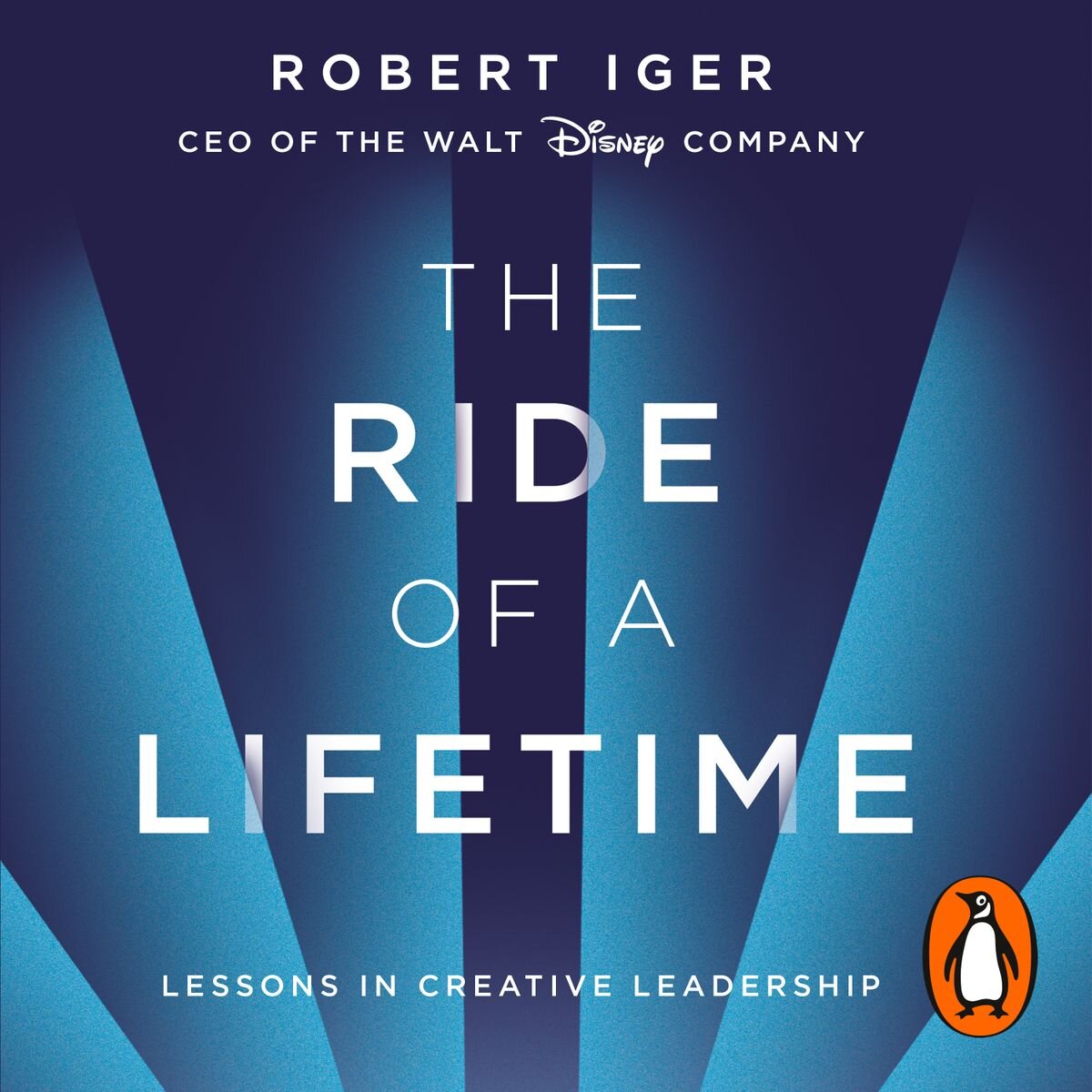
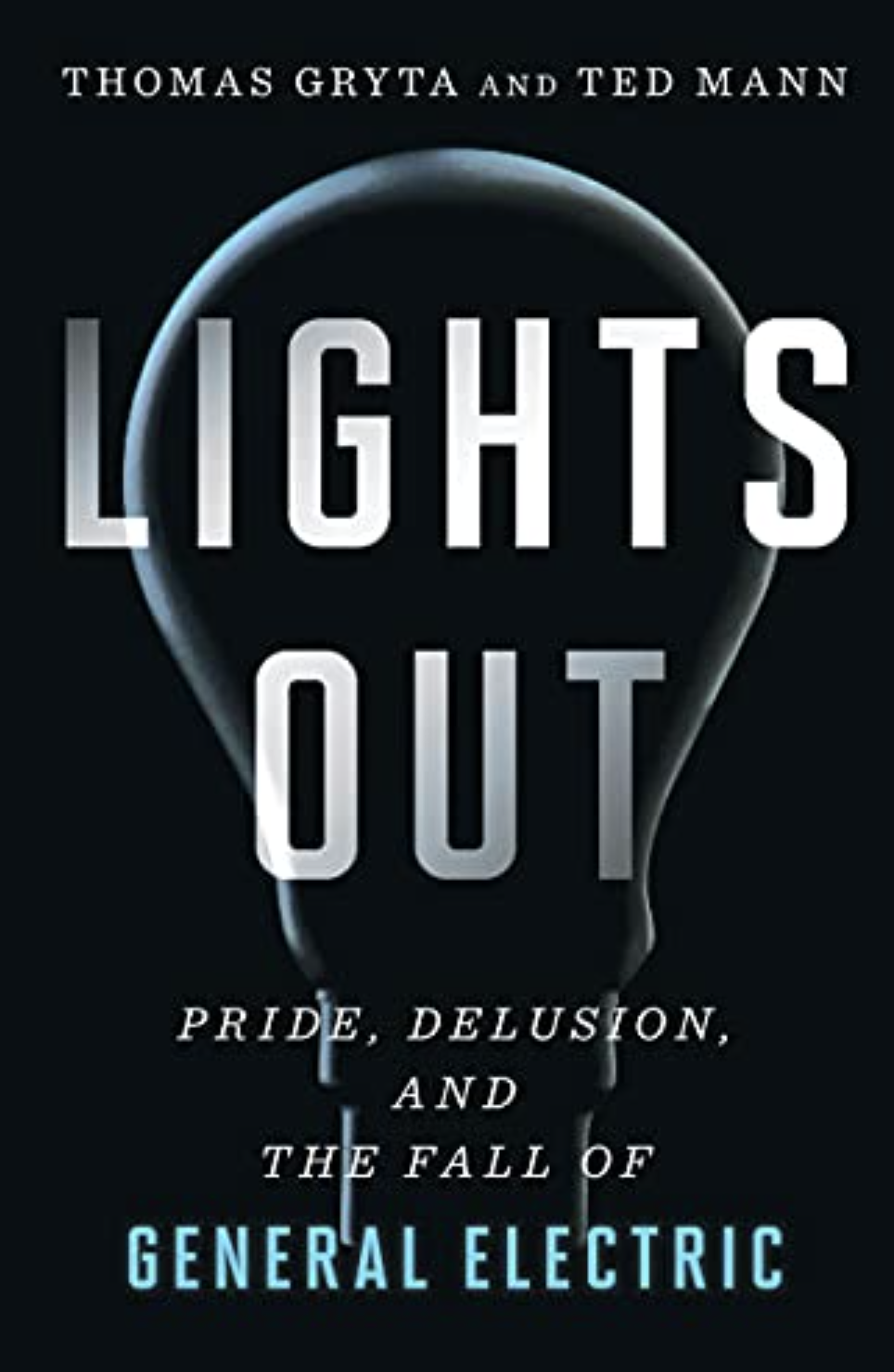
Warren Buffett and Charlie Munger have long espoused the benefits of studying failure. Armed with the foresight of what not to do can help an investor avoid the key risk to any investment program - the permanent loss of capital. With this insight in mind, and having read a short synopsis in Bill Gates Summer Reading List, I looked forward to reading the book, ‘Lights Out - Pride, Delusion and the Fall of General Electric’ by Ted Mann and Thomas Gryta. An easy read, the book details the multitude of problems which beset GE coupled with a cornucopia of red flags to look out for in your own investments.

“I like to study failure… we want to see what has caused businesses to go bad." Warren Buffett

Once a storied industrial leader, the last few decades have been nothing short of brutal for GE. While a toxic culture of ‘making the numbers’ seemed ingrained at the time Jack Welch handed the reigns to Jeff Immelt, Immelt’s sixteen year term atop GE earned him a scathing review. Characterised with an incessant focus on the share price, always coveting Wall Street’s admiration, ignorant of tail risks, obstructive to feedback, turning a blind eye to questionable accounting and an absence of humility were the hallmarks of a failed leadership tenure. If the expression, ‘an institution is the lengthened shadow of one man’ rings true, this isn’t a book for Immelt’s trophy cabinet.

Gates Notes - ‘5 Ideas for Summer Reading’  2021

Gates Notes - ‘5 Ideas for Summer Reading’ 2021

Perhaps unsurprisingly, the company’s travails were strikingly at odds with the traits that have defined the great businesses we’ve reviewed in the past. Below I’ve called out some red flags and accompanying lessons from GE. Notwithstanding the accounting misconduct, most of the tell-tale signs of trouble are qualitative and behavioural in nature.

S&P500 [grey] vs General Electric [blue] Normalised - 2000 - 2021 [Source: Bloomberg]

S&P500 [grey] vs General Electric [blue] Normalised - 2000 - 2021 [Source: Bloomberg]

Financials Above Purpose

In the superb book, ‘In Search of Excellence,’ Tom Peters noted, “We found that companies whose only articulated goals were financial did not do nearly as well financially as companies that had broader sets of values.

“The Growth Playbook [was] a grueling annual examination of GE’s eight major business leaders. It was here that GE hammered out targets for sales and profits, setting the underlying assumptions for the financial estimates it would give investors. Under Immelt, the point of the exercise was determining how his executives would get to their financial targets - though not how they would determine what output the business would produce as a starting point. This practice had been ingrained at GE from the days of Welch.” Lights Out

“The problems stemmed not from any single action but from the practices of accountants on staff at the dozen or so plants in the division. They’d reported their numbers by working backward: starting with a profit target and then working out what their sales figures would have to show to get there, rather than simply running the business and reporting their results to headquarters every three months.” Lights Out

The best business leaders have long recognised a company’s share price is a function of long term business performance. Solve for the latter, and in time, the share price will look after itself. At GE the financials dictated strategy.

“Investors and executives need to realise that the creation of shareholder value is an outcome — not an objective.” Terry Smith

“Stock price is an outcome. You can’t manage the outcome. You manage the inputs.” James Gorman

“We want corporate management to solve for value creation, not security price.” Dan Loeb

“Companies that focus on their stock price will eventually lose their customers. Companies that focus on their customers will eventually boost their stock price. This is simple, but forgotten by countless managers.” Morgan Housel

“When it comes to discussing a company’s strategy, it is alarming how frequently one finds confusion about what a strategy actually is. Often a CEO mistakes a short-term target, say an earnings per share target or a return on capital threshold, with a strategy.” Marathon Asset Management

“Some would claim that maximising profits is a business’s ultimate purpose. Yet it is often when companies become exclusively profit orientated – and explicitly define this as their objective - that things go wrong. The end result of what investors seek, good shareholder returns, is invariably better achieved obliquely.” Nick Train

“An annual report with a numbers obsession speaks volumes about what’s important.” Marianne Jennings

Jeff Immelt’s strategy was directed with reference to the share price; providing guidance, smoothing earnings, setting optimistic long term EPS targets, undertaking acquisitions and divestments to appease Wall Street, appealing to big investors and ‘making the numbers’ regardless of cost. All are misguided short cuts.

Focus on Share Price

Of all the books on great businesses I’ve read, I can’t recall one where a company’s share price featured so prominently. Great businesses are all about empowering people, innovating, delighting customers, tolerating mistakes, focusing on the long term, upholding values, embracing change and remaining humble, to name but a few - none of which rated barely a mention.

“The stock market didn’t appreciate what GE was really worth. And it was driving Jeff Immelt crazy. His handlers claimed that he didn’t watch the daily movement in the shares, but his actions betrayed him. The stock market was the ultimate scoreboard tracking his performance.” Lights Out

‘The stock is currently trading at one of the lowest earnings multiples in a decade,’ Immelt wrote in his annual letter to investors in early 2006. ‘Investors decide the stock price, but we love the way GE is positioned. We know it is time to go big!’ he wrote.” Lights Out

“Always aware of the stock’s reflection on his leadership, Immelt was trapped in a waking nightmare.” Lights Out

“GE’s stock price and its miserable performance were a constant cloud over Immelt’s head.” Lights Out

A management’s obsession with their share price is often a tell for investors; as recognised by some of the world’s best.

“Today, it seems to be regarded as the duty of CEOs to make the stock go up. This leads to all sorts of foolish behaviour.” Charlie Munger

“[The managers we have owned] don’t have a screen in their office showing them the price of their stock. And lots of them do. Sometimes you find it in the lobby of a company and sometimes you find it on the CEO’s desk. That doesn’t interest us. Their focus is on the wrong thing, in our judgement.” Chuck Akre

“We’ve been suspicious of companies that place a whole lot of emphasis on the price of their stock. When we see the price of a stock posted in the lobby of the headquarters or something, things like that make us nervous.” Warren Buffett

“A worrying sign is a CEO with a subscription to Bloomberg as this may indicate an unhealthy interest in stock prices and short-term news flow to the detriment of long-term thinking.” Marathon Asset Management

Quarterly Earnings

The best investors have a long-term orientation, focused on where a business might be in three to five years or more, rather than next quarter’s result. GE spent their time trying to please short-term investors.

“We do not worry about the stock price in the short run, and we do not worry about quarterly earnings. Our mindset is that we consistently build the company — if you do the right things, the stock price will take care of itself.” Jamie Dimon

“The investor wanting maximum results should favour companies with a truly long-range outlook concerning profits.” Phil Fisher

“We really think that an undue focus on quarterly earnings, not only is probably a bad idea for investors, but we think it’s a terrible idea for managers. If I had told our managers that we would earn three dollars and 17 1/2 cents for the quarter, you know, they might do a little fudging in order to make sure that we actually came out at that number.” Warren Buffett

Business Results Aren’t Linear

Smart investors recognise the business environment and economy are not conducive to a perfect earnings trajectory. GE failed to understand this, deploying unethical and in some case illegal short cuts to deliver.

“GE executives have acknowledged that they worked to make sure earnings were growing in a nice smooth trajectory.” Lights Out

“When Fortune’s Carol Loomis once told Welch that the smoothing practice was terrible, he vehemently disagreed with her. ‘What investor would want to buy a conglomerate like GE unless its earnings were predictable?” Lights Out

“The concept of managing earnings, another wonderful numbers term that infiltrates the numbers-pressure culture that leads to ethical collapse. It’s not cooking the books, it is managing earnings. A numbers obsession finds employees and officers not managing strategically but manipulating numbers for results.” Marianne Jennings

“Be suspicious of companies that trumpet earnings projections and growth expectations. Businesses seldom operate in a tranquil, no surprise environment, and earnings simply don't advance smoothly. Charlie and I not only don't know today what our businesses will earn next year we don't even know what they will earn next quarter. We are suspicious of those CEOs who regularly claim they do know the future and we become downright incredulous if they consistently reach their declared targets, Managers that always promise to ‘make the numbers’ will at some point be tempted to make up the numbers.” Warren Buffett

Businesses do not meet expectations quarter after quarter and year after year. It just isn’t in the nature of running businesses. And, in our view, people that predict precisely what the future will be are either kidding investors, or they’re kidding themselves, or they’re kidding both.” Warren Buffett

Promoting the Stock

“In the [2015] annual letter, Immelt wrapped up his lecture on the limitless superlatives of GE with an awkward plea to major institutional investors.. ‘We have delivered for you in the last five years. But we are still under-owned by big investors. In this time of uncertainty, why not GE?’ he wrote, like a heartbroken lover begging for reconciliation. ‘We have a ton of cash that can protect you,’ he added.” Lights Out

“[At the annual Electrical Products Group conference for industrial investors and executives] Immelt, as he had done before, argued that investors had GE all wrong and were mispricing a stock that should have been above $30 a share.” Lights Out

“We suspect that business leaders who are busy promoting themselves or their stock are not properly focused on running their companies. We go out of our way to look for management that cares about shareholder value but doesn't hype its stock.” Marathon Asset Management

“People who have a proclivity for announcing how valuable their stock is, are I think, people who you ought to be very cautious of.” Warren Buffett

Fancy Predictions

“As the [2016] year came to an end, Immelt planted a flag that would define the rest of his career: he declared that GE would produce at least $2 of profit per share in 2018. It was an unusually long-term projection, and its meaning was undeniable to Immelt.” Lights Out

“It was wishful thinking at best that GE could deliver the $2 of earnings Immelt had promised.” Lights Out

“Charlie and I tend to be leery of companies run by CEOs who woo investors with fancy predictions. A few of these managers will prove prophetic – but others will turn out to be congenital optimists, or even charlatans. Unfortunately, it’s not easy for investors to know in advance which species they are dealing with.” Warren Buffett

Candor and Bad News

“Faced with the prospect of telling their tempestuous CEO that the new product was a disaster, the managers chose another route. They massaged the numbers.” Lights Out

“There was no market for hard truths or bad news. Not as far as the guy at the top was concerned.” Lights Out

“It was better to figure out a better way to deliver the bad news, or make it go away somehow, than to present it to Immelt straight.” Lights Out

Great businesses are tolerant of mistakes. Great Leadership recognises businesses grow through trial and error. When problems aren’t addressed they fester and the eventual impact on a business can be disastrous.

“Almost every business has problems, and we’d just as soon the manager would tell us about them. We would like that in the businesses we run. In fact, one of the things, we give very little advice to our managers, but one thing we always do say is to tell us the bad news immediately. And I don’t see why that isn’t good advice for the manager of a public company. Over time, you know, I’m positive it’s the best policy.” Warren Buffett

Bad news concealed over time doesn’t get any better. See those studies again: companies with the most candid disclosures in their financial statements perform better over the long term and have higher share prices.Companies that put their current positions and performance right out there for investors and analysts to study are the companies to put your money in.” Marianne Jennings

A Culture of Making the Numbers

“The pressure to perform inside GE is omnipresent, and missed goals can be fatal, a tradition true at all levels of the company.” Lights Out

“Management expectation about the sales growth and profit they should be able to hit didn’t reflect the dim reality of the market, team members told Steve Bolze [CEO GE Power] and Paul McElhinney, the head of the unit that administers the service contracts. Vocal complaints about management’s view diverging from the reality of the market, or from basic math, were common among lower level Power executives. When the concerns were raised to leaders like McElhinney, they were stopped cold... ‘Get on board,’ McElhinney said. ‘We have to make the numbers.’” Lights Out

“When Immelt took over the Plastics operation, the previous management hadn’t been playing it straight. Under pressure from Welch, the division had stretched to make the numbers, including misreporting inventory figures to reduce the cost of goods sold.” Lights Out

“Welch would argue that he pushed his underlings to produce results, not fraud. But even if the CEO didn’t bend the rules himself, Welch cultivated an environment of pressure that incentivised people to do just that.” Lights Out

“If you couldn’t do the job and hit your targets, they all knew, Jack Welch would get someone else who could.” Lights Out

“Jeff Immelt’s assignment was clear: keep the earnings machine of GE humming steadily along, as it had under Welch.” Lights Out

“GE regularly leaned on [GE Capital] to make sure that profits stayed steady.” Lights Out

“Few fates were worse than missing your numbers at GE. Executives assigned targets to underlings, rather than lower-rung workers passing information up the ladder, so projections were based on market realities.” Lights Out

“Salespeople relied on financing provided by the stub of GE capital to prop up customer demand.” Lights Out

thumbnail_IMG_0971.jpeg

Marianne Jennings wonderful book, ‘The Seven Signs of Ethical Collapse - How to Spot Moral Meltdowns in Companies... Before It's Too Late’ cites ‘Pressure to Maintain Those Numbers’ as the number one sign of ethical collapse; “All companies experience pressure to maintain solid performance. The tension between ethics and the bottom line will al-ways be present. Indeed, such pressure motivates us and keeps us working and striving. But in this first sign of a culture at risk for ethical collapse, there is not just a focus on numbers and results but an unreasonable and unrealistic obsession with meeting quantitative goals. ‘Meet those numbers!’ is the mantra.”

“Charlie and I have been around the culture, sometimes on the board, where the ego of the CEO became very involved in meeting predictions which were impossible and everybody in the organisation knew, because they were very public about it, what these predictions were and they knew that their CEO was going to look bad if they weren’t met. And that can lead to a lot of bad things. You get enough bad things, anyway, but setting up a system that either exerts financial or psychological pressure on the people around you to do things that they probably really don’t even want to do, in order to avoid disappointing you, that’s a terrible mistake. And, you know, we’ll try to avoid it.” Warren Buffett

“We really believe in the power of incentives. And there’s these hidden incentives that we try to avoid. One we have seen more than once, is when really decent people misbehave because they felt that there was a loyalty to their CEO to present certain numbers, to deliver certain numbers, because the CEO went out and made a lot of forecasts about what the company would earn. I’ve seen a lot of misbehaviour that actually doesn’t profit anybody financially, but it’s been done merely because they don’t want to make the CEO look bad, in terms of his forecast.” Warren Buffett

“You really have to be very careful in the messages you send as a CEO. If you tell your managers you never want to disappoint Wall Street, and you want to report X per share, you may find that they start fudging figures to protect your predictions. And we try to avoid all that kind of behaviour at Berkshire. We’ve just seen too much trouble with it.” Warren Buffett

If a culture is broken and toxic the best advice is to steer clear. It’s almost impossible to turn around a poor culture.

“You can’t buy a company that’s got a dishonest culture and turn it into an honest culture." Bradley Jacobs

Cost Cutting

“The Corporate cost cutting program [was'] called ‘Simplification.’ That program had zeroed in on worker pensions and retiree health insurance as a good place to tighten the company belt.” Lights Out

'Whenever I read about some company undertaking a cost-cutting program, I know it's not a company that really knows what costs are all about. Spurts don't work in this area. The really good manager does not wake up in the morning and say, 'This is the day I'm going to cut costs,' any more than he wakes up and decides to practice breathing.'' Warren Buffett 

“You can’t cut a company to greatness.” Charles Schwab

“Almost every firm engages in bouts of cost cutting. Exceptional firms, however are involved in a permanent revolution against unnecessary expenses.” Marathon Asset Management

Losing Your Competitive Position

“If a management makes bad decisions in order to hit short-term earnings targets, and consequently gets behind the eight-ball in terms of costs, customer satisfaction or brand strength, no amount of subsequent brilliance will overcome the damage that has been inflicted. Take a look at the dilemmas of managers in the auto and airline industries today as they struggle with the huge problems handed them by their predecessors. Charlie is fond of quoting Ben Franklin’s ‘An ounce of prevention is worth a pound of cure.’ But sometimes no amount of cure will overcome the mistakes of the past.” Warren Buffett

“Companies which underinvest in their franchise in order to meet short term targets are not good candidates for compounding wealth.” Terry Smith

Accounting Irregularities

Pressure from the top to hit numbers coupled with an unwarranted focus on the share price, can tempt employees to fudge the numbers. Once again, Marianne Jennings observed, ‘A declining stock price can cause bizarre accounting behaviour. The drive for numbers, number, numbers can take us right to the slippery slope and into ethical collapse.”

“GE Power had sold service guarantees to many of its customers that extended out for decades. By tweaking its estimate of the future cost of fulfilling those contracts, it could boost its profits as needed.” Lights Out

“These reviews [of GE’s service contracts] produced profits that GE could use to hit targets for Wall Street, but they were really future profits, produced by accounting adjustments alone. There was no actual cash coming in… [They] can be red flags to investors… To pad the hole, GE now began selling its receivables - bills its customers owed over time - to GE Capital in order to generate short-term cashflow, making it appear that those newfound profits were matched by cash flowing in the door.” Lights Out

“The SEC concluded its investigations into GE accounting practices, having found multiple instances of misbehaviour in the pursuit of financial targets. The company had overstated its earnings by hundreds of millions of dollars and stretched the accounting rules to their breaking point.” Lights Out

“The SEC described [GE as] a company that lied to investors in its regulatory filings and in its public statements, that ignored growing risks, and that worked to keep those risks hidden.” Lights Out

“Over the years, Charlie and I have seen all sorts of bad corporate behaviour, both accounting and operational, induced by the desire of management to meet Wall Street expectations.” Warren Buffett

Hitting Guidance

“What starts as an ‘innocent’ fudge in order to not disappoint “the Street” – say, trade-loading at quarter-end, turning a blind eye to rising insurance losses, or drawing down a “cookie-jar” reserve – can become the first step toward full-fledged fraud. Playing with the numbers ‘just this once’ may well be the CEO’s intent; it’s seldom the end result. And if it’s okay for the boss to cheat a little, it’s easy for subordinates to rationalise similar behaviour.” Warren Buffett

Acquisitions & Divestments

Immelt wanted to appease Wall Street and convince them to place a higher multiple on the stock. Historically GE had enjoyed a premium valuation providing the currency for accretive acquisitions. As GE Capital grew, a complex finance business within an industrial company, Wall Street applied a lower multiple. Immelt believed shrinking GE Capital would fix the problem.

“GE could use its unusually high price-to-earnings ratio for an industrial company as high-value currency to pay for deals. By acquiring companies with a lower price-to-earnings ratio, GE was getting an automatic earnings boost.” Lights Out

“Immelt needed to make moves that would finally impress upon Wall Street that he had found a way to lead the old GE into a new economic paradigm.” Lights Out

Capital Management

“GE had been sending cash out the door to repurchase its stock but wasn’t bringing in enough cash from its regular operations to cover its dividend.” Lights Out

“Buybacks were a regular fixture under Immelt, who spent more than $108 billion on them after 2004. At the end of 2018, GE’s entire market value was $67 billion.” Lights Out

Group Think

The oversight role of the board was minimal.” Lights Out

“The board, made up of current and retired business executives and academics, as a group, liked Immelt and didn’t want to challenge him.” Lights Out

“Top GE executives, including Immelt, would say that they never heard any serious dissent about the Alstom deal.” Lights Out

The absence of robust opposition [to the Alstom deal] also pointed to the broader problem, long cultivated and growing into a quiet crisis within the company of real candor and self-awareness. When it had come time for lower levels of management to stand up to the ultimate boss and tell him that his legacy play wasn’t going to work - and in fact, had been a clumsy mistake all along - no-one was willing to do so.” Lights Out

“Vice Chair John Krenecki, insiders said, had been forced out by Immelt, in part because he had already seemed a little too prone to disagreeing with the CEO or telling him no.” Lights Out

“GE’s board of directors was unquestionably weakened from having the CEO as the chairman of the Board.” Lights Out

“While Immelt said he encouraged debate, [Board] meetings often lacked critical questioning.” Lights Out

“The seventeen independent directors got a mix of cash, stock, and other perks worth more than $300,000 a year.” Lights Out

“[Board] directors rarely challenged Immelt.” Lights Out

“The [Board] directors had amassed impressive titles in their own career and in many cases undeniable achievement. They had resumes a yard long, most of them had personal fortunes, and they were presumed in all company to have unusually astute minds for business - not least because each one was a highly compensated director of GE. And yet, on their fiduciary watch, with whatever caveats about individual misjudgement and macroeconomic trends, they had done nothing to stop one of the world’s most solid industrial companies from lunging off a commercial cliff.” Lights Out

“Sycophants are the enablers of ethical collapse. Fear and silence are the enemies of an ethical culture.” Marianne Jennings

“If you arrange your organisation so that you basically have a bunch of sycophants who are cloaked in titles, you are going to leave your prior conclusions intact, and you’re going to get whatever you go in with your biases wanting. And the board is not going to be much of a check on that. I’ve seen very, very few boards that can stand up to the CEO on something that’s important to the CEO and just say, you know, ‘You’re not going to get it.’” Warren Buffett

Complexity

“Inside GE’s legendary management machine was a complex mechanism that used [GE Capital’s] deals to help the company meet its profit goals.” Lights Out

“GE Capital was always a problem. It was utterly complex and filled with risk, and its tentacles reached everywhere in the company.” Lights Out

“[The financial services] balance sheets were treacherously complex, and deep risks lurked there and were not always easily spotted in the quarterly profits and losses.” Lights Out

“[GE Capital was] essentially operating a high-powered hedge fund.” Lights Out

Where you have complexity, by nature you can have fraud and mistakes.. This will always be true of financial companies. If you want accurate numbers from financial companies, you’re in the wrong world.” Charlie Munger

Cyclical Industries

GE ventured into the highly cyclical oil business with optimistic forecasts, little experience and no margin of safety.

“GE was going big into the oil business.” Lights Out

“Now GE became, in a series of high-dollar acquisitions, a player in the oil and gas equipment market virtually overnight.” Lights Out

“While Immelt heard, and was annoyed by, the chirping of some analysts who felt he’d paid a premium to leap into the oil and gas industry several years after his competitors, the company’s leadership was sure that the ensuing years would show the bet payoff.” Lights Out

GE’s ‘base case’ assumption for all of the rosy pictures it was painting about its oil unit was $100 for a barrel of oil. Brent crude had closed out the previous month at more than $105 a barrel, only a little off its summer peak.” Lights Out

“Afloat on fracking profits during an oil boom, Lufkin had caught GE’s eye and been swallowed up at an expensive price, only to become a casualty when the conglomerate couldn’t abide the hit to earnings that a prolonged dip in the price of oil represented.” Lights Out

Insurance Tail Risks

“Everyone - reporters, analysts, investors - thought that the company had sold the insurance business long ago, significantly de-risking GE Capital. In often highlighting this point, Immelt and his top executives hadn’t minced words: GE was out of insurance.” Lights Out

“The core problem was that GE had made some bad decisions in reinsuring the long-term care policies.” Lights Out

GE needed $15 billion to cover its liability.” Lights Out

"Virtually all surprises in insurance are unpleasant ones." Warren Buffett

“You can make big mistakes in insurance… You can make mistakes in something like insurance reserving, big time.” Warren Buffett

Bigger than Life CEO

Jeff Immelt almost personified the ‘bigger-than-life’ CEO. It’s a characterisation Marianne Jennings identified as another red flag for investors.

“Immelt knew the power of his influence, and he wasn’t above calling these subordinates [below the divisional heads] to make sure they knew the stakes and urge them to hit their targets.” Lights Out

“The structural component that fuels fear and silence and numbers pressure is the presence of an iconic CEO who is adored by the community, media, and just about anyone at a distance.Marianne Jennings

Humility & Tone from the Top

“Immelt was required by the board to use only the company’s planes and was barred from flying commercial.” Lights Out

“Immelt, his good cheer notwithstanding, was not interested in hearing his judgement questioned. ‘My job is to make the company perform,’ Immelt told a newspaper reporter, ‘and my job is to make sure that nobody defines this company other than me.” Lights Out

“[Owning GE Capital meant] Immelt enjoyed having the accompanying seat at the table with Wall Street power players.” Lights Out

“Owning NBC gave Immelt and Welch access to red carpets.” Lights Out

“It had taken two corporate jets to take Jeff Immelt around the world. For much of his career [Immelt] often had an empty jet follow his GE-owned Bombardier or Gulfstream to far-flung destinations, just in case there was a mechanical issue that could lead to delays.” Lights Out

“No effort was spared by the staff to ensure that meeting venues were cooled to meat-locker temperatures to accommodate Immelt’s preference, irrespective of whether anyone had ever heard him make such a demand out loud.” Lights Out

“Was a CEO supposed to object that the temperature was not to his liking, or demand that elevators were always open and waiting for him? Or that the cold diet sodas he liked were always present on a sideboard when he entered a room, no matter how far-flung the visit or conference room he walked into?” Lights Out

“But GE has stood for well-bred hubris as well. Under Immelt, the company believed that the will to hit a target could supersede the math, even when hundred of thousands of livelihoods - those of investors, customers, and suppliers, to say nothing of workers, retirees, and their families - hung in the balance." Lights Out

Smart Investors

The emergence of a smart investor on the register is no panacea for investment success. Activist investor Nelson Peltz’s fund emerged with a $2.5 billion stake in 2015. Even the great investors make mistakes.

Trian’s endorsement was the stamp of approval that Immelt thought would help others realise the full legitimacy of GE’s expected turnaround.” Lights Out

In every great stock market disaster or fraud, there is always one or two great investors invested in the thing all the way down. Enron, dot-com, banks, always ‘smart guys’ involved all the way down.” Jim Chanos

Summary

The ‘pressure to maintain those numbers’, a culture of ‘fear and silence’, a bigger-than-life CEO, and a weak board conspired against the investors of General Electric; red flags that stand firmly in the qualitative camp, not to be found in a spreadsheet.

These misdeeds aren’t unique or new to investing. After more than two decades of research and observation, Marianne Jennings identified each of them in her book, ‘The Seven Signs of Ethical Collapse.’ They didn’t go amiss at Berkshire either, given Munger and Buffett’s astute understanding of human behaviour.

History is littered with similar corporate disasters to GE. They serve as a warning for analysts, investors, portfolio managers, boards and CEO’s alike; Forewarned is forearmed. Understanding those qualitative tools that may suggest not all’s right with a company might help you ‘keep the lights on,’ when the next GE turns up.

“I think that many CEOs get carried away into folly. They haven’t studied the past models of disaster enough and they’re not risk-averse enough.” Charlie Munger


Source:
Lights Out - Pride, Delusion and the Fall of General Electric,” by Ted Mann and Thomas Gryta, Mariner Books, 2020.

Further Suggested Reading:
The Ten Commandments of Business Failure,” Investment Masters Class, 2016.
The Seven Signs of Ethical Collapse - How to Spot Moral Meltdowns in Companies... Before It's Too Late,” Marianne Jennings, MacMillan, 2006.
Avoiding Group Think,” Investment Masters Class, 2016.


Follow us on Twitter : 
@mastersinvest
* NEW * Visit the
Blog Archive


TERMS OF USE: DISCLAIMER

Learning from Estée Lauder's Leonard Lauder

‘Paris, the Eiffel Tower, Estée Lauder.’

Kind of rolls off the tongue doesn’t it? Now try this one: ‘Esther Lauter, Brooklyn, Business Fanatic.’ While the former conjures up images of glamour and beauty, the latter does so less, and is rather the story of one woman’s unrelenting drive and obsession to create a luxury brand renowned the world over.

From the start, Estée recognised the psychological benefits of a name that sounded feminine and vaguely European, distinctive but elegant, and easy to pronounce and remember. She settled on her baby nickname ‘Estee’ and added an accent mark to make it a little French while softening the hard German Lauter to a more amorous Lauder.

I recently enjoyed reading ‘The Company I keep - My Life in Beauty,’ the story of one family’s journey to the top of the world’s cosmetic and beauty stage. The story is told by Estée’s son Leonard who joined the company in 1958 when it was still a fledging mom-and-pop company, with less than $1m in revenue and product distribution limited to just a small handful of prestige specialty stores. In time, Estée’s creativity, intelligence and fanaticism combined with Leonard’s business acumen and acquisition prowess created the powerhouses that are The Estée Lauder Companies today.

The Lauder’s were applying a repertoire of ‘influencing’ tools long before Charlie Munger’s favourite psychologist, Robert Cialdini, identified them in his bestselling book of a similar name. A Clinique beauty expert dressed in a lab coat and armed with the ‘Clinique computer’ would trigger the power of authority; free samples and gifts would engage the reciprocation tendency; Saks 5th Avenue provided the requisite social proof; glamorous models and compliments from the beauty counter initiated the liking disposition; while limited distribution created a sense of scarcity.

“The [Clinique] beauty experts exuded exactly the right combination of scientific authority and style.”

Two of my favourite takeaways from the book were Leonard’s insights into the creation and evolution of prestige brands and their delicate relationship with distribution channels and his ‘modus operandi’ of ensuring constant competition within the business. The book is brimming with business lessons; the need for patience; the danger of becoming a prisoner of the P/E ratio, staying under the radar, the value of a diverse workforce, setting the tone from the top, and the benefits of ‘walking the floor’ to name but a few.

There’s a plethora of mental models you’ll recognise from many of the other great businesses we’ve studied. Hopefully there’s one or two new ones you can add to your own investing toolkit. Below you’ll find some of my favourites.

Estée Lauder vs SP500 1995-2021 [Source: Bloomberg]

Estée Lauder vs SP500 1995-2021 [Source: Bloomberg]

Family

“The company and I grew up together, our lives as closely paired as twins. It has always been more than a family company: it was - and continues to be - my family.”

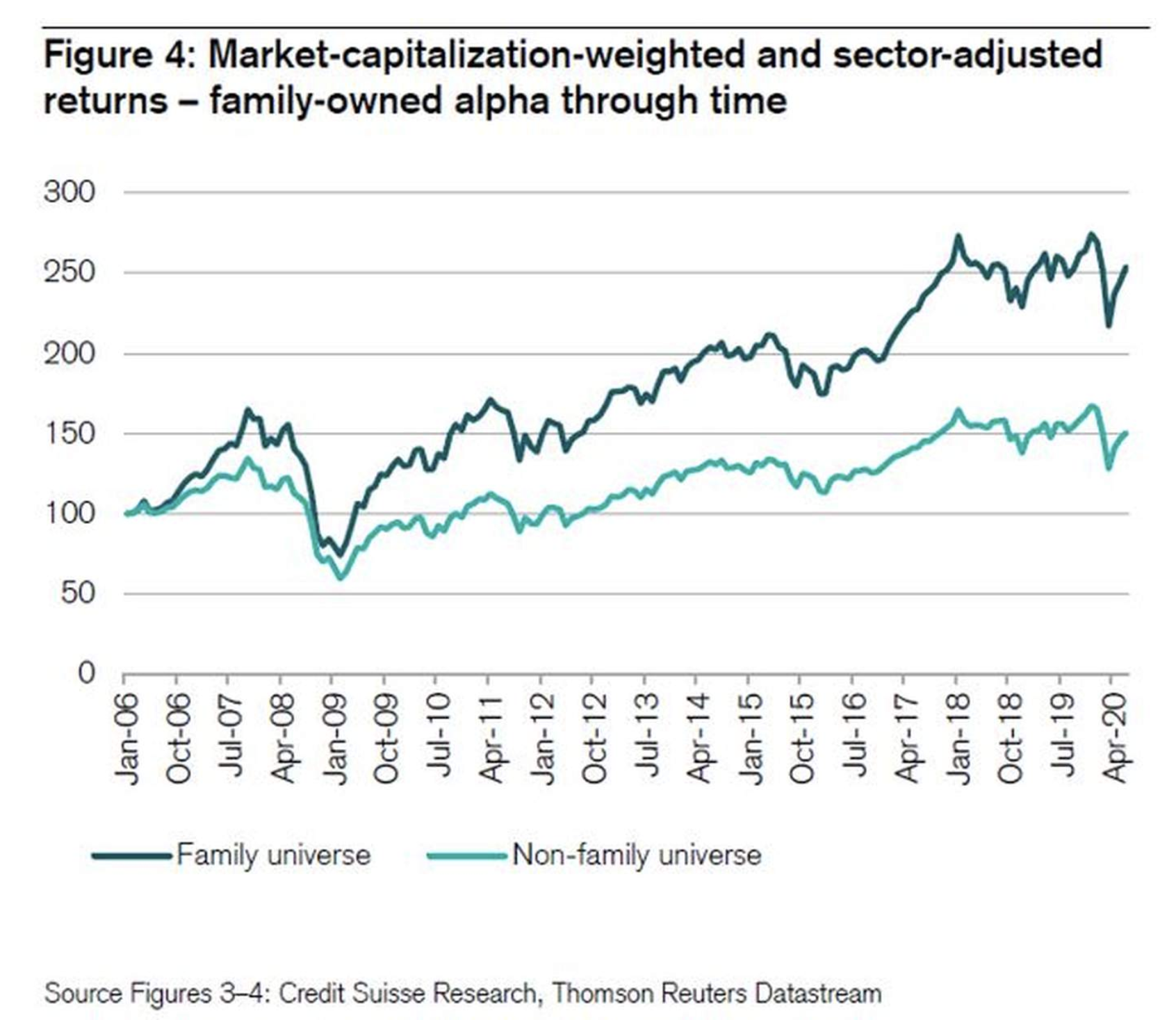
My mother strongly believed in ‘family’ as a powerful asset, and she was right. There's a lot of research comparing the sustainability and profitability of family companies whether the family is in control or "just" works there, to non-family companies. Because of their sense of stewardship, the family companies tend to be more profitable and more sustainable in the long run.”

Family for me is not limited to my blood relatives; the concept extends to all of our employees at The Estée Lauder Companies. We make a big effort to make everyone in the company feel part of the Estée Lauder family.”

“It’s been said that there are two things that can destroy a family business: the family and the business, and they both have to be kept in order.”

Culture

“Seeing how Revson [Revlon CEO] treated some of his top executives pointed me in a direction that I think always worked out for us. You can make a nice place to work and still make money.”

Quality

“I learned early that being a perfectionist and providing quality was the only way to do business.”

My mother was a stickler for quality. Quality was, to use a modern term, a differentiator.”

Never skimp on quality; put your heart and soul into producing the best-quality products to present to your public. Don’t let anyone talk you out of it.”

Reciprocation

“My mother had discovered what she called ‘The sales technique of the century’: free samples.”

‘A Gift for You’ - Estée Lauder advert 1989

‘A Gift for You’ - Estée Lauder advert 1989

A free sample was the basis on which Estée Lauder was built.”

“‘I visited the sales personal in the dress department, the hat department, the shoe department, as well as other cosmetic departments,’ she [Estée Lauder] later wrote. ‘To each saleswoman, I brought a gift of my makeup or cream, exactly what I’d be giving away to customers as they claimed their free gifts they’d been promised in advertisements. ‘I learned the merchandising method of inducing the whole store to speak for my products,’ she concluded. ‘The point was to keep placing the products in the public eye, keep devising new ways of capturing the consumer’s attention.’”

“The giveaways created an opportunity to exercise the high-touch Estée Lauder sales approach, encourage spontaneous buying, increase loyalty among existing customers, and bring in new ones.”

Value Employees

If you respect the people that work for you, they will respect you.”

“As time went on, I made a habit of writing once a year to everyone who worked behind the counter, expressing my recognition of and gratitude for their hard work. I’d write individual notes - not ‘Dear Everyone’ form letters - and I’d sign each one. As the company grew, I had to resort to dictation, but each letter was personalised - and each one signed by me.”

I firmly believe that people don’t work only for money. They work for recognition.”

Find a way to congratulate someone for a job well done. Even if your note is just a little one-liner, when you say ‘thank you for doing a good job,’ it’s more likely the recipient will go to the ends of the earth for you.”

When we went public in 1995, I persuaded all the members of the Lauder family to carve out a portion of their personal stock and give it as a gift to the employees of Estée Lauder. It wasn't enough to enable everyone to splurge on a yacht, but it was enough to make each person feel that we were all in this together.”

Ideas

“I’m a big believer in what I call ‘lateral creativity’ - getting ideas from everywhere.”

Competitive Advantage

“My mother didn’t realise it at the time, but her insistence on personally training saleswomen would be a key differentiator when she eventually opened counters in department stores.”

“My parents didn’t have the capital to create even one such salon, let alone a chain of salons that could compete against Miss Arden and Madame. Instead, my mother hones in on a different platform to reach her customers: select specialty stores.”

“My mother instinctively knew that a brand is defined by its distribution. If we were sold in Saks Fifth Avenue, then we had made it. How to get Estée Lauder products into Saks was the main topic of dinner conversation every night.”

Estée Lauder / Saks Fifth Avenue

Estée Lauder / Saks Fifth Avenue

“At Estée Lauder, everything was and still is about training. It’s one of our key differentiators from our competitors. Training is all about teaching people that they can achieve anything if they know what to do and how to do it and giving them the confidence to do it well.”

Competitive Strategy - Avoid Competitors

“Backing into the fragrance market through bath oils taught me another lesson. Our non-threatening strategy enabled Estée Lauder to stay below the radar of major competition. French perfume manufacturers scoffed, saying, ‘We don’t do bath oils.’ Meanwhile, sales of Youth Dew skyrocketed. I learned the importance of choosing my battles - and not to dismiss a competitor just because they seem innocuous.”

“The lesson my mother drummed into me: Everyone is a competitor or a potential competitor. You can’t ignore anyone.”

Change

“In 1960, there were 4,500 malls accounting for 14 percent of retail sales. By 1975, there would be 16,400 shopping centres scooping up 33 percent of retail sales… We owned the suburban stores. First to market always wins.”

Economic Resilience

‘My mother was onto something: even in 1933, one of the worst years of the Depression, cosmetic sales were higher than they had been before the crash.”

Compete with Yourself

“I learned a valuable lesson [running two film clubs at college]: you can compete with yourself and win. It was a lesson that, a decade later, would spawn Clinique and would eventually inform the thinking behind The Estée Lauder Companies’ portfolio of brands.”

Instead of waiting to see what our rivals might dream up and then respond, wouldn’t it be better for us to leapfrog them and create our own competitor first? A multi-brand model for Estée Lauder had always been in my mind. I thought, ‘I know just what I’d do if I were competing with Estée Lauder. Why let a competitor do it? I’ll do it.”

Clinique wasn’t just a new line of skin-care or makeup: it was an entirely new way of thinking about beauty.”

In retrospect, the Clinique and Estée Lauder brands both competed and complemented each other. Clinique was the ‘anti-cosmetic,’ so wherever Estée Lauder sold well, Clinique didn’t. And where Estée Lauder lagged, Clinique did well.”

Clinique's first computer, launched in 1968, was used to determine skin type and deliver personalised results.

Clinique's first computer, launched in 1968, was used to determine skin type and deliver personalised results.

I created Clinique specifically to compete with Estée Lauder. Competing against myself is an idea that never grows old. Who was going to compete with M.A.C? The answer, unquestionably, was Bobbi Brown Cosmetics. [When we acquired] Bobbi Brown it was the perfect counterbalance to M.A.C.”

Creating our own competition both brings about something and prevents something. What I was trying to bring about was becoming the market leader, and we’ve done that: we are the largest supplier of prestige cosmetics in the world and we are the dominant player in almost every prestige market, largely because of that strategy. Second, I knew that a brand can’t live forever. I had seen older brands, which were once market leaders fade away. People would come up to me and say, ‘Oh, Estée Lauder, my grandmother loves your products.’ If they said, ‘My daughter loves your products,’ I’d be thrilled. But ‘my grandmother?’ Not as great. So we kept on acquiring companies or launching our own competitors so that as new consumers came into the market, they would discover their own newer brands and they would make them theirs.”

Humility

“Being a waiter was a good experience because I believe you have to do grunt work in order to appreciate the big things.”

Patience

“It didn’t happen overnight. The sampling and Gift-with-Purchase programs were like planting an accord. They didn’t really bear fruit for another year, and only then did Youth Dew [fragrance] itself start to take off. This would be a valuable lesson in patience that I would apply to subsequent fragrance launches.”

“We took a bath before Clinique started paying off… just six months after the launch of Clinique, our cashflow problem had become a crisis.”

Brands

“The navy also taught me about strategy. The aircraft carrier was always accompanied by several destroyers, which served as a screen for the large ship. I would use that analogy in business: The small brands would protect the main brand. Clinique was the first screen for the Estée Lauder aircraft carrier, followed by Origins and Prescriptives. Later, the brands we acquired for the The Estée Lauder Companies’ portfolio would support the heritage brands.”

“My dream was to make Estée Lauder the General Motors of the beauty business, with multiple brands, multiple product lines, and multinational distribution.”

‘In 1956 Estée Lauder advertising proudly lists price at an unprecedented $115 a jar’ Source: Estée Lauder Companies

‘In 1956 Estée Lauder advertising proudly lists price at an unprecedented $115 a jar’ Source: Estée Lauder Companies

“[Launching in Europe] we deliberately chose a different approach: Re-Nutriv, the most expensive cream in the world… [Treatment] creams were unabashedly expensive - and that was one of their selling points. Estée Lauder led this rarefied club.. Not only was it a terrific product; it had one of the most brilliant positioning statements we’ve ever made: the most expensive cream in the world… it was the positioning, not the ingredients, that propelled its success.”

I wanted Estée Lauder to be the most upmarket brand there was. I wanted to have limited distribution so that every store that was selling our product knew that the person they were selling to could only come back to them; conversely, the person who was buying revelled in the exclusivity of where she bought it. That’s how you build a great brand and a great business.”

“I knew that out products had to be the highest quality, unique, creative, original, and, of course, efficacious. The Lauder brand would be synonymous with luxury, and Re-Nutriv would be the epitome and standard-bearer of luxury products.”

We wanted to sell our products in high-end specialty stores because their prestige gave us prestige.”

Positioning a brand says, “This is who we are.” I’ve seen too many companies fail by trying to reposition a brand. Know who you are and stick to it. Enhance your brand but don’t reposition it.”

“Up until then, every cosmetic ad was designed to sell a product. I decided that rather than selling only a product, our ads would sell the brand.. All our advertising would be orientated toward the brand. Focusing on the brand would hone our identity and be our North Star. Marketing a brand gives you more pricing power. If a product is a musical instrument, a brand is the entire orchestra.”

The launch of Clinique was a classic case of leveraging market segmentation. Looking back, this was probably the most important lesson I learned in my career: if you understood market segmentation, you understood everything.”

“Its well known in our industry that when customers like one product from one brand, they’re willing to try - and maybe buy - other products. Fragrance, in other words, broadened the profit stream for the entire Estée Lauder brand.”

“Fragrance became an intrinsic part of the all-round concept of being an Estée Lauder woman. Our fragrance advertising sold romance and prestige. You can’t sell romance with an anti-wrinkle cream.”

“A few years earlier, I had retained Harvard Business School professor Michael Porter to consult on the future of Estée Lauder. His advice: ‘Never get stuck in the middle.’ If you’re in the middle you’re nowhere. You’re neither value line nor the prestige line, so what are you?”

Brands have their own DNA and don't always follow the story you script for them. It’s like when a child is born: you think she's going to become a doctor and she decides instead to become an astronaut or an actor. We thought [with Prescriptives] we were launching another treatment line - another anti-Lauder line, a’la Clinique—but that morphed into a cosmetics/colour line driven by the Calyx fragrance.”

“I had an epiphany: I realised we needed new brands to understudy our existing brands as well as to fill in the gaps and expand the company as a whole. We needed to launch or acquire competitors so that as newer consumers came into the market, they could discover new brands and make them their own.”

“Creating a new brand that really is new is very difficult to do. It’s even more difficult to do from inside an established organisation. Outsiders are all about blowing up conventions: ‘I’ve got to beat the old guys.’ People inside the organisation, however, hesitate: ‘Let’s be careful in creating something new, so we don’t destroy what we have.’ Playing it safe sabotages boldness.”

I’m a risk taker and I always have been. In order to survive, you have to take chances. But I don’t believe you should destroy the old before building the new, you’ll have no ground to build on. Brands need to change to stay relevant. Consumers are constantly evolving in ways you can’t even imagine.”

“As I saw it, acquiring brands was - and remains - a great way to expand our customer base. In order to grow, we needed to acquire not just new brands but new thinking. The best way to acquire new thinking was to acquire a company with the founders, who could then, with our help, drive their original creation to new heights.”

“There’s nothing more high-touch that a freestanding store, no better way to protect the brand and control the customer experience.”

Autonomy

“M.A.C Cosmetics would have an organisation all of its own, from top to bottom. They would be able to create their own world without anyone saying, ‘You can’t do that.’ There wouldn’t be any naysayers around.”

Distribution

One of our most important epiphanies was, ‘You’re defined by your distribution.’ For us, that meant luxury department and specialty stores, pure and simple.”

You’re known as much by where you don’t sell as by where you do sell.”

I’ve said it a thousand times: you’re defined by your distribution. If you’re in luxury, stay in the luxury segment. Don’t be bewitched by the volume that can be gleaned by selling in a distribution channel that does not match the equity of your brand.”

In the prestige sector, no brand is strong enough to withstand over-distribution. Distribution is forever.”

“Financial analysts always praise ‘distribution expansion.’ But without realising it, they’re encouraging slow death because over-distribution kills a luxury brand. Over-distribution certainly killed the Prescriptives stores. And that is especially poignant, because over-distribution went against everything we stood for. We had become a prisoner of our P/E.”

Growth

I decided to focus on growth: growth of market share and rate of growth. America loves growth. Growth is a story that gets people excited.”

Keep it Simple

Our formula was simple; limited distribution in prestige specialty and department stores accompanied by the personal touch of a beauty advisor.”

Hiring & Firing

“[The Navy taught me the greatest lesson of my life…] no matter how smart you think you are, there’s always someone who’s smarter. No matter how good you are, there’s always someone better. I vowed that when I got out of the Navy and went into business, I would search out and hire exactly those people. So if they were the head of sales, they would sell better than me. If they were a copywriter, they would write better copy. They all had to be better. I would respect and celebrate their abilities and never be threatened by them. This belief would play an enormous role in the growth of Estée Lauder and help us build a company of the greatest people in the world.”

“Don’t hire your best friend and don’t hire former classmates. In short, don’t hire people that you can’t fire. Friendship is friendship but business is business.”

“My father had a saying when he had to fire someone: ‘Better a sharp pain in the end than pain without end.’ If you’re having trouble with a person who looks like they will not be able to improve, it’s better to help them to leave than to suffer with them. There is a point beyond which patience becomes neglect, Fail fast. Cut your losses.”

Everyone in the world has worth. If you cannot get someone to produce for you in a satisfactory manner, it is almost always your fault and you should acknowledge that, honestly and with respect. When I have to fire someone, I’ll say to them, ‘It’s really not your fault, it’s our fault." We probably didn’t train you right, we didn’t supervise you well, we didn’t work with you properly, and we didn’t put you in the job most suited to your talents. The reason I’m asking you to leave is not because you are no good. It’s because we’re not good enough to be able to use the great talents you have.”

Win-Win

During our promotions the first floor of the stores reported sales increases well over 100 percent. Thanks to limited distribution, the stores got a fantastic return on investment.”

The intimacy of our relationship with our stores was crucial to our growth... It’s often said that you can only be as good as the people who work for you want you to be. I would add, we could only be as good as the people we are selling to want us to be, too. Our message: ‘Support Estée Lauder and you support your store.’ To enable them to support us, we supported them with a lot of work behind the scenes. Each store was given an annual program, broken down month by month, of what we would do to improve our business - and theirs.”

We’d always had a partnership with our stores: more than a partnership, the stores were part of the extended Estée Lauder family.”

Diversity / Women

Almost the entire Clinique leadership team was composed of women. (Over the years, when Clinique was run by women, its P&L was always higher than any of our other P&L’s). This was the secret sauce. In fact, I would turn it into a management formula. Every time I set up a new international office, I always wanted to have two people in charge: a man and a woman.”

Our great strength has derived from the fact that from the beginning, we had women giving women the products and knowledge to make themselves feel beautiful, as opposed to Charles Revson [Revlon] telling women that he, as a man, knew what would make women desirable to men. Today, this is what is called ‘mirroring’ the market.

The last thing you want is a team of mini-mes. Difference - whether it’s a different background, different ethnicity, age, or different gender - is a source of strength.

Committees

I never relied on a committee for a final decision. Committees are the death of creativity and productivity.”

Mistakes

Never be afraid to admit you’ve made a mistake. It shows you’re human and people will respect you more.”

Market Share / Private Company

“I never, ever forgot that once you've lost market share, you can't get it back again so easily. And I was always going to protect our market share, no matter how much it cost. As a private company, we had a huge advantage over our publicly held rivals: we could spend years nursing along a new brand or spending to gather market share because we didn't have to answer to our shareholders.”

“We were always contrarian. When the competition tightened its budget, we increased ours: we doubled down to protect out market share.”

It would have been difficult to sustain the flexibility that nurtured Clinique and Origins if we had shareholders demanding a steady stream of profits and growth. The hard fact is, I don’t think we would have been able to maintain either brand if we had been a public company.”

“Getting ahead of the curve also means imaging and preparing for what might go wrong. Don’t wait for bad things to happen to you. Don’t wait to defend your market share. Fight for every percentage point while you’re growing because by the time you lose it, it will be too expensive to get it back.”

Frugality

My wife liked to regale people with stories of my frugality. For example, I couldn’t understand why she had to take a taxi to visit stores in Brooklyn. ‘Why can’t you take the subway?’ I’d gripe. Anyway, because our overhead was so low, we could afford to use - in fact, we could insist on using - expensive ingredients.”

“I am the legendary Scrooge-in-Chief.”

Instinct

“As I established my place at Estée Lauder, I learned the most important lesson that would shape my career and life inside and outside the company: to trust my instincts. Instinct is something that is natural and ingrained: however, instinct has its foundation in experience. If you have enough experience, somewhere along the line, instinct will kick in. If we’re making a decision to buy a company, my experience helps me connect the dots faster and see bellwethers others might not. Then my instinct will take over and make the decision.”

First to Market

First to market always wins.”

“My dream was to put our stake in the ground. We had a once-in-a-lifetime opportunity: to be the first brand of prestige cosmetics in what could become an enormous market. Deep in my gut, I knew that Europe was ready for Estée Lauder.”

Clinique Computer (Source: Estée Lauder Companies)

Clinique Computer (Source: Estée Lauder Companies)

Launch first, launch strong, and stay strong: it worked for us then and continues to work for us today.”

Whenever possible, we created product lines that would open new market segments where Estée Lauder would be first.”

“My radar was honed for overlooked demographics. That led to the 1963 launch of Aramis, the first prestige men’s fragrance and the cornerstone of a collection of men’s grooming aids.”

When you launch first, you have no competition to sweep aside. You automatically become the authority.”

“We became the first prestige brand to advertise on television.”

“Our objective was to have at least 33 percent of our business each year be totally new products.”

Walk the Floor

Listen to and learn from people on the ground. They’re the ones who really know what’s going on.”

“It taught me a valuable lesson: to listen to our customers and the people who worked behind the counter. They were my consumer research. And it was free.”

“One of the most rewarding - and certainly one of my favourite - activities in helping build the Estée Lauder business was visiting our stores. These visits had several objectives. The first was to listen to our consultants and buyers and learn what was really going on. The second was to let the people in the trenches know that their work was recognised and appreciated, and inspire them to do better. The third was to send a message to everyone who worked for us that store visits were an important thing to do.”

“Retailers in the ‘mass business’ call these ‘store checks.’ However, I don’t consider these visits check-ups. They are a learning tool for management and a motivational tool for everyone.”

“If you study military history, you'll find that the most effective leaders are those who engage with their troops on the eve of battle: Henry V speaking to his ‘band of brothers’ before Agincourt; Vice Admiral Horatio Nelson signalling the British fleet that ‘England expects every man to do his duty" as the Battle of Trafalgar commenced; General Dwight D. Eisenhower shaking the hands of the paratroopers before they jumped on D-Day. We at Estée Lauder were fighting a war on two fronts—our ‘class’ competitors in prestige stores and our ‘mass’ rivals elsewhere. We needed to do more than just ‘check the store.’ We needed to learn and inspire our employees, our stores, and ourselves.”

I’d ask the counter manager questions: What was the best-seller at that particular moment? What were people asking for? What were people liking - and not liking? Which products would she like to see us add to the line?”

Store visits were deep dives that delivered ideas in droves. I loved those van trips. They were the oil that helped our company run smoothly and built Estée Lauder and Clinique into powerhouse brands.”

When I visited a store, my job was to connect with people and listen.”

Tone at the Top

It’s very important for a leader to send the right message through his actions. For example, on one of the van trips I was having breakfast at a swanky hotel with two friends who were art dealers. The discussion drifted to the fact that I would only fly economy. ‘'Economy?’ they asked, shocked that the president of a luxury beauty company would take a seat in the back of the plane. ‘How can you fly only economy?’ I answered, ‘If I'm going to make all our executives fly economy, then I'll fly economy, too.’ That's how we were able to build a fast-growing business without ever having to borrow one dollar from the bank—and they knew it.”

When I walk through the hall of the company, if I see a piece of paper on the floor, I pick it up. It’s important for employees to see you doing that. Because if you don’t care, why should they?

Crisis

Crisis can be a means of fusing the company together. Laughter helped smooth the path through hard times.”

Tactical versus Strategic Mistakes

When it comes to strategy, you can make tactical mistakes but you cannot afford to make a strategic mistake. What do I mean? A tactical mistake is one that, if you make it today, will only cost you today. A strategic mistake is one that, if you make it today, will cost you tomorrow - and tomorrow and tomorrow.”

Long Term

“I’ve always felt that you can’t deal with the day after tomorrow. You have to deal with the decades after decades. One of the things that made Estée Lauder so successful in my thinking is that we think in decades, not in the short term.”

We prided ourselves on our patience. My son William likes to use the term ‘patient capital,’ shorthand for how we allocate our resources. Knowing that it often takes years for a new brand to become profitable, we could afford to invest the time and money [when we were a private company] to let a brand grow at its own pace and mature in particular markets.”

Patient capital enables you to launch for the long term. Some people think that if you introduce a new product today, you need to make money immediately or have to pull the plug. After you’ve been around a while, you know that if the product makes money year one, you can almost guarantee it won’t make money in the future. It’s a flash in the pan. But if you hang in until year three, it will pay off for the long term.”

Invert

I always work backward to move forward. I start imaging what I want to see happen in three to five or even ten years from now, and then I worked backward to articulate steps I have to take today and tomorrow and next year and the year after.”

IPO

I felt the price [of the initial public offering] should be modest, so that the aftermarket would see strong growth and give our investors confidence that the company was a good investment.”

Wall Street Journal 1989 (Source: Estée Lauder Companies)

Wall Street Journal 1989 (Source: Estée Lauder Companies)

“The scrutiny you face from being in the public eye is a different experience than you've ever had if you've been a privately held, family company. Instead of steering the ship on our own, we'd have to answer to partners. The aims and considerations of outside shareholders are often very different from your own. They tend to eschew the long-term good for the immediate reward of short-term gains.”

I swore to myself and my colleagues that we would continue to run Estée Lauder as a privately held company: Our decisions would be steered by what was good for either market share, long-term profits, and/or brand equity, rather than what Wall Street wanted.”

Acquisitions

I think of myself not as a brand buyer but as a brand builder.”

The first two acquisitions sparked a sea change in my thinking: from then on, I would look to the entrepreneurs to come up with ideas that we couldn't imagine. We would try to enlist and support these new creators, make their operations more efficient, but never change their DNA. In return, we would offer them a chance to expand their company's name and footprint and their life. We could make them and their employees richer and happier.”

My strategy was to target brands that were either beating us in a particular category or pioneering a new path in the luxury market. I looked for companies that showed a track record and momentum, had an infrastructure that was working, and understood their distribution and how that distribution supported their brand. We could build upon and boost what their founders had started. I avoided big companies with entrenched identities. I wanted small businesses with plenty of room to grow - with our help. I’d rather buy a $1m company and build it to $100m than try push a $100m company to $200m.”

We only bought companies that already had momentum. Newton's law of inertia says that an object in motion tends to stay in motion. Look for brands and products that are growing; the consumer is giving you millions of dollars of market research that you don't need to purchase.”

I was never interested in turnarounds. I didn’t have the patience to bring the troubled brand to health, and they were probably in trouble for good reason.”

“We’ve since expanded our portfolio of acquisitions to include more than twenty-five brands. It’s a carefully constructed collection that gives us balance - in the brands we own, in the markets where we do business, and in the diversity a global company needs to protect itself from the ebb and flow of world economies. This balance gives us competitive strength and consumer appeal.”

Summary

The Estée Lauder Companies have survived and thrived in a constantly evolving and intensely competitive industry through empowering and engaging their salespeople, supplementing existing brands with new ones and exercising the patience required for them to succeed. While the business has recognised and engaged many of the psychological tools of influence, long term sustainability comes from pleasing an ever changing customer.

Leonard’s engaging book sheds light on many of the qualitative characteristics we’ve witnessed in the other great businesses we’ve studied; factors that have been creating competitive advantages in companies for decades. When you find a combination, you’ll often see the lollapalooza outcomes; so desired by Charlie Munger.

Many of the timeless lessons espoused by Leonard and his mother will be as relevant tomorrow as they have been through the more than 70 years The Estée Lauder Companies have been thriving in business. Leonard has been generous to share them with us and if we listen, it should allow our investments to harness a beauty of their own.


Source:
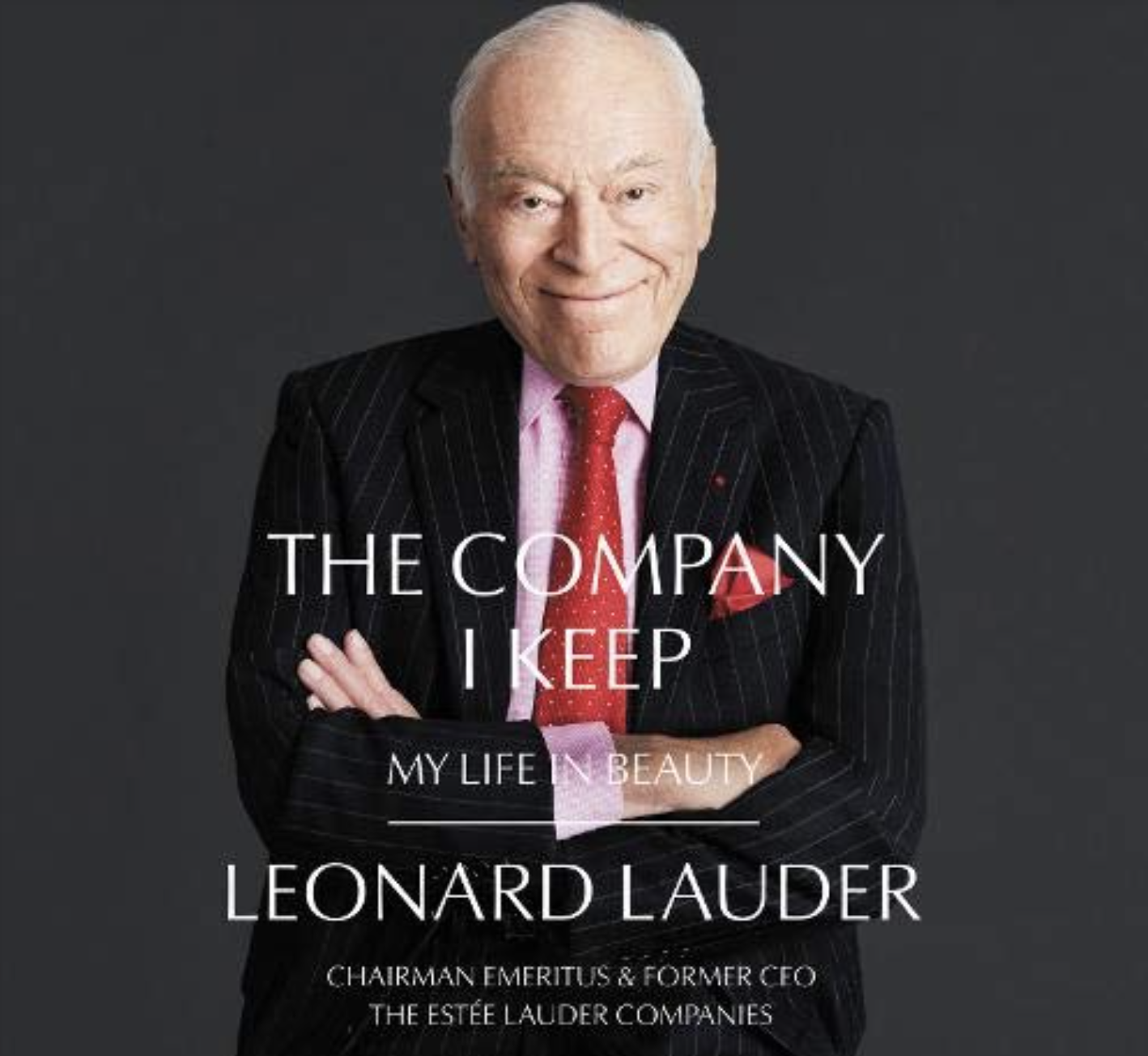
The Company I Keep - My Life in Beauty,’ Leonard A. Lauder, HarperCollins 2020.
‘Key Moments of History,’ Estée Lauder Companies - website.
'The Estée Story,’ Estée Lauder Companies - website.


Follow us on Twitter : @mastersinvest
* NEW * Visit the
Blog Archive


TERMS OF USE: DISCLAIMER


Master Series: David Rolfe

Warren Buffett has long likened compounding to a snowball of sticky snow, and the longer the runway the snowball has to gather that sticky snow, the better. One manager that started rolling that ball a quarter of a century ago, was David Rolfe of Wedgewood Partners. And thanks to the power of compounding that snowball has grown a lot faster than the S&P500, with annual returns of 13.1%pa gross compared to 9.6%pa for S&P500. In part, Wedgewood’s market-beating performance stemmed from a preparedness to embrace technology stocks and challenge traditional value investing heuristics. I was fortunate to chat to David recently where we discussed his strategy, portfolio management, Berkshire and all things investing. I hope you enjoy the insights as much as I did.

Early Career

“The planets aligned for me really early in my career. Wedgewood was founded in 1988 by my current business partner Tony Guerrerio. 1988 was also coincidentally the year that I left the sell-side of the Street. I left PaineWebber in 1987 after being there for about a year and a half out of college. In early 1988, shortly after the crash in 1987, I was very fortunate to get a job as a portfolio manager at a big bank in St. Louis called Centerre Trust, the old First National Bank of St. Louis. Shortly after I joined, they merged with the second largest bank in St. Louis called Boatmen's, and they kept the name Boatmen's. So my CV says Portfolio Manager of Boatmen's Trust.

What's really key to this time period, is that the combined banks did a huge custody business. And pre-internet, it's kind of funny to think about this, we had annual reports, quarterly reports, mutual fund reports, money manager commentaries from the outside money managers that the clients used from the bank; all of that information came in and it was being filed. So my
continuing study of the great investors of the day really launched – particularly the focused managers. There's a file of all the old shareholder letters from Mason Hawkins at Southeastern before he launched the Longleaf fund, mutual fund reports from the original gang at Janus – Bailey, Craig and I think Marsico joined them in 1986.  A ton of reports from John Neff’s Windsor fund.  The great writings from George Michaelis at Source Capital. A ton of Mario Gabelli. There were annual reports from Berkshire Hathaway going back into the early 1970’s. We even had the internal corporate reports from the old Templeton Investment Counsel before Franklin bought them in 1992. It was a goldmine!

So in 1988, I became a portfolio manager and what was really fortunate for me at a very young age all of the portfolio managers at Boatmen's Trust, were assigned fully discretionary equity accounts that we could do whatever we wanted with. If you beat the S&P, you got a bonus. It was a one, two and three year rolling metric, audited by the old Arthur Andersen. I did pretty good those four years beating the S&P 500 in three of those. So our current focused strategy was born back in early 1988 and I have been on the performance clock ever since going on 33 years.

I did that for almost four years until I heard through the grapevine at a meeting of the CFA Society of St. Louis that this investment firm out in St. Louis County, had a founding CIO who was leaving. And so with track record in hand, at the ripe old age of 30 and I knew all the mysteries of the stock market at the age of 30 [laughs], I met my partner, my then boss, Tony Guerrerio.

My predecessor, God bless him, he passed away recently, what a great guy. He was very nice to me. He was older than Tony, he retired. Wedgewood only had $10 million or so under management. The other side of the business, a discount brokerage like Quick & Reilly or Schwab that kept the lights on. So literally as the new CIO I had a whiteboard to start the investment management side of Wedgewood. And I've been doing the same thing ever since 1992.”

Wedgewood Team

“There’s just four of us on the Team – but if I may brag on the crew, a highly productive crew. Tony Guerrerio, Michael Quigley and Chris Jersan and I make up the team. Tony’s primary role is as portfolio manager for our older private family relationships that go as far back prior to Tony founding Wedgewood Partners in 1988. Michael Quigley has been with Wedgewood since interning in high school. He is an ‘old,’ very experienced forty year-old since he has been on the team since 2006. Chris Jersan joined Wedgewood in 2016. Chris has extensive investment experience as both analyst and portfolio management since entering the business in 1998. Michael, Chris and I wear the CFA hats. We are all analysts and portfolio managers – essentially generalists. Given that our focused portfolio typically contains just 20 stocks I want the entire team to have a ‘career-ownership stake’ in the entire portfolio. As CIO I have veto power. The culture of the team is one of intense collaboration on security analysis and portfolio management. Key too is making fewer but more impactful decisions, plus making sure there aren’t too many cooks in the kitchen.”    

Mental Frameworks

Every successful active manager has a competitive edge. And it must be repeatableFocus is our edge. We have layered in a synthesis of the classic tenets of both growth company and value investing. Specifically, we want to own a select list of companies that are competitively advantaged earning high returns on capital, but also have the ability to reinvest a healthy portion of retained earnings at continued high rates of capital. We then try to have patience to buy at intelligent valuations. Rinse and repeat. But not too often.  Our annual portfolio turnover is typically between 20 to 25%.

We embrace the founding philosophical thoughts and wisdom from the greats like Warren Buffett, Charlie Munger, Benjamin Graham, Charlie Ellis, Sir John Templeton and such, plus the focused greats of our era. Price is what you pay, value is what you get rings true with everything we do here at Wedgewood.”

Tech Investing

Investing in ‘technology’ stocks has evolved over the years. Particularly in the so-called capital ‘V’ value crowd. I think some of these mental frameworks like circle of competence and moats and all these other Buffett, Munger type of attributes of how you should think and act are wonderful, but sometimes I think maybe people take them to extremes.

It wasn't that long ago the value investing mindset was ‘there's no such thing as value in tech, period. Technology stocks don’t have ‘moats.’  You don't know what the business models are going to look like, so how can you even estimate five or ten years out’. Only a rare specialist will possess a ‘circle of competence’ investing in tech.   

When you think back to Buffett's early aversion to tech, you've got to go back in time. Buffett made that great call to shut down his partnership in '68 and he has talked often about the conglomerates which all blew up back then. Of course there was the '73, '74 brutal market decline – really a long, slow-motion crash. But before that I think maybe a little bit less known, which I can't help but think had a significant impact on Buffett, was the tech crash of 1968 through 1970. Stocks like NCR, EDS, Control Data, Mohawk Data, that were largely hardware tech, which back in the day wasn't so much personal computing, it was tech for businesses fell 70 to 80%. It was cyclical, it was cutting edge CapEx and as the economy headed into a little bit of a recession the first thing that probably gets cut is this new tech stuff, ‘let's cut the orders for IBM, et cetera’. Even the ‘blue-chip’ tech stocks got smoked.  Texas Instruments, IBM, General Instruments, Polaroid, Xerox.  Of course the ‘Too Many Fred’ conglomerates like Litton, LTV, Levin-Townsend and Kidde literally vanished.

If you think back to the fact of how much tech was really hardware, enterprise hardware before software. And even with Microsoft in the early days of software, it was kind of boom-bust, you didn't have this subscription stuff. You would buy software and you'd get your floppy disk and then when the company came out with their new improved version a year and a half later, they did everything they could to get you to buy that. So, I get all of the elements of tech is hard to figure out, but maybe in terms of evolution, tech has evolved. Tech is very different these days and tech has vastly more consumer discretionary and non-discretionary attributes.

But for the longest time, too many in the value crowd said, ‘If Buffett can’t figure out tech, then who am I to even try?’ It became a crutch.

Well, fast forward today, and much has changed. ‘Tech’ has become quite common place across the investment style spectrum. Heck, even notable ‘deep value’ guru Seth Klarman at Baupost currently has big positions in both Facebook and Google. Even Buffett took a swing at IBM building a $14 billion position in the stock by 2015. His IBM position was notable still for being, at the time, his largest equity position by cost ever – even eclipsing his $13 billion, 500 million cost stake in Wells Fargo. IBM was a bust for him, but not to be deterred, he immediately started building a mammoth position in Apple. His cost in Apple peaked in 2018 at $36 billion.  

Speaking of Apple, we first invested in Apple in '05. It wasn't that long ago obviously that Apple was mainly hardware and some software and people viewed it as classic hardware tech, maybe a bit consumer discretionary tech. It really wasn't doing much enterprise business. Then all of a sudden, the iPod appears and boom, then here comes the iPhone and the evolution of Apple to a consumer staple began in earnest. Heck, the early iPods and iPhones were always at my kid's heads. To my kids, it wasn't even discretion, it was a utility. Sauerkraut and asparagus are discretionary to my children (laughs). So Apple's a great example I think of how tech has morphed, and next thing you know, Buffett has a multi-billion dollar position in Apple, you know, the guy who swore off technology.

I'm 59 now. I'm lucky that I got started at a pretty young age, but someone who's a portfolio manager today at a so-called value fund, if they want to call themselves that, and they're 35 or 40, I’m not sure they have any hesitancy to invest in tech, like my early generation did. It's been interesting to see how tech has evolved. In the very early days automobiles were ‘tech,’ look at say Progressive, what would Progressive’s business model look like today if they didn't whole heartily embrace tech – particularly telematics? Heck, advanced telematics is now table stakes in auto insurance.”

Evolution as an Investor

“Where we have evolved, and I think every investor has had to evolve is the Fed’s growing influence in financial markets, even back to the infamous Greenspan Put back in the late 1980’s. Back in the day the phrase ‘Don’t Fight the Fed’ was stamped on rookies’ foreheads on the first day in investing boot camp. We can thank Marty Zweig for those pearls of wisdom.  When one looks back on the DotCom boom/bust and the housing boom/bust and today with QE Infinity, it seems that the Fed has become both the arsonist and the fireman. Prior to say 2012, before central bankers barked ‘do whatever it takes’ to today’s yield control, when interest rates were allowed to find more free-market based levels, if a business was growing at say 12%, then the max P/E one might pay would be a high-teen multiple, certainly no more than say 22X unless it was a truly exceptional company. Fast forward today, 35 to 40X is the new 22X in the zero. It’s not the ‘Powell Put’ any longer, it’s become the ‘Powell Trampoline’.

And so what we've done over the last number of years is we have not been as steadfast to sell a stock outright because of valuations, we've been slower to trim it and conversely pay up a bit and build positions more slowly too. That said, we’ve maintained the discipline to sell even the best of businesses when valuations get absurd. Such was the case of our sale on NVIDIA last September.

When you look at the current valuation of our portfolio, if somebody were to have a crystal ball and they were to show me today the valuation, say, on a trailing or forward basis, if you would show me what the valuation is today, say, 10 years ago, certainly 15 years ago, I would have thought I’d gone mad.

But I think that's been a rational, intelligent adjustment to make. Let's face it, growth companies tend to be longer duration assets. Interest rates get lower, the valuation gets higher. We've learned or adjusted to the environment.  Of course, the catch is that we all know if Powell & Company announce on morning, ‘no more QE’ we all know what would happen to the stock market. It would be October 19th, 1987, The Sequel.”

Debt Levels

“If you look at a median or weighted average calculation of the debt of the companies that we own, it's never been higher than it is today over the past, since we’ve been doing this since 1992, but it hasn't been excessive. If debt capital is the cheapest capital, use it. If your equity is the cheapest, use it. Look at how successful Apple has been, borrowing super cheap money to buy back cheap enough stock to enhance their earnings per share. But Apple is the exception. Most C-Suites are terrible at capital allocation and dreadful at value-destroying share buybacks.” 

Holding Great Business Through Thick And Thin

“I need to have a page in our pitch book on the top 10 worst investment decisions at Wedgewood Partners in our 29-year history. And the one thing they all have in common, it's not necessarily valuation, it's we didn't understand how good and how resilient the business model was. We owned Home Depot for quite a while and we thought there were some problems, and there were for a few quarters or so, but we didn't get back in. Medtronic, same type of thing, Microsoft, Intuitive Surgical and United Healthcare and Amazon and Analog Devices and Apple Materials! I will admit to you, one of the hardest things when you're managing public money is on the one hand you have to take the long- term view, but you've got this quarterly score card, yearly scorecard, and I'd be less than honest if it hasn't affected us from time to time. When I think of the money that we left on the table in some of these stocks, it would have ... well, the numbers would have been even better.”

Banks As Growth Companies

“We've never invested in what I would call really deep cyclical companies like a Caterpillar or a John Deere, but in times past we have invested in more economically sensitive businesses like banks. That said, but only banks that are considerably superior to their peers. Years past we have owned the old Norwest, then Wells Fargo; the old Cherry Hill, New Jersey based Commerce Bancorp, U.S. Bancorp and MTB Bank. We own First Republic right now. If you look at their growth numbers, if you didn't know what they did, and you just looked at their numbers your jaw would be drop once you found out it’s a bank. They are incredible operators. An amazing franchise.”

New Ideas and Studying 13F’s

Myself and our team, we're always digging up new names. Always looking for that emerging diamond in the rough. One of the areas that we are constantly on the lookout for are growing mid cap companies that are doing really well. On their way to becoming a large cap stock. The minimum market cap that we would consider is $10 to $15 billion. So part and parcel of our research bench are those smaller companies that are breaking into the large cap area that we can own.

Another area we're always looking at the competitors of the stocks we currently own. Years ago we owned Intel for a long time, from that we became familiar with Micron Technology. While that didn't work out for us that well, from that experience, we came across Linear Technology, which is probably one the greatest business models I've ever seen, particularly for a semiconductor company. Linear’s voodoo analog design engineers were the 1927 Yankees.

The last area we look at is that we study 13F’s. There's a lot of smart people in this business, very smart people and I keep a watch list of many investment firms that I respect and I'm always curious to see their 13F’s, It keeps you honest and humble. And so ideas can come from a lot of different areas, but those are the big ones.”

Position Sizing

“Over the last couple of years we haven’t had much chance to swing large on new portfolio positions. We usually initiate a position at two, two and a half, maybe three percent in the hopes that we can continue to build it. Typically, we're trying to buy companies when maybe the industry's out of favor or maybe the company has hiccuped a little bit and we want to get in at decent valuation and hope to own more. So in a 20 stock portfolio in our minds, a 5% weighting is average, 7%, 8%, 9% is large. We won't own anything over 10%. And then anything under 4% is considered on the smaller side.

Very key as a focus investor all of our stocks in the portfolio have a higher weighting than the weighting in a style benchmark or the S&P 500. It's high conviction focus, high active share so why waste time with tiny positions that are either benchmark weight or too small to move the performance needle. What's challenging for a lot of managers is the likes of Apple, Microsoft and Amazon are so gigantic, unless you run a focused portfolio, even if it's one of your top holdings, chances are it's just a benchmark weight. In the Russell 1000 growth, I think the top six stocks are 40% of the benchmark.”

Focused Investing - Diversify by Business Model

“We contend focused investing doesn't have to be risky if you stick with higher quality companies, however, we think a more intelligent way to diversify is to diversify by business model. So obviously Progressive has nothing to doing with Apple in terms of their business model. We're not going to own four or five semiconductor companies, we're not going to own four or five medical device companies. We've been a long-term investor in Visa. We've never owned MasterCard at the same time, because our thinking is those business models - there are some differences on the debit side of things - but they're alike enough that if something goes wrong with Mastercard it is unlikely that Visa escapes unharmed. So the last thing we want in our portfolio is when we make our inevitable mistakes, we don't want pin action in other parts of the portfolio.”

Stock Sell-Offs

“I've got plenty of scars too when we haven't gotten it right. I remember one of the early ones, when I joined Wedgewood, I guess it was Spring of 1993. ‘Marlboro Friday’, when Philip Morris came out on a Friday morning and said, ‘We've got to cut prices, we're losing market share to some of our competitors.’ It wasn't really an expensive stock at that time, but the next trade it's down 25%. Wall Street is pretty good of ripping the band-aid off. Rooting for a stock to go down runs against the grain, but some of those opportunities in hindsight have been wonderful. Again, it's going to hurt near term in a 20 stock portfolio, but when we can take a 5% holding that gets banged up someday, now it's a 3.5% weighting, and we can make it a 7% weighting and then we're right after that, when we look back on that difficulty that day or that week, when stocks blow up like that on a hiccup, it's not a fatal hiccup, but the valuation is pricey, the damage gets done pretty quick.

Now, the ones that really hurt is where the business model has gone terribly wrong and oftentimes it could be fraud. Back in the day, we owned WorldCom, we got out when the cash flow statements started to look a little bit goofy, but we didn’t suspect fraud. Same thing with Lucent Technologies. If management wants to cook the books eventually it comes out. But those are episodes that you have to deal with. Fortunately, we've got scars, but they haven't put that dagger in our heart.

The thing that I probably admire the most are individuals who have been doing this for a long, long time, because without fail,
they've all been hit by stock blow-ups and dusted themselves right off. Think of that book by Philip Carret, ‘A Money Mind at 90’, I mean, are you kidding me? I hope they pull me out of my office in a pine box when I'm 90, that's awesome. I don't care what profession you're in, if you can write a book on what you've done when you're at 90 years of age and you're still doing it, well, how cool is that?”

Berkshire Hathaway

We sold our Berkshire Hathaway stock in 2019 after owning the stock in size since January 1999. We sold a third of our position in late May 2019 and the rest soon after in early August. All told, Berkshire stock gained about 370% over those +20 years.  The gain in the S&P 500 was about 235%. Investing in Berkshire and attending many annual meetings was a further education beyond reading and studying Mr. Buffett and Mr. Munger. A highlight of my career. The stock was terrific for our clients. 

On the first trim of Berkshire, we bought shares in Motorola Solutions (MSI). Since then (mid-May), Berkshire stock is slightly ahead of MSI, gaining about 44% versus 41% for MSI. After more buys of MSI, the stock today is our 3rd largest holding. The final sale of Berkshire really moved the needle for us. With those sale proceeds we increased our long-held position in Alphabet (GOOGL) by almost two-thirds to an 8% weighting and initiated a new position in NVIDIA (NVDA). Since then (as of mid-May again) GOOGL has gained about 90%, double that of Berkshire. GOOGL is currently our largest position at 9.6%. NVIDIA would turn out to be a moonshot. Over the course of the NVDA position we added to our original position once, trimmed twice and sold the stock in early September 2020. On the final sale of NVDA, the stock outperformed Berkshire over our holding period 215% versus 4%. Finally, we rolled the last NVDA sale proceeds into a new position in First Republic Bank (FRC). Since that purchase, FRC has gained about 67% and Berkshire Hathaway stock has gained about 39%.

Our sale thesis on Berkshire Hathaway was three-fold. First, too many capital allocation miscues. In a world of Fed-induced zero cost of capital, plus untold billions in private equity, Berkshire has long been at a competitive disadvantage in bagging gazelles and elephants. Compounding this problem, Mr. Buffett refuses to compete in investment banker-led buyout auctions and his disdain for leverage, typically a good thing, has all but rendered Mr. Buffett to, well, play solitaire while deal-making booms around he and Mr. Munger. Quite frankly, the phone rings more for the lonely Maytag repairman than it does in Omaha these days. Relatedly, we had long, long been an advocate for Buffett & Co. to cool the elephant hunting and bag the elephant in their backyard Omaha Zoo – Berkshire shares themselves (laughs). 

Capital allocation miscues, well, they've starting to add up - Precision Castparts, Kraft Heinz, Lubrizol, IBM and Wells Fargo.  On the equity portfolio let’s give credit where credit is due. Berkshire’s huge position in Apple was a terrific purchase and in elephant size as well. It really moved the needle. However, the lack of omission in the equity portfolio in large holdings of ‘Buffett-esque’ circle of competence stocks like Mastercard, Visa, Alphabet, Costco and Microsoft are head-scratchers. I understand Mr. Buffett’s reasoning on Miscrosoft that he didn’t want to take advantage of his friendship with Bill Gates, but that doesn’t square with his long friendship with Tom Murphy, key in delivering Mr. Buffett’s 1980’s-1990’s ABC/CapCities/Disney/GEICO masterstroke.  

The fact that Mr. Buffett looks like he has called off elephant hunting in lieu of buying back Berkshire stocks also reduces another related risk, that of complexity. At what point does a huge conglomerate become too big, too complex for Greg Abel to effectively manage? The supposed good news for shareholders after years of conglomeration are the seven or eight Fortune 500 sized companies within Berkshire. The bad news on this conglomeration is that Greg Abel is ultimately responsible that they are all managed well.  Tall order.  

I get the idea of ‘management by abdication’ long espoused by Mr. Buffett and Mr. Munger, but perhaps a little less abdication and a little more, what?, usurpation?, may have kept BNSF from underperforming Union Pacific, or GEICO underperforming Progressive. And speaking of GEICO, it’s been a year and a half since portfolio manager Todd Combs was named CEO of GEICO. I may be mistaken, but I thought Combs was to be a temporary CEO.  

The second part is the deteriorating quality of too many businesses within the Berkshire conglomerate, particularly in their MSR (Manufacturing, Service and Retailing) division. Outside of the recent addition of Clayton Homes in this segment, it is easy to conjecture that this group barely earns its cost of capital. We would know for sure if Mr. Buffett would provide a balance sheet for this segment. That said, the other key parts of the conglomerate are better than the average business. Again, BNSF is good, but under-performing Union Pacific. GEICO's is good, but underperforming Progressive. Berkshire Energy is fantastic, particularly on the tax credit side and their continued policy of reinvesting all of their earnings – quite unlike other large utilities. But here's the rub, you don't need Berkshire Hathaway or Mr. Buffett to get the ‘best of Berkshire.’ Who doesn’t own Apple these days? Instead of GEICO you can get Progressive on your own. Instead of Burlington Northern you can get Union Pacific on your own.  Replacing Berkshire Energy would be difficult because they're reinvesting in all their earnings, they don't pay a dividend and they have all of these tax credits. In a tax-exempt account, you can maybe buy a utility ETF and reinvest the dividends as a replacement proxy of Berkshire Energy.

The third, quite honestly, I think as the years go by now, there's significant management risk, succession risk. Mr. Buffett’s and Mr. Munger’s cognitive abilities and stamina continues to amaze, but unfortunately Father Time won’t be denied.  

Maybe one last thought on Mr. Buffett; I've have the greatest respect for Mr. Buffett.  I wouldn’t be in this business since 1986 without him as a guiding light. Mr. Buffett chooses his words carefully, both spoken and written. And I've certainly noticed, it's been remarked by many others too, it wasn't long ago, a few years ago, where he stated at annual meetings, essentially, ‘We think we have a collection of businesses that should do better against the S&P 500.’ Those words are gone. More recently the verbiage was ‘Maybe we'll keep pace with the S&P 500.’  Those words seem to be gone too. Even after the strong run of Berkshire stock versus the market since last June, the stock is still considerably behind the S&P 500 over the past three and five years. There's probably less downside in the stock relative to the S&P 500, maybe. But quite frankly, the people who hire us, want us to beat the S&P 500 and I don't think Berkshire, particularly at current valuations and its collection of businesses, will. The S&P 500, it's tough to beat, even for the best of us. I think it's going to be much tougher for an overdiversified conglomerate that isn't growing that much more than GDP. Mr. Buffett warned shareholders long ago the performance deadening perils of size. Shareholders will never again see examples of Mr. Munger’s ‘lollapalooza’ dynamism at Berkshire such as the brilliant transaction path of ABC/CapCities/Disney/GEICO/Coca-Cola.

After an incredible two decades in the stock for our clients, too many of the former competitive advantages of Buffett & Co. at Berkshire later, in our view, became disadvantages. That’s why we sold.”

Influential Books

“I finished school in late 1985 where I’d been fortunate to have a very influential investment professor, who was a stock market junkie. He dispensed with all of the textbook stuff and he just talked about the stock market. He was instrumental in pointing me to outside reading, outside of textbooks. And I was fortunate to get my hands on, in the early '80s, the classic 1980 book by John Train, The Money Masters. That was my first exposure to Buffett, Templeton, Graham, Carret, Rowe Price. It became an obsession literally overnight. I was hooked - hook, line and sinker. I got into the brokerage business in early 1986, that's when Peter Lynch's first book came out, and I didn’t want to be a salesman anymore. I wanted to be a stock picker, I wanted to be a portfolio manager, I wanted to be an analyst. 

Today we in the business are blessed with many classic, must read books. We get to sit on the broad shoulders of the greats. The Intelligent Investor; chapter 8 on margin of safety, chapter 20 introduces the concept of Mr. Market, those are must reads – every year too. But some of the early books, all of Train’s books obviously, Buffett's shareholder and his partnership letters. Even today, I'll go back and and I'll pull up say history 1981 shareholder letter, and though it’s a delightful trip down memory lane, it's still refreshing to read. It’s batting practice. Buffett’s such a great writer and it's like that old textbook ... It's like an old friend and you get to have that conversation again with that old friend.

Anything Charlie Ellis wrote. His Loser’s Game and The Paradox are among the pantheon of must reads.

But the one book that I have already mentioned that probably made the biggest impact on my career in those early formidable years back in the day was Peter Lynch's ‘One Up on Wall Street’. My two takeaways was when Peter Lynch went into some detail that even in his best years, his stock ideas, he batted just .500, one of the great investors of all time and he’s admitting that half of his stock picks don’t work out. What an eye opener. It was liberating, it really was. 

When I first got into this business, like many, I wanted perfection, I wanted every stock to work.  All the best have the proper ego and intelligence to take a loss and move on. So here's one of the greatest of all time saying, "Hey folks, half my ideas didn't work out." And then related to that, when he would say, "The worst thing that can happen is if the stock goes to zero." Now, if you're managing public money and you have too many of those, you're going to have to find another line of work, I get it. But then Lynch said, ‘The best thing that can happen is a stock may double or quadruple,’ his famous ten-bagger. 

Here comes some scars. Micron Technology, we bought that stock in March 1996, I think it was March 15, 1996. It never seemed to go up. The big demand for computer memory needed for Windows 95 and the new Pentium cpu was priced in. And DRAM surplus came on like Niagara Falls. Again, on any given day the stock wouldn't go up, and we bought some more, and more. At the same time, I'm looking at this company called Linear Technology, a completely different business model. So about six months later, we sucked it up, and we sold Micron Technology to buy Linear Technology and our clients were like, ‘Wait a minute, you're selling what technology to buy what technology, are you kidding me?’ But in the big scheme of things, I think we lost 40%, 45% on Micron and it stung, no doubt about it, but that 50% loss in one stock, hopefully we learned from it, pales in comparison to the money we made in Linear Technology. And so Peter Lynch's book, among other wonderful anecdotes he had in there, it took the pressure off me. I didn't have to be perfect and I stopped trying to be perfect, and if I stuck with the better businesses, even if I, in hindsight, I found out that I maybe paid a little bit too much for it, a growing, best of breed business often bails you out.

Summary

You can see how Rolfe’s snowball has both first gathered and then continued to gather snow. His success has been earned over long years and it’s clear that his humility in admitting investment mistakes, his openness to the thoughts and opinions of others, and his willingness to challenge those opinions - even some of the greats - have all contributed to that investment success.

I’m incredibly grateful to David for both his time and his incredible insights and look forward to the next time we can speak. In the meantime, I hope some of the insights above can help your snowball grow.

Further Reading:
Wedgewood Partners Investor Letters.

Follow us on Twitter : @mastersinvest
* NEW * Visit the
Blog Archive

TERMS OF USE: DISCLAIMER


Master Series: Francois Rochon

Let’s face it, for most, achieving decent returns from investing can be remarkably difficult at times. Achieving consistent returns is even more so, and outperforming the markets over the long term is harder still. Few investors can do it. Francois Rochon is one of those who can and has; his Rochon Global portfolio1 (that serves as a model for clients at Giverny Capital) has delivered a 15.3%2 annual compound return for nearly three decades, outperforming the benchmark3 by more than five percent per annum. By 2020’s year end, the Rochon Global portfolio’s cumulative return since inception in 1993 stands at 4,969% versus the benchmark’s 1,103%.

While Francois carries a relaxed demeanor, it masks the emotional fortitude he possesses that is required to navigate challenging market conditions. No better example of his rational composure comes to mind than during the pandemic induced collapse of global financial markets last year. In the midst of the crisis, Francois penned a 2-page memo to his partners reminding them that their portfolio of companies had the capacity to weather the crisis and he implored them not to be influenced by stock market fluctuations. In the eye of the storm, it was a lighthouse guiding investors; the Giverny portfolio had been crafted to survive the most treacherous swells, provided investors could avoid the rocks of emotion. A recount of the most important market corrections of the last sixty years and their subsequent recoveries made clear that smooth sailing ahead was inevitable [see table below].

“It is only those who sell in panic in declines who become the real losers of the volatility inherent in financial markets.” Francois Rochon - March 16, 2020

Giverny Capital Letter - 16 March 2020.

Giverny Capital Letter - 16 March 2020.

Sage advice indeed.

Francois’ genuine humility is evident in everything he does. A few years back, after reaching out to him about content for the MastersInvest site, Francois invited us to meet with him in Omaha while we were attending Berkshire’s AGM. He willingly gave us his time while we were there, and we were able to discuss a wide range of topics and learn more about his thinking, his investment philosophy and the practical art of investing.

A few weeks ago we had the opportunity to chat with Francois once more, and gain his insights into how he sees the world, some opportunities he’s finding attractive and collect some timeless investment wisdom4.

Market Crises [Covid 19]

“When valuations are low and pessimism is high and you have a long term horizon I think you have to at least stay invested. If you have available capital you just have to have faith and invest.”

Current Valuations

“I always say, high valuations, most of the time, translate into lower returns. You have to accept that. You can justify paying 50 or 60 or 70 times earnings, as some stocks trade today, by expecting many years of high growth and discounting them with a very low interest rate. But that also means that you'll have lower returns if you discount them with a lower discount rate. I believe that there are many stocks that are expensive and many quality names are trading at pretty high ratios. You have to accept that if you want to own those names you'll probably have lower returns going forward. I’m not saying negative returns but for the S&P 500 in general, I think it's going to be hard to earn a total return in the next five years of more than let’s say 6% annually, which is okay but not as high as it's been in the last decade, that's for sure.”

Opportunity Set

“We still, as always, can find great companies that trade at reasonable valuations. If you build a portfolio of such securities, I think you can do better than the average. I take the example of Markel for instance. I think Markel is a great company and the market doesn't really see it that way. I think that's one example of a company I don't believe it's trading at high valuation at all.”

Financials

“In general, everything that is seen as interest rate sensitive or financial, has come back [up] a little bit but is still out of favor. Banks or insurance companies, they're not what young and dynamic investors want to own because that's not really exciting. But you know I always say, I'll favor stable, durable, competitive advantaged, great management, good return on equity, lower valuations and I will live with the ‘dull’ nature of the business.”

“We own two banks, Bank of American and JP Morgan. I think those two banks are very well managed, they have solid balance sheets. Their stocks have rebounded lately but I still think if you own them for the next five years you'll do okay.”

Tech Stocks

“I'm not against owning technology names. I mean I've owned some of them for many, many years. If I go back to the first years like 1994, I think back then I owned Intel and Sun Microsystems. One lesson I learned is that if you look at Sun Microsystems for instance, it was a great company in 1994, I bought it at very reasonable valuation and I had a very good return. While the company still exists, as part of Oracle now, it's not as dominant. It's far from as dominant as it was 20 years ago.”

Facebook & Google

“I think the situation with Facebook and Google is a little different. I don't really see them as technology companies, they offer a service and they've built this incredible network. I think they've got an extraordinary brand. I don't see them as sensitive to technology change as a company that sells hardware or software.”

“If you look at Facebook, it's trading at around 25 times this year’s earnings. It's still growing pretty fast. I think it can grow between 15 to 20% a year going forward for the next five years. It's a very reasonable valuation. These are clean earnings, meaning that everything that has to be expensed has been expensed - like stock options for instance. That's not the case with many companies that even trade at 40, 50 times earnings [non-GAAP, without stock options expensed earnings which I'm not a big fan of. I'll do my own calculation of earnings and adjust them for the stock option expenses]. If you look at Facebook, I think the valuation is very reasonable for such an outstanding company.”

Progressive

“If you look at Progressive, the auto insurance company, they've gained market share in the last 20 years and they're as strong, their model is as strong today as it was 20 years ago. There's many technology companies you can't say that at all. How durable is the competitive advantage is a key question you have to ask when you invest in any security.”

Apple

“I think Apple is more than just a hardware product. It's really an ecosystem where there's the phone, there's all these services and the fact is today, compared with 20 years ago, your cell phone is much more important to your daily life than it used to be. So many little things in your daily lives are built into your phone. It's a big thing to change your phone today. It wasn't a big thing 15 or 20 years ago to change a phone but today it is. I think Apple’s dominance is great. The thing you have to ask yourself, once you're so dominant, how are you going to come up with a lot of growth going forward. That's a question I think you have to ask with any already dominant businesses.”

Finding Opportunities

“I love baseball and so I watch, I don't know how many games a year. I don't do it because I want to learn about baseball or be a better baseball connoisseur, it's really because I enjoy watching the game. After a while you kind of know almost all the important players, the best players, the best pitchers, and the ones that have a better batting average. You know about those players because you're interested in this game. It's similar with an art collection. I'm interested in everything in the history of art, I try to go to every major show and visit the museums in Montreal, New York City, Chicago, Los Angeles. After a while I know a lot of artists and great artists. I think I can have a general view on which ones are the most important artists, the ones I believe are really the outstanding ones that will still be considered important in 50 years.

It's a similar process when you invest in companies. You look at almost every company, even private ones, but you're more interested in the public ones so you want to learn about every important public company in the world. When you find something, a company that looks exciting, that looks like they've got this great business, you want to understand why its so great, and what's the source of their greatness. You find CEOs that you admire like Mark Leonard at Constellation Software. When you've read a lot of annual reports I think you can find, you can see when there's something special about a company because you've seen so many of them; you can find one that really stands out. It's really a daily process for the last, in the case of investments, 28 years. Just looking daily at a lot of companies because I enjoy the process. I enjoy discovering companies and learning about the history of companies and I am always on the quest of finding new companies because finding a new company is exciting.”

“When I travel in the US, I'll go to a new restaurant chain I've never heard about and try it. If I like the food, if I like the experience, I'll say lets look at the stock. But sometimes just reading a friend’s annual letter and, "Oh, my friend bought this new company and I don't know about it so I'll read about it." I know how he thinks so since I share a similar investment philosophy as him, it might be at least worth reading. That's one source of ideas of course.”

Investment Edge

“I think a lot of opportunities in the stock market arise not because we have more insights into understanding businesses. I think a lot of people can pretty quickly identify the great businesses. I think our edge as investors is really our behaviour, it’s not to focus too much on the short term but really we're there for the next five to ten years. So even a great company can have some periods of uncertainties in their business or short term problem or if there is a recession and that makes the company growth rate be a little lower for a while; if we think the fundamentals over the long term are intact, it can be an opportunity for us. So our edge is really our behaviour and our long term horizon which is so rare today because people want good results in a very short time period. Of course, people can do whatever they want as an investment style; but we believe that the short term horizon of others is probably at the source of many of our investment opportunities because we have a longer term horizon than most people.”

Autohome

“There's some opportunity in the internet and technology sector, Facebook is one. We own a Chinese company called Autohome, which is by far the leader in China, a website where you can do some research about buying a new car or some car related products. It's a great company and I think Wall Street is a little worried about a Chinese company listed in the US so the stock has gone down at least 10 to 15% recently. If you look at Autohome’s valuation, I think it trades at something like 20 times this year's earnings. I think it can be a 15, 16, 17% grower going forward. It’s very well managed, the balance sheet is very good and the valuation is very reasonable. It's at a discount to the S&P valuation ratio.”

“Where did I find Autohome? I like to read annual letters from great managers. I think it was a top holding of a money management firm I admire in the US. I'd never heard about that company so I read the annual letter; I went to the website. I thought it was a good company and we talked to management and we did all the research and decided to buy shares.”

On Berkshire

“Warren Buffett is such a good steward of capital, he doesn't do anything risky. He doesn't use debt, he doesn't acquire companies by paying very high ratios. So of course in the last five years it's been hard for him to acquire companies because many other acquiring entities are using debt, are paying high ratios - the competition has been much less prudent than he is. Knowing Warren, that won't change his approach. Preservation of capital I think is still a cornerstone of his approach. He used to say that the first rule is don't lose money and rule number two rule is don't forget rule number one. He still is very prudent. This prudence has been probably one reason he has so much cash on the balance sheet, I think it's something like 140 billion dollars. That's a lot of capital because I don't know exactly the numbers but it would represent something, at least a quarter of the equity. So when a quarter of the equity is invested in something that yields close to 0%, it's hard for the whole thing to earn 10 to 12%. The rest has to compensate and it's very hard to compensate that much. That's been a drag on the return of Berkshire.”

“At some point I think until [company] valuations come back a little bit to more reasonable levels, I think the best thing he can do is buy back stock and return the excess capital to shareholders. If he continues to do that, and he's been doing that for the last two quarters very aggressively, I think it's nine billion per quarter in the last two quarters. From what the annual letter said he’s still doing this in the first quarter of 2021. That's $36 billion a year so that's about 7% of the market value of Berkshire. Well if you return 7% per year going forward, I think it's going to be a better stock than it was in the last few years, at least relative to the S&P 500 so I still think the whole thing can continue to grow at 5 or 6% annually at least. But if you add a 7% buyback, it's really a good return of capital to the shareholders. I think that Berkshire can do something like 12% going forward.”

Evolving

“The world is always changing and you have to evolve with it. If you don't evolve you'll probably stay behind, very slowly but surely. You have to accept that you have to always rethink everything and do postmortems on investments on what went well and what went wrong. We're doing that on at least a yearly basis with our yearly medals for the top three mistakes.”

Mistakes & Margin of Safety

“Year after year what I realise is most mistakes I've made is not paying perhaps a higher price than I should have for great companies. I think I probably have already evolved on that. I'm ready to pay 20 times earnings for good growth companies but sometimes there's not that much difference between 20 times and 25 times. There is between 20 and 60 but between 20 and 25, perhaps I'm trying to be a little too precise, or to prudent, and sometimes miss the big picture that if you find a great growth company and it doubles its earnings every five years, well perhaps valuation to some degree should be flexible a little bit. So I probably have evolved a little bit over the years with that.”

“You have to be careful because how much do you stretch? You can stretch to 25 and then 30 and then 40, I mean it never ends. You have to accept you still want a margin of safety and I think that's the key element in The Intelligent Investor and when you read Ben Graham’s writings. Seventy years later, I believe that the key lesson from Ben is still the importance of margin of safety.”

“The margin of safety is not just in the price you pay, it's also in the quality of the business, it's in the balance sheet of the business and the accounting and also in terms of the quality of top management. When we bought shares of Constellation Software, I don't remember how much we paid but we paid a reasonable valuation, I think 18 or 19 times earnings. To us the real margin of safety was Mark Leonard. We thought he was a great investor, a great manager and I mean to us it was not the valuation that was the key criteria it was really because of management.”

Portfolio Companies

“I think if you look at the portfolio, there's some differences in the style of the businesses but they all have similar themes. They are all great business, already profitable, already dominant in their industry, that have good growth prospects - not 40% a year - but between let's say 8 and 20% more or less. They have good balance sheets, we like the management and we think they're good capital allocators. All the companies we own, we believe share those characteristics. They're in different industries, they're different sizes. We own some small companies and some very large ones, but they have a similar style of businesses.

I know that I have some colleagues that would say, ‘Well, I invest in this young company that is not profitable yet but if everything goes well it can increase 10 times.’ Well to me that's a little risky. I've seen so many companies disappear over the years and I don't want to own a company that needs to go to the capital markets on a regular basis because either it has too much debt or is not profitable. You never know when there's going to be a financial crisis. I've seen a few of them in the last 28 years. I mean in 2000, 2001, and 2002 when the tech bubble burst it was very, very hard for those technology companies to get new financing. If you look at 2008 or 2009, there were some companies that had some debt and went to the financial markets and couldn't find capital at all. So I don't want to own companies that if there's a crisis or a recession, could be in the weak position of having to raise capital at very bad levels for shareholders or through expensive debt.

To avoid that I just avoid companies that are not profitable or have too much debt on the balance sheet. Even though I see that there is some upside potential, I see the downside in case of a recession or financial crisis because I've seen and I’ve lived through them. So I know they can happen and they will probably... I don't want to use the word conditional because it's not a conditional situation. There'll be recessions, there'll be crisis and I want the portfolio to survive them. We want the companies to be survivors not ones that will need to go to the capital markets at the worst possible time.”

Partner with Management

“There's all sorts of reason why some companies are not properly valued by the stock market. Sometimes it's just because it's non-exciting; a little dull business or a low profile manager. Some CEOs speak very well, they're good salesmen. That’s fine, that’s business. I like to see CEOs as partners because that's really what you are doing when you are buying shares; you're becoming a partner with the top management CEOs. I want partners that are low profile, are really focused on building something for the long run, ideally that are humble. They're not trying to pump up their stock. They want to build wealth over the long run, they're trying to build solid businesses and they know that in the end if the company does well the stock will eventually reflect that. They know that.”

Book Recommendations

“There's the classics of course like the books of Ben Graham, Peter Lynch and Philip Fisher. John Train wrote two good books in the 80’s, ‘The Money Masters’ and ‘The New Money Masters,’ which I liked. William Thorndike wrote the ‘Outsiders’ which was one of my favourite books over the last few years. Larry Cunningham wrote a few books on Warren Buffet and Berkshire Hathaway which I think are very interesting. My friend Guy Spier wrote the book, 'The Education of a Value Investor’.


There's older books such as John Paul Getty’s book, ‘How to be Rich’. It contains a chapter on stock market investing which I think is very good. You can read biographies or autobiographies by great business builders. Many years ago I read the book by David Packard which was very good and Ken Iverson’s, the guy that built Nucor. Bill Gates’ book from 1994 when the internet was just starting called ‘The Road Ahead’ was very good. I’d also recommend a book by S. Cathy Truett who started Chick-fil-A, the chicken burger chain. I thought that book, ‘How did you do it Truett?,’ was really good. I've been hoping that Chick-fil-A becomes a public company since then.”

Summary

Francois’ passion for investing is as obvious as his humility, and is mirrored in his deep interest in both baseball and art. His returns have been nothing short of outstanding over the years and are the envy of many. We’re very grateful to Francois once again for his insights and thoughts on matters. Truly he has painted a masterpiece of his own and we expect that his batting record will only continue to climb in the years to come.


givernydisc.PNG

Further Reading:
‘Investment Masterpieces - Francois Rochon’ - Investment Masters Class, 2017.
Giverny Capital Annual Letters


Follow us on Twitter : @mastersinvest

TERMS OF USE: DISCLAIMER


The Beauty of Stock Markets

Screen Shot 2019-11-10 at 6.42.11 am.png

Step right up, step right up! Welcome to the Stock Market Circus, an unruly bazaar that is absolutely chock full of brazen salespeople, fortune tellers, sham wealth remedies, high-frequency pirates, fallen angels, pigs with lipstick and much, much more. This is a place where crazy things can happen; stocks can take exponential leaps only to then crash and burn, companies that are here today can be gone by tomorrow, and perceived good news that usually brings higher prices might actually trigger shock selling. Its not a place for the faint-hearted; this Circus abounds with metaphors like death spirals, squeezes, collapses and crashes, none of which engenders feelings of security. And if you want to leave, the exits aren’t always big enough. For the uninitiated, this can be a truly scary place.

If you take a step back however, there is beauty to be found in this madness. You just need the right perspective. A few home truths, a grasp of history and an ability to filter out the noise can go a long way to help investors in this respect. Let’s dive in…

Silly Prices

"The beauty of stocks is that they do sell at silly prices from time to time. That's how Charlie and I have gotten rich." Warren Buffett

Buffett likes to remind us that on occasion you will get silly prices in the stock market. That’s the beauty of it. Silly prices are often the result of emotionally charged behaviour rather than anything fundamental. The market’s ease of access and low cost of transacting encourages quick action, hence turning the psychological short cuts that saved our ancestors on the savannah into an impediment to investment success.

When we’re fearful, we look to other people for guidance. Yet, the truth of the matter is they’re just as likely to be acting on their own fears; reacting emotionally rather than rationally.

When you throw in the dominant quantitative and passive funds of today, who’ve no idea what they own and are triggered by price movements, you’ve got a recipe for significant mis-pricing - stock prices become untethered from business value. For those who are able to keep their cool during these situations, opportunity abounds.

"The stock market will offer you opportunities for profit, percentage-wise, that you’ll never see, in terms of negotiated purchase of business." Warren Buffett

“Research has shown that over the last century, U.S. stock prices have been three times more volatile than fundamentals.” Frank Martin

“We believe that shares spend relatively little time at ‘fair value’. Rather, lengthy periods of overvaluation are followed by lengthy periods of undervaluation… Extreme valuation spreads in the equity market aren’t necessarily rare or short-lived.” Marathon AM

Nick Sleep of Nomad Partners recognised that over time, all businesses can be meaningfully mis-priced.

“We can all observe that stock prices, set in an auction market, are more volatile than business values. Several studies and casual observation reveal that individual prices oscillate widely around a central price year in year out, and for no apparent reason. Certainly, business values don’t do this. Over time, this offers the prospect that any business, indeed all businesses, will be meaningfully mis-priced.” Nick Sleep

An analysis by John Huber at Saber Capital highlights this point. Mr Huber shows the average intra-year difference between the high and low of the ten largest stocks in the S&P500 in 2019 was a staggering 44%! [and people talk of an efficient market?]

Stock prices move much more than true values do even in the largest stocks, which by definition causes mis-pricing at times. This isn’t due to a lack of information, it’s simply good old-fashioned human nature, and unlike the price of semiconductors or the value of information, human behaviour is not going to change. The biggest edge is in understanding this simple concept, and then being prepared to capitalise on it when it’s appropriate.” John Huber

Source: Saber Capital Letter Q3 2019.

Source: Saber Capital Letter Q3 2019.

The opportunity conferred by extreme price volatility isn’t lost on the Investment Masters. In many ways, the great investors are arbitrageurs of human nature.

Stock Markets Compound

The long-term history of the US stock market is one of rising prices. A key contributing factor to a rising stock market has been the earnings retained by corporates that are re-invested for the benefit of shareholders.

“Equities can compound in value in a way that investments in other asset classes, such as bonds and real estate, cannot. The reason for this is quite simple: companies retain a portion of the profits they generate to re-invest in the business.Terry Smith

“To report what Edgar Lawrence Smith discovered, I will quote a legendary thinker - John Maynard Keynes, who in 1925 reviewed the book, ‘Common Stocks for Long-Term Investment’, thereby putting it on the map. In his review, Keynes described ‘perhaps Mr. Smith's most important point ... and certainly his most novel point. Well-managed industrial companies do not, as a rule, distribute to the shareholders the whole of their earned profits. In good years, if not in all years, they retain a part of their profits and put them back in the business. Thus there is an element of compound interest operating in favour of a sound industrial investment.’ It was that simple. It wasn't even news. People certainly knew that companies were not paying out 100% of their earnings. But investors hadn't thought through the implications of the point. Here, though, was this guy Smith saying, ‘Why do stocks typically outperform bonds? A major reason is that businesses retain earnings, with these going on to generate still more earnings--and dividends, too.’" Warren Buffett

“In the 1920’s, a brilliant and important book by Edgar Smith, ‘Common Stocks for Long-Term Investment’, became a prime market influence. It was still popular in the fall of 1929, but most people read it too late. Mr. Smith advocated the benefit to corporate growth of the application of retained earnings and depreciation. Thus capital appreciates. The book may have been influential in changing accepted multiples of 10 x earnings to higher multiples of 20 to 30 x earnings.” Roy Neuberger

Retained earnings have propelled American business throughout our country’s history. What worked for Carnegie and Rockefeller has, over the years, worked its magic for millions of shareholders as well.” Warren Buffett

While markets can be volatile, the returns achieved by corporate America have remained remarkably consistent. Free trade, an entrepreneurial spirit and continuous innovation have been the hallmarks of America’s success.

“Historically, US companies increase their profits by about 6-7% per year and pay a dividend of around 2%. This generates an annual return of 8-9% from simply owning a solid group of companies.” Francois Rochon

“Anyone who examines the aggregate returns that have been earned by companies during the postwar years will discover something extraordinary: the returns on equity have in fact not varied much at all.” Warren Buffett

The S&P 500 produces 12% or 13% returns on capital and it retains and reinvests about half of its earnings, and so that should generate 6% or 7% earnings growth over the long run. Then the rest of the earnings can be returned to you as dividends and share repurchases. If you can get 6% earnings growth in the long run, plus a couple percent from dividends and buybacks, then you're going to achieve a high single digit rate of return by owning that asset class in the long run. Obviously, it's going to be very lumpy, but if you have a long term, 10-year plus time horizon, that is the rate of internal compounding that I think American business will continue to achieve over time.” John Huber

Attractive Long Term Returns

Over the long haul the stock market has delivered attractive returns. While the Saber Capital table above makes clear the potential for short-term volatility, the potential for loss diminishes with time. Certainly that’s been the case in history.

The chart below highlights that over the last c150 years, investors who’ve taken a twenty year view have earned positive returns 100% of the time.

“The historical odds of making money in U.S. markets are c50/50 over one-day periods, 68% in one-year periods, 88% in 10-year periods, and (so far) 100% in 20 year periods.” Morgan Housel

Source: Collaborativefund.com - Morgan Housel.

Source: Collaborativefund.com - Morgan Housel.

Not only have investors been blessed with positive returns a good majority of the time, those returns have ordinarily been pretty solid. For context, in the last one hundred years the worst 25-year return in the market was four times capital. More generally, it’s been twelve times or more.

“You want to remind people that the worst 25-year period in the past 100 years was a 4-times return on their capital. Typically, a 25-year investor gets 12 times return or more. So, to me, being able to share that message with our younger analysts, with our shareholders and potential shareholders helps me keep it together when stocks are behaving differently than we anticipate they would.” Bill Nygren

Even stock market crashes fade over time. The worst percentage fall in stock market history, the 1987 crash, is a blip on the long term chart [see below]. What a wonderful friend compounding has been for the long term investor.

Dow Jones Industrial Average - 1987 Crash [Source; Bloomberg].

Dow Jones Industrial Average - 1987 Crash [Source; Bloomberg].

Asymmetric

It’s been found that humans find symmetrical patterns more attractive than asymmetrical ones. When it comes to the stock market however, it’s the asymmetry that beautiful. When you invest, the most you can lose is 100% of your capital yet the opportunity exists to make multiples of your investment.

“The asymmetric payoff structure (you can make far more if you’re right about a stock than you can lose if you’re wrong) is the fundamental attraction of investing in equity markets.” James Anderson

“One of the interesting dynamics of buying stock in a company is that our downside is known. In the worst case, we can lose 100% of our investment. In the best case, we can make many multiples of our original investment.” Scott Miller

Long Term Gains

To harness the market’s beauty you need to be invested. Sitting on the sidelines won’t earn returns. While short term market moves can be volatile, history has shown investing in high quality businesses has been a winning strategy over the long term.

“I think that this time would be as good as any other time or as bad as any other time. I have been at this business for 40 years now, so I have been through all kinds of times. That’s a long time to be at one trade, and I have done it every day. I couldn’t tell you that I knew any particular day, whether it was today or 10, 15, 20 or 40 years ago that actually would have been the right day for someone to invest. The right thing to do is to enter the investment scene, whether you are just an individual investor, someone who might be approaching it on a career basis, or a professional investor already working to hone your skill set.” David Polen

“All I can tell you as an increasingly experienced investor, is that I have never known a time when people weren’t worried about the sort of issues that you adduce and those people that spent too much time worrying about those issues, didn’t get invested and missed out on a opportunity to protect their wealth against inflation and indeed, to growth their wealth in real terms. So the rational way to deal with these sports of concerns, it may not be the correct thing, but the rational thing is to ignore them and be invested in fine businesses.” Nick Train

“The stock market goes up over time. Developed markets should increase by around 6% p.a. over long periods of time, implying a double every 12 years, a quadruple every 24 years, and so on. If you have a 40 year plus time horizon and an investment opportunity that will go up 8-fold, how much is there to think about? The smart money is invested, not on the side-lines fretting about what to do.” Robert Vinall

Get Rich Slowly

Compounding’s power reveals itself over time. While short term gains may look small, with time they mushroom. You don’t need to hit the ball out the park every year to build long term wealth. In fact, doing so, may increase the risk of losing capital. And losing capital is what impedes compounding. While everyone wants it all today, the world’s best recognise the beauty in getting rich slowly.

“At the beginning of the AGM of the Berkshire Hathaway Company they show this little video and each year Buffett is asked what’s the main difference between himself and the average investor, and he answers patience. And there is so little of it these days. Has anyone heard of getting rich slowly?” Nick Sleep

“The biggest thing about making money is time. You don’t have to be particularly smart you just have to be patient.” Warren Buffett

"The desire to get rich fast is pretty dangerous.” Charlie Munger

“People would rather be promised a (presumably) winning lottery ticket next week than an opportunity to get rich slowly.” Warren Buffett

“Ninety-nine percent of investors shouldn’t try to get rich too quickly; it’s too risky. Try to get rich slowly.” Sir John Templeton

“Small investors who get into trouble, I think, are those who try to get rich quick. They are in and out of the market in a flash and don’t take the time to learn. That’s a dangerous game.” Roy Neuberger

"In investing, time is your friend. The people who make a lot of money in investing are those that buy great businesses, in our case with expanding moats, and they give them time to work for them over 5, 10 and 15 year pulls. All the people that have created a lot of wealth for themselves didn't do it in a week, or 3 months or 6 months. They did it over a generation." Paul Black

“A good summary of investing history is that stocks pay a fortune in the long run but seek punitive damages when you try to be paid sooner. Virtually all investing mistakes are rooted in people looking at long-term market returns and saying, “That’s nice, but can I have it all faster?” Morgan Housel

Summary

On any given day it’s pretty much a coin toss what markets will do, and because of it you must be able to brace yourself for volatility. It’s a function of human nature and that’s not going to change anytime soon. Discard the received dogma that volatility is risk. While most business schools trumpet this notion, the great investors have recognised the beauty in volatile prices - they can present attractive entry points which ordinarily don’t surface in most markets. Little wonder these Investment Masters consider volatility as the friend of the long-term investor.

While there’s little sense to be made in the daily sound bites and market gyrations, as time expands, the markets longer term beauty reveals itself. Companies values compound and together cause markets to rise. You just have to lengthen your perspective to see it.

Whilst we’ve covered some of the attractive features of the stock market, I’m sure you can think of plenty of others; accessing the world’s best management teams, the ability to work from remote locations, not having a boss - there’s plenty more. Successful investing requires the right attitude, perspective and planning; manage your emotions, recognise and respect the power of compounding and exercise patience.

The market has a history of attractive long term returns; all you need to do is step back to see it’s beauty.


Follow us on Twitter : 
@mastersinvest

TERMS OF USE: DISCLAIMER


Beyond Investing

beyond.PNG

In 2014, the Nomad Investment Partnership was it, and their last few years of returns were nothing short of astonishing. A 2012 return of 39.8% trumped the MSCI’s 15.8%, and a year later, Nomad clocked up a staggering 62.2% return, decimating the MSCI’s 26.7%. Indeed, in four of their last five years Nomad delivered returns of 40% or more. Without a doubt the partnership founders, Nick Sleep and Qais Zakaria were at the top of their game. Still young, in their mid-40’s, they possessed a magnet for capital via their track record of 20%+ annualised returns. The opportunity to raise billions of capital was there for the taking. Yet, after two decades of investing and fourteen years running Nomad, Sleep and Zakaria decided it was time to hang up their boots. They’d achieved their ‘X-amount’. For them, it was time to move beyond investing.

From the early days, Sleep and Zakaria had mused over a concept they referred to as the ‘X-amount’. This was an amount of money they deemed necessary to pay the bills and have a nice lifestyle. Beyond which, they felt the surplus funds could be an anchor, stripping meaning from their lives by distorting relationships with friends and family and encouraging an indulgent existence.

Like many of the Investment Masters, Sleep and Zakaria recognised the good fortune afforded to successful investors, and took it upon themselves to direct their excess gains towards charitable causes. Both established foundations which continue to benefit from their investing prowess; almost six years on from closing Nomad to external capital, the fund has achieved an average twenty percent return for twenty years.

There is certainly more to life than investing. Caring for the environment, supporting society and helping others less fortunate helps make the world a better place. The rewards of investing are often non-linear, rarely are they commensurate with the commitment, dedication and work required to achieve them. They are unique to the world of investing and with thoughtful application they can support the foundations of a better world.

“My luck was accentuated by my living in a market system that sometimes produces distorted results, though overall it serves our country well. I’ve worked in an economy that rewards someone who saves the lives of others on a battlefield with a medal, rewards a great teacher with thank-you notes from parents, but rewards those who can detect the mis-pricing of securities with sums reaching into the billions. In short, fate’s distribution of long straws is wildly capricious.” Warren Buffett

“Investors can think their way to success without seeming to work in the traditional sense and the payoff in capitalism from stock picking can be extraordinary.” Nick Sleep

One of my favourite sayings is, ‘You can’t take a pin with you.’ Money won’t deliver happiness. Meaning will, however, and many of the world's greatest investors have recognised this. Below are some of the random musings I’ve collected over the years.

Giving Pledge

Screen Shot 2021-03-14 at 7.57.09 am.png

In 2010, Bill and Melinda Gates and Warren Buffett created the Giving Pledge, a movement of philanthropists who’ve committed to giving the majority of their wealth to philanthropy or charitable causes, either during their lifetimes or in their wills. In addition to Buffett, many of the Investment Masters have also signed the pledge, including Ray Dalio, Paul Singer, Paul Tudor Jones, Chris Hohn, Bill Ackman, Jim Simons, Mario Gabelli, Seth Klarman, Jeremy Grantham, Ken Langone, David Rubenstein, Tom Steyer, T. Boone Pickens and Julian Robertson.

It’s quite possible Warren Buffett will be remembered more by his philanthropic endeavours than his investing acumen.

“Gifting to Bill Gates his wealth to take on, that was the greatest achievement of Warren Buffett. He’s respected as an investor, but he should be more respected as a philanthropist.” Chris Hohn

Life Lessons

Studying the world’s greatest investors offers not just lessons in investment but lessons for living a successful and fulfilling life. While Buffett is beyond rich, he chooses to reside in a house purchased in 1958 for $31,500, whose value today reflects less than 0.001% of his wealth. Buffett’s favourite restaurant is the low-key local Omaha steak diner, Gorat’s, while his favorite meal remains a burger washed down with a can of Coke.

“I think it’s also probably surprising to people that the money doesn’t matter to him. He made the money sort of by accident because he was really good at doing what he loved, and when you do that particular thing really well, you end up with a whole bunch of money. But it’s really true that he does not care about having a bunch of money.” Susie Buffett [Warren’s daughter]

“When I look at a bunch of stock certificates in a safe deposit box that were put there 50 years ago or so, they have absolutely no utility to me; zero. They can’t do anything for me in life. I mean they can’t let me consume 7,000 calories a day instead of 3,000. There’s nothing they can do. I’ve got everything in the world I want, and I’ve had it for decades. If I wanted something additionally, I’d go buy it.” Warren Buffett

“I could have 10 houses, but, you know, I could buy a hotel to live in, you know. But would I be happier? It would be crazy. Charlie and I both like fairly simple lives.” Warren Buffett

Purpose

People need purpose and meaning in life. One of my favourite books, ‘Man’s Search For Meaning’ was written by Viktor Frankl, a survivor of the Nazi concentration camps. His experience at Auschwitz reinforced a key idea: life is not a quest for pleasure, but a quest for meaning. The greatest task for any person is to find meaning in his or her life.

Screen Shot 2021-03-14 at 8.57.54 am.png

Frankl’s insights are echoed in the empowering stories of James Stockdale and Eddie Jaku. Stockdale was a vice admiral in the US Navy who endured seven and a half years as a Prisoner of War - tortured, isolated in solitary confinement and restrained in leg irons - after being shot down above North Vietnam. Eddie Jaku, also a holocaust survivor, endured seven years of unimaginable horrors across Nazi concentration camps in World War II.

While each of their stories was forged in the extremes of terrible suffering, they highlight a common theme - mankind’s need of purpose.

Inheritance

Without purpose, one’s life lacks meaning. Most people cherish the idea of inheriting a fortune, yet there can be a ‘dark side of wealth’. Another favourite book is ‘Fortune’s Children - the Fall of the House of Vanderbilt.’ In 1877, Cornelius Vanderbilt was the richest man in the world. Fifty years after his death, one of his direct descendants died penniless, and no Vanderbilt was counted among the world’s richest people. The story recounts an extravagant lifestyle of spending by his heirs but also the misery, burden and loneliness that inherited wealth can inflict. By his early sixties, Vanderbilt’s son confessed to his family..

fortune-s-children.jpg

“The care of $200,000,000 is too great a load for my brain or back to bear. It is enough to kill a man. I have no son whom I am willing to afflict with the terrible burden. There is no pleasure to be got out of it as an offset - no good of any kind. I have no real gratification or enjoyments of any sort more than my neighbour on the next block who is worth only half a million. So when I lay down this heavy responsibility, I want my sons to divide it, and share the worry which it will cost to keep it.”

This hasn’t gone unrecognised by many of the world’s most successful investors and business owners.

“I think Kay Graham was quoting her father at the time but — some years back as saying, ‘If you’re quite rich, probably the idea of leaving your children enough so they can do anything, but not enough so they can do nothing, is not a bad formula.’” Warren Buffett

“If you have a lot of money, giving all your money to your kids is a mistake which will deprive them of self-achievement. I’ve given my kids a reasonable sum of money. One made it all on his own, one needed it because he’s a scientist, didn’t make a lot of money, but I wouldn’t give all my money to my kids, it’s just so damaging.” Leon Cooperman

“You can always give all your money to your children, but usually people who inherit great sums may not be as productive citizens as people who don’t inherit as much.” David Rubenstein

“I’m not a big fan of inherited wealth. It generally does more harm than good.” T. Boone Pickens

"My children are in a privileged position. I am willing to give them enough help to do something, but I am not willing to give them enough help to do nothing. Because it would destroy them." Terry Smith

“Do you really want your children to be like those who thought themselves your betters while you struggled? Letting them have too much money is really a lot worse than letting them have too little. I've watched family after family destroyed by excessive distributions to descendants, and by family patriarchs' and matriarchs' attempts to be able to control others' behavior from the grave. With wealth comes power. With power comes the ability to damage. Gifts and inheritances influence those you love most. Inheriting too much money at one time destroys initiative, distorts reality, and breeds arrogance. When the money runs out - as it always does - those left bereft of cash can't cope.” Michael Bloomberg

“We will make sure we’ve given most of our money away by the time we die, with the exception of what we leave to our kids. We want to pass along enough for them to live reasonably well, but not so much that they can do anything foolish with it. We want them to have a roof over their heads, but we also want them to have the meaning in their lives that comes from having to make their own way.” Ken Langone

“Why should men leave great fortunes to their children? If this is done from affection, is it not misguided affection? Observation teaches that, generally speaking, it is not well for the children that they should be so burdened.” Andrew Carnegie

“It is every man’s duty to strive to give his children the best possible equipment for life. But to leave millions to young sons is dangerous.” A.P Giannini

“Inherited wealth is as certain a death to ambition as cocaine is to morality.” William Vanderbilt

Possessions

We live in a society that encourages consumption and materialism. Keeping up with the Jones’ has been a long held ambition of many. The sad truth of this matter is that it’s impossible to keep up; when everyone is striving for more, there is no finish line and the race is eternal. Personal possessions will only keep accumulating over time.

“Possession’s don’t bring anybody happiness and most people don’t believe it until you experience it. Your possessions in many ways can become burdens.” James Dinan 

“Money is a wonderful commodity to have, but the more one possesses, the more involved and complicated become his dealings and relationships with people.” John P Getty

“We should have guys like Sir John Templeton, Warren Buffett, Charlie Munger as examples to all of us. The legacy of these men should be the focal point of our lives because it doesn’t take long to realize that money buys nothing of value. Everything that is truly worthy is free. That lesson comes hard to some people, but the sooner it comes, the better.” Frank Martin

“Some material things make my life more enjoyable; many, however, would not… Too often, a vast collection of possessions ends up possessing its owner.” Warren Buffett

“No man actually owns a fortune. It owns him.” A.P Giannini

“The first thing you could do [with money] is you could pleasure yourself. You could buy a plane, you could buy cars, you could buy homes, you could buy art. If you’re an art collector you never have enough money because you can spend $100 million on one canvas. I don’t collect art and I happen to have a view that material possessions brings with it aggravation. I’m a less is more kind of guy.” Leon Cooperman

Health

This one speaks for itself. There’s no such thing as the richest man in a graveyard, so you better ensure you look after yourself while you’re alive.

“A healthy man wants a thousand things, a sick man only wants one.” Confucius

“Stay fit. You don’t want to get old and feel bad. You’ll also get a lot more accomplished and feel better about yourself if you stay fit. I didn’t make it to 91 by neglecting my health.” T Boone Pickens

"You get exactly one mind & body in this world & you can't start taking care of it when you're 50. By that time you'll have rusted out if you haven't done anything. You should really remember you've got just one mind & body to get through life with & do the most with it." Warren Buffett

Time is Money

Time is one of those rare finite resources. We only get so much of it, and regardless of how much money we have, we can’t buy more. So it becomes infinitely more valuable than any possession or trinket.

“If you asked me to trade away a very significant percentage of my net worth, either for some extra years in life, or being able to do, during those years, what I want to do, you know, I’d do it in a second.” Warren Buffett

“Many times over the years, I was fortunate enough to speak at student commencement ceremonies, and that gave me the chance to look out into a sea of the future and share some of these thoughts with young minds. My favourite of these speeches included my grandchildren in the audience. What I would tell them was this Depression-era baby from tiny Holdenville, Oklahoma — that wide expanse where the pavement ends, the West begins, and the Rock Island crosses the Frisco — lived a pretty good life. In those speeches, I’d always offer these future leaders a deal: I would trade them my wealth and success, my 68,000-acre ranch and private jet, in exchange for their seat in the audience. That way, I told them, I’d get the opportunity to start over, experience every opportunity America has to offer.” T. Boone Pickens

Last year, I was saddened by the loss of Jon Boorman, who died of cancer. I didn’t know Jon but I enjoyed his financial posts on twitter. He seemed to have his priorities right. He wrote this before he was diagnosed with cancer. He was a real stoic.

“When you’re young, you have so much time but never enough money. When you’re old you have money but never enough time. How you perceive and value time and money will change many times throughout your life, but at the end there’s only one you’ll want more of, would give anything for, but it won’t be available at any price. Cherish it while you can.” Jon Boorman

Pleasure

Many of the Investment Masters have chosen to give away their money while they are alive. Helping others gives pleasure and investors can direct the funds where they feel they’re most needed.

I enjoyed a recent Forbes article, ‘The Billionaire Who Wanted To Die Broke . . . Is Now Officially Broke’ which recounts the story of Chuck Feeney, the former billionaire co-founder of retail giant Duty Free Shoppers, who pioneered the ‘Giving While Living’ approach while donating over $8 billion to worthwhile causes.

“I see little reason to delay giving when so much good can be achieved through supporting worthwhile causes. Besides, it’s a lot more fun to give while you live than give while you're dead.” Chuck Feeney

Many of the Investment Masters have chosen a route similar to Chuck Feeney.

“You know, I get a lot of pleasure out of doing these things and if I didn’t do them and I died with more money, would I be a happier person? I don’t think so.” David Rubenstein

“Hopefully, we would live long enough to also see the consequences of our [charitable] actions; we would have to eat our own cooking, as it were. Previous generations that retired in old age and died soon after, have not always had that opportunity.” Nick Sleep

“Over the years, the emotional and psychological returns I have earned from charitable giving have been enormous. The more I do for others, the happier I am. The happiness and optimism I have obtained from helping others are a big part of what keeps me sane.. I get tremendous pleasure from helping others. It's what makes my life worth living.” Bill Ackman

“Philanthropy has had a huge role in my life. It’s brought me great joy. I give money away because I love the joy of watching lives change and being able to shape things. I don’t feel guilty about the money I made but I do think it’s strange that I’ve gotten the financial remuneration I have versus a doctor. If I can take that money and raise the the prospects for the American Dream in underserved neighbourhoods, provide scholarships or work on the environment it just brings great joy.” Stanley Druckenmiller

“When we make charitable gifts, we almost always feel richer, not poorer, for having been given the opportunity to help.” Seth Klarman

“We find the execution of our philanthropic work to be both challenging and deeply satisfying.” Jim Simons

“We think it is true that, once past X-amount, real meaning comes with reinvesting in society through charitable giving, which can also be a thoughtful, challenging, wonderful adventure, but with the added bonus that it feels like the world working properly.” Nick Sleep

A desire to donate through their lifetimes is the recognition that problems can sometimes compound faster than capital.

“Our current expectation is that within the constraints of the vagaries of fate, we will spend down most of our philanthropic assets in our lifetimes. One key observation is that society’s problems seem to be compounding as fast as or faster than wealth can compound, suggesting a greater urgency to current funding.” Seth Klarman

After Life

“I realised how rich I had become and I asked myself, ‘Do I really want to be the richest person in the cemetery?’” David Rubenstein

“There’s no Forbes 400, you know, in the graveyard.” Warren Buffett

Summary

The exponential pay-off unique to the investment industry can afford it’s most successful practitioners the capability to make a difference in the world. While every successful investor takes their own approach, there are lessons that can be drawn that relate to not just investing, but leading a more fulfilling life.

Investing is only a small piece of the pie.

Charlie Munger, with his 97 years of accumulated wisdom, teaches us in his characteristically shrewd way that a successful life requires stretching beyond investing.

“If all you succeed in doing in your life is to get early rich from passive holding of little bits of paper, and you get better and better at only that for all your life, it’s a failed life. Life is more than being shrewd at passive wealth accumulation.” Charlie Munger

“If you’re good at just investing your own money, I hope you’ll morph into doing something more.” Charlie Munger

Leon Cooperman encapsulated this nicely in his letter to the Giving pledge:

“I feel it is our moral imperative to give others the opportunity to pursue the American Dream by sharing our financial success. The case for philanthropy has been stated by others in a most articulate way and in words that have impressed me: In the early 1900's Andrew Carnegie said "He who dies rich, dies disgraced." In the 1930's, Sir Winston Churchill observed that "We make a living by what we get, but we make a life by what we give." In 1961, President John F. Kennedy in his inaugural address stated "Ask not what your country can do for you, ask what you can do for your country." Well before all these gentlemen expressed their thoughts, it was written in the Talmud that "A man's net worth is measured not by what he earns but rather what he gives away." Leon Cooperman

The idea of being able to answer the question of, ‘What’s enough?’ remains anathema to many. But not to these few altruistic investors who like Sleep and Zakaria, have determined their X-amount and chosen to pursue more meaningful lives beyond investing.


Sources/Further Reading:
‘X-Amount’ - The I.G.Y Foundation. Nick Sleep & Qais Zakaria. 2021.
‘The Giving Pledge - A Commitment to Philanthropy.’
‘The Billionaire Who Wanted To Die Broke . . . Is Now Officially Broke.’ Steven Bertoni, Forbes. 2020.
The Billionaire Who Wasn’t - How Chuck Feeney Made and Gave Away a Fortune Without Anyone Knowing,’ Conor O’Clery, 2007.


Follow us on Twitter : 
@mastersinvest

TERMS OF USE: DISCLAIMER

Learning from Disney's Bob Iger

All industries face evolution and the inevitable change that comes with it. Its virtually unavoidable, and never more so than in recent times - technological advancements, competitive landscapes and the demands of consumers change almost daily, and only those businesses and industries that can adapt will survive. Even fewer will come out the other side stronger than when they went in, and only manage to do so because they have clarity of vision and purpose.

Intel’s Andy Grove noted that at the turn of this century, the entertainment industry was ‘facing the valley of death’; customers & distribution channels were fragmenting, customer choice was exploding, barriers to entry were collapsing, technology was filling old moats and niches were opening for new players to exploit. And the Disney Corporation was no exception.

The man tasked with navigating this new industry landscape for Disney was Bob Iger. Mr. Iger had started in the television industry in 1974 and joined Disney through their 1996 acquisition of ABC/Capital Cities, where he was CEO. Disney named Iger the president and COO in 2000, making him Disney's number two executive under chairman and CEO, Michael Eisner. He was appointed CEO of the Disney Corporation in 2005.

“Bob Iger is a home run hitter. I mean he is really, really good. And he’s a great guy on top of that.” Warren Buffett

In an industry confronting a strategic inflection point, clear and strategic direction are imperative. In his wonderful book, ‘Only the Paranoid Survive’, a journey into fundamental industry change and strategic inflection points, Intel’s Andy Grove observed:

It is very hard to lead an organisation out of the valley of death without a clear and strategic direction’.

Luckily for Disney, by the time he was CEO, Iger had identified some simple strategic priorities that would address the entertainment industry’s rapidly evolving landscape. Three clear priorities would guide the Disney Corporation for the next few decades; a focus on high-quality branded content; embracing technology; and becoming truly global. Combined, they would remain the cornerstone of Disney’s decision-making process throughout Iger’s tenure.

Iger wasn’t afraid to embrace change. He recognised the company’s inimitable history and scale meant Disney could leverage and monetise other high quality brands like no other. Iger sought out the pinnacle of the world’s entertainment assets; acquiring Pixar in 2006 for $7.4 billion, Marvel Entertainment in 2009 for $4 billion, Lucasfilm in 2012 for $4.06 billion, and 21st Century Fox in 2019 for $71.3 billion.

In making such bold acquisitions, once again, Andy Grove’s advice is telling: ‘when dealing with emerging trends, you may very well have to go against rational extrapolation of data and rely instead on anecdotal observations and your instincts.’ Battling internal dissent, it was Iger’s instinct that ultimately prevailed to conclude these acquisitions. And each alone was a home run.

‘Of all the changes in the forces of competition, the most difficult one to deal with is when one of the forces becomes so strong that it transforms the very essence of how business is conducted in an industry.’ Andy Grove, Ex CEO, Intel

Recognising the technological inflection point transforming the industry, Iger implemented the courageous step of disrupting his core distribution business. Despite significant upfront costs, the negative impact on near term earnings and the resultant backlash from Wall Street, Iger looked towards a future where Disney connected directly to customers and by-passed the middlemen that had exerted significant control over the industry.

‘Most managements will do too little too late and fritter away the protection that the bubble of their existing business would otherwise have provided them with.’ Andy Grove

The legendary Bob Iger’s story is told in his recent book, ‘Ride of a Lifetime - Lessons in Creative Leadership.’

I’ve included some of my favourite extracts below.

Universal Ideas

‘My experiences from day one have all been in the media and entertainment world, but these strike me as universal ideas: about fostering risk taking and creativity; about building a culture of trust; about fueling a deep and abiding curiosity in oneself and inspiring that in the people around you; about embracing change rather than living in denial of it; and about operating, always, with integrity and honesty in the world, even when that means facing things that are difficult to face.’

Education and Smarts

‘I got mostly B’s and a few A’s in high school, but academics was never my passion.’

Optimism

One of the most important qualities of a good leader is optimism, a pragmatic enthusiasm for what can be achieved. Even in the face of difficult choices and less than ideal outcomes, an optimistic leader does not yield to pessimism. Simply put, people are not motivated or energised by pessimists.’

Optimism in a leader, especially in challenging times, is so vital. Pessimism leads to paranoia, which leads to defensiveness, which leads to risk aversion. Optimism sets a different machine in motion. Especially in difficult moments, the people you lead need to feel confident in your ability to focus on what matters, and not to operate from a place of defensiveness and self-preservation.’

People

‘There’s nothing more important than the quality and integrity of your people and your product. Everything depends on upholding that principle.’

Creativity

‘However you find the time, it’s vital to create space in each day to let your thoughts wander beyond your immediate job responsibilities, to turn things over in your mind in a less pressured, more creative way than is possible once the daily triage kicks in.’

Bad News / Unexpected

‘I tend to approach bad news as a problem that can be worked through and solved, something I have control over rather than something happening to me.’

‘I sometimes chide [my team] that they don’t report bad news fast enough to me.’

‘There are always crises and failures for which you can never be fully prepared.’

Moat / Competitive Advantage

We manufacture fun.’

‘Shanghai Disneyland cost about $6 billion to build. It is 963 acres, about eleven times the size of Disneyland. At various stages of its construction, as many as fourteen thousand workers lived on the property. [It took] eighteen years to complete the park.’

It is impossible to overstate the creative and technical brilliance of Disney’s Imagineers. They are artists, engineers, architects, and technologists, and they occupy a place and fulfill a role that is unmatched anywhere else in the world.’

‘Rupert Murdoch was clearly worried about the future of 21st Century Fox. ‘We don’t have scale,’ he said several times. ‘The only company that has scale is you.’ Rupert’s decision to sell was a direct response to the same forces that led us to create an entirely new strategy for our company. It’s hard to overstate how sweeping the disruption is in our industry, but his decision - to break up a company he’d built from almost nothing - was as good a marker as any of its inevitability.

Lollapalooza

‘[Michael Eisner] understood that ‘great’ is often a collection of very small things, and he helped me appreciate that even more deeply.’

Integrity

Nothing is more important than the quality and integrity of an organisation’s people and its product. A company’s success on setting high ethical standards for all things, big and small. Another way of saying this is: The way you do anything is the way you do everything.’

True integrity - a sense of knowing who you are and being guided by your own clear sense of right and wrong - is a kind of secret weapon.’

Strategy

‘A CEO must provide the company and its senior team with a road map… this kind of messaging is fairly simple: This is where we want to be. This is how we’re going to get there… I landed on three clear strategic priorities. They have guided the company since the moment I was named CEO:

1) We must devote most of our time and capital to the creation of high-quality branded content. In an age when more and more ‘content’ was being created and distributed, we needed to bet on the fact that quality will matter more and more. It wasn’t enough to create lots of content; and it wasn’t even enough to create lots of good content. With an explosion of choice, consumers needed an ability to make decisions about how to spend their time and money. Great brands would become even more powerful tools for guiding human behaviour.

2) We need to embrace technology to the fullest extent, first by using it to enable the creation of higher quality products, and then to reach more consumers in more modern, more relevant ways. From the earliest Disney years under Walt, technology was always viewed as a powerful storytelling tool; now it was time to double down on our commitment to doing the same.

3) We needed to become a truly global company. We were broad with our reach, doing business in numerous markets around the world, but we needed to better penetrate certain markets, particularly the world’s most populous countries, like China and India.’

Don’t be in the business of playing it safe. Be in the business of creating possibilities for greatness.’

Disney Corporation vs S&P500 - March 2005 to 2021 [Source: Bloomberg]

Disney Corporation vs S&P500 - March 2005 to 2021 [Source: Bloomberg]

Innovate / Adapt

‘This job requires an ability to constantly adapt and re-adapt.’

If you want innovation, you need to grant permission to fail.’

‘I’ve thought every day about how technology is redefining the way we create, deliver, and experience media, and what it means to be both relevant to a modern audience and faithful to a nearly hundred-year-old brand.’

The foundation for risk-taking is courage, and in ever-changing, disrupted businesses, risk-taking is essential, innovation is vital, and true innovation occurs only when people have courage. This is true of acquisitions, investments, and capital allocations, and it applies to creative decisions. Fear of failure destroys creativity.’

‘A deep and abiding curiosity enables the discovery of new people, places, and ideas, as well as an awareness and understanding of the marketplace and its changing dynamics. The path to innovation begins with curiosity.’

‘[Roone Arledge at ABC sports] changed the way we experience televised sport. He knew, first and foremost, that we were telling stories and not just broadcasting events, and to tell great stories, you need great talent .. Athletes were characters in unfolding narratives .. He wanted to try every new gadget and break every stale format. He was always looking, always, for new ways to connect to viewers and grab their attention. Roone taught me the dictum that has guided me in every job I’ve held since: Innovate or die, and there’s no innovation if you operate out of the fear of the new or untested.’

I didn’t want to be in the business of playing it safe. I wanted to be in the business of creating possibilities for greatness. Of all the lessons I learned in that first year running prime time, the need to be comfortable with failure was the most profound. Not with lack of effort but with the unavoidable truth that if you want innovation - and you should, always - you need to give permission to fail.’

‘In early 2001, every media and entertainment company was feeling the ground shifting beneath it’s feet, but no-one was sure which way to run. Technology was changing so fast, and the disruptive effects were becoming more obvious and anxiety-provoking… It was an interesting time, and marked what I saw as the beginning of the end of the traditional media as we knew it. Of great interest to me was that almost every traditional media company, while trying to figure out its place in the changing world, was operating out of fear rather than courage, stubbornly trying to build a bulwark to protect old models that couldn’t possibly survive the sea change that was under way.’

‘I’ve been in the business long enough to have heard every old argument in the book, and I’ve learned that old arguments are just that: old, and out of step with where the world is and where it should be.’

‘After the dust settled on the last of our ‘big three’ acquisitions, we begun to focus even more on the dramatic changes we were experiencing in our media business and the profound disruption we were feeling. The future of those businesses had begun to seriously worry us, and we concluded it was time for us to start delivering our content in new and modern ways, and to do so without intermediaries, on our own technology platform.’

Did we have the stomach to start cannibalising our own still-profitable business in order to begin building a new model? Could we disrupt ourselves, and would Wall Street tolerate the losses that we would inevitably incur as we tried to modernise and transform the company?

I know why companies fail to innovate. It’s tradition. Tradition generates so much friction, every step of the way. I talked about the investment community, which so often punishes established companies for reducing profits under any circumstances, which often leads businesses to play it safe and keep doing what they’ve been doing, rather than spend capital in order to generate long-term growth or adapt to change.’

Technological developments will eventually make older business models obsolete. You can either bemoan that and try with all your might to protect the status quo, or you can work hard to understand and embrace it with more enthusiasm and creativity than your competitors.’

Quality

‘If you’re in the business of making things, be in the business of making things great.’

‘[Roone’s] mantra was simple: ‘Do what you need to do to make it better’. Of all the things I learned from Roone, this is what shaped me the most. When I talk about this particular quality of leadership, I refer to it as ‘the relentless pursuit of perfection.’ It’s a mindset really, more than a set of rules. It’s not, at least as I have internalised it, about perfection at all costs. Instead, it’s about creating an environment in which you refuse to accept mediocrity.’

Culture

Strong leadership embodies the fair and decent treatment of people. Empathy is essential, as is accessibility. People committing honest mistakes deserve second chances, and judging people too harshly generates fear and anxiety, which discourage communication and innovation. Nothing is worse to an organisation than a culture of fear.’

A company’s culture is shaped by a lot of things, but this is one of the most important - you have to convey your priorities clearly and repeatedly. In my experience, it’s what separates great managers from the rest. If leaders don’t articulate their priorities clearly, then the people around them don’t know what their own priorities should be.’

‘‘Pixar needs to be Pixar’, I said [when acquiring the company]. ‘If we don’t protect the culture you’ve created, we’ll be destroying the thing that makes you valuable.’

‘If you trust your own instinct and treat people with respect, the company will come to represent the values you live by.’

Failure

‘I’ve never had too much fear about trying something and failing.’

Acquisitions

‘Disney had done due diligence about the assets [ABC Cities] they purchased, but there was no way they could understand all of the complexities of the company they were about to own.’

A little respect goes a long way, and the absence of it is often very costly. Over the next few years, as we made the major acquisitions that redefined and revitalised the company, this seemingly trite idea was as important as all of the data-crunching in the world; If you approach and engage people with respect and empathy, the seemingly impossible can become real.’

“You certainly can’t make a major acquisition without the necessary models to help you determine whether a deal is the right one, but you have to recognise that there is never 100 percent certainty. No matter how much data you’ve been given, it’s still, ultimately, a risk, and the decision to take the risk or not comes down to one person’s instinct.’

Disney acquisitions under Bob Iger

Disney acquisitions under Bob Iger

People sometimes shy away from taking big swings because they assess the odds and build a case against trying something before they even take the first step. One of the things I’ve always instinctively felt, is that long shots aren’t usually as long as they seem.’

‘.. a recurring theme in nearly every discussion I had about Pixar. I was told over and over it was too risky and ill-advisedIt’s true on paper the deal didn’t make obvious sense. But I felt certain that this level of ingenuity was worth more than any of us understood or could calculate at the time. As with everything, the key is awareness, taking it all in and weighing every factor. Nothing is a sure thing, but you need at the very least to be willing to take big risks. You can’t have big wins without them.’

The buyer often destroys the culture of the company it’s buying, and that destroy value. A lot of companies acquire others without much sensitivity regarding what they’re really buying. They think they’re getting physical assets or manufacturing assets or intellectual property (in some industries, that’s more true than in others). In most cases, what they’re really acquiring is people. In a creative business, that’s where the value is.’

‘The Pixar acquisition served our urgent need to revitalise Disney Animation, but it was also the first step in our larger growth strategy: to increase the amount of high-quality branded content we created.’

‘The acquisition of Marvel has proved to be much more successful than even our most optimistic models accounted for.’

‘Looking back on the acquisitions of Pixar, Marvel and Lucasfilm, the thread that runs through all of them (other than that, taken together, they transformed Disney) is that each deal depended on building trust with a single controlling entity.’

Pricing Power

‘Michael’s [Eisner - ex CEO] biggest stroke of genius might have been his recognition that Disney was sitting on tremendously valuable assets that they hadn’t yet leveraged. One was the popularity of the parks. If they raised ticket prices even slightly, they would raise revenue significantly, without any noticeable impact on the number of visitors. Building new hotels at Walt Disney World was another untapped opportunity, and numerous hotels opened during Michael’s first decade as CEO… Then came the expansion of theme parks [Hollywood Studios & Euro Disney]. Even more promising was the trove of intellectual property - all those great classic Disney movies - just sitting there waiting to be monetised… It’s not an exaggeration to say that he taught me how to see in a way I hadn’t been able to before.’

Decentralised

‘[Tom Murphy & Dan Burke of Cap Cities/ABC] also believed in a decentralised corporate structure.. Other than a CFO and a general counsel, there was no corporate staff, no centralised bureaucracy, and very little interference with the business units.’

‘[Disney’s] centralised decision making had a demoralising effect on senior leaders of our businesses, who sensed that the power to run their divisions really resided at Strategic Planning… We had to start reconfiguring the apparatus and pushing strategic responsibility back to the businesses sooner rather than later… There were about sixty-five people in Strat Planning, and they’d taken over nearly all of the critical business decisions across the entire company. All of our senior business leaders knew that strategic decisions about the divisions they ran - Parks & Resorts, consumer products, Walt Disney Studios, and so on - weren’t actually theirs to make. Power was concentrated within this single entity at Burbank [and were] viewed more as an internal police force than our partner to our business… To my mind they were often too deliberate, pouring over every decision through their overly analytical sieve.. I wanted to drastically reduce the size of the group and begin streamlining our decision making by putting more of it in the hands of business leaders.’

Pain Today, Gain Tomorrow

‘It’s better to give up a release date and keep working to make a better movie, and we’ve always tried to put quality before everything else, even if it means taking a short-term hit to our bottom line.’

‘We were now fully committed to also becoming a distributor of our own content, straight to consumers, without intermediaries. In essence, we were now hastening the disruption of our own business, and the short term losses were going to be significant.’

The decision to disrupt businesses that are fundamentally working but whose future is in question - intentionally taking on short term losses in the hope of generating long-term growth - requires no small amount of courage. Routines and priorities get disrupted, jobs change, responsibility is reallocated. People can easily become unsettled as their traditional way of doing business begins to erode and a new model emerges.’

‘To often, we led from a place of fear rather than courage, stubbornly trying to build a bulwark to protect old models that can’t possibly survive the sea change that is under way. It is hard to look at your current models, sometimes even ones that are profitable in the moment, and make a decision to undermine them in order to face the change that’s coming.’

Worthwhile Markets

‘In one of our conversations about some initiative I was considering, Dan [Bourke] handed me a note that read: ‘Avoid getting into the business of manufacturing trombone oil. You may become the greatest trombone-oil manufacturer in the world, but in the end, the world only consumes a few quarts of trombone oil a year!’ He was telling me not to invest in projects that would sap the resources of my company and me and not give much back. It was such a positive way to impart that wisdom, though, and I still have that piece of paper in my desk, occasionally pulling it out when I talk to Disney executives about what projects to pursue and where to put their energy.’

Career Advice

Do the job you have well; be patient; look for opportunities to pitch in and expand and grow; and make yourself one of the people, through attitude and energy and focus, that your bosses feel they have to turn to when opportunity arises. Conversely, if you’re a boss, these are the people to nurture - not the ones who are clamouring for promotions and complaining about not being utilised enough but the ones who are proving themselves to be indispensable day in and day out.’

Surround yourself with people who are good in addition to being good at what they do.’

Take responsibility when you screw up. In work, in life, you’ll be more respected and trusted by people around you if you own up to your mistakes. It’s impossible to avoid them; but it is possible to acknowledge them, learn from them, and set an example that it’s okay to get things wrong sometimes.’

Humility

‘I can’t emphasise how much success is also dependent on luck, and I’ve been extraordinarily lucky along the way.’

‘To hold onto that awareness of yourself even as the world tells you how powerful and important you are. The moment you start to believe it all too much, the moment you look yourself in the mirror and see a title emblazoned on your forehead, you’ve lost your way.’

Summary

While Bob Iger stepped down from running the Disney Corporation last year, the business’ recent record share price is testament to the courage, creativity and resolve he showed in transforming this great company. For even the great Disney Corporation, with its cast of irreplaceable characters, wasn’t immune to the winds of change.

Iger fortified the business with the acquisition of Pixar, Marvel, Lucasfilm and 21st Century Fox which together provided an unprecedented stable of the world’s best entertainment product. In a bold move that was sure to hurt near term earnings, Iger developed the capability to deliver that content directly to consumers through the new Disney+, ensuring Disney controlled its destiny and longevity of success.

I hope you’ve recognised many of the characteristics common to the other great businesses we’ve studied; innovation and embracing change, tolerating mistakes, decentralisation, focus on quality, accepting pain today for gain tomorrow. Many of these are found in Tom Peter’s seminal classic, ‘In Search of Excellence,’ a book itself replete with Disney anecdotes of 40 years ago.

“A special attribute of the success-orientated, positive, and innovating environment is a substantial tolerance for failure.” Tom Peters

Every business book has its lessons, in Bob Iger’s case there’s a myriad of business, investing and life lessons. Collating the ideas into mental models to apply to investments can help identify potential opportunities and pitfalls. One mental model I particularly enjoyed was the ‘Trombone Oil Market.’ It’s a reminder to do things that are worthwhile, not to chase markets that are too small. As Linkedin’s founder Reed Hoffman noted, “If it’s the left-handed scissors market, it’s too narrow.” When it comes to investing we can seek out the same.

I’ll let Bob himself have the final say:

‘If you’re in the business of making things, be in the business of making things great.’

Source:
The Ride of a Lifetime - Bob Iger. Penguin Random House. 2019.

Further Reading:
Creativity - Learning from Pixar’ - Investment Masters Class. 2017.


Follow us on Twitter : 
@mastersinvest

TERMS OF USE: DISCLAIMER


Founders & Management Alignment

Screen Shot 2021-01-01 at 7.17.31 am.png

If you’ve ever founded your own business, you’ll know how important they become to you. For many business owners, their companies become like one of their own children; they nurture and guide them and then watch them grow, and feel every triumph and failure far more keenly than others who are not as emotionally invested within the business might. Some few decide to sell their businesses after a while, yet many others choose to stay with them, remaining with their ‘child’ over time to see it grow to maturity.

I’m sure you’ve heard the saying, ‘no one works as hard as the owner’, and this is largely true. No one does. Where other managers and employees might come and go over time, it’s the founder who is there, quite often seven days a week, plugging away at their enterprise, steering and guiding and leading it towards success. And its this commitment to the cause that often leads to remarkable levels of performance.

We’ve covered a lot of different successful businesses in the Investment Masters Class over the last few years: Aldi, Home Depot, Walmart, Copart, Charles Schwab and McDonald’s to name but a few. And interestingly, one of the most striking features of these businesses has been the fact that ninety percent of them have been run by Founders.

You may have also noticed yourself that many of the investors considered ‘Masters’ have quite literally filled their portfolios with companies run by either founders, families or major shareholders who act like such; Berkshire, Nomad, Giverny, Baillie Gifford, Marathon and Gardner Russo are some that come to mind.

“Nomad’s investments may be in publicly listed firms but these firms are also overwhelmingly run by proprietors who think and behave as if they ran private firms.” Nick Sleep

Sixty-plus percent of my investments at the moment and most of the past decades have been invested in family-controlled companies, which is quite unusual, and it has given us a slightly interesting benefit that to most investors, family-controlled companies suggest more risk, not less risk.” Thomas Russo

Almost ninety percent of the portfolio is invested in firms run by founders or the largest shareholder, and their average investment in the firms is just over twenty percent of shares outstanding.” Nick Sleep

“The attractions of [founding] shareholder structures explain why companies that enjoy them form nearly 60 per cent of the International Alpha portfolio.” Baillie Gifford

And the reason for this is quite simple. Over time, businesses with aligned management have tended to produce some of the best stock market returns. There’s a myriad of explanations for this. Let’s delve a little deeper.

Outperformance

Numerous studies have shown that companies with a long term founder at the helm have outperformed. A 2012 study by the Harvard Business Review titled, ‘What You Can Learn from Family Business’ highlighted, ‘when we looked across business cycles from 1997 to 2009, we found that the average long-term financial performance was higher for family businesses than for non-family businesses in every country we examined.’

Studies such as the one from the Harvard Business Review conclude that founder-led businesses often outperform professionally managed firms. I would suggest that they do so because the founder's commitment runs far deeper and is often longer-term in nature than that of the professional manager. And commitment and focus is what drives performance." Ron Shaich, Founder, Panera Bread

“Statistically, CEOs matter a lot. I can identify that some of these CEOs are founders and then I could ask: do founders do better on average? And the answer is yes, founders do better on average!” Hendrik Bessembinder

The Credit Suisse Research Institute have made similar findings. Using its proprietary ‘Family 1000’ database of more than 1000 publicly listed family or founder-owned companies, Credit Suisse has identified that since 2006, the overall universe of ‘Family-owned businesses’ have outperformed non-family-owned companies by an annual average of 370 basis points.

Research by Baillie Gifford concurs, “Our own research suggested that businesses where a family or founder owned more than 10 per cent outperformed by 3.4 per cent per annum over a fifteen-year period.”

Screen Shot 2020-12-25 at 12.03.01 pm.png

Trust

Money managers effectively pass stewardship of their client’s capital to the management of the companies they invest in. And as it’s never possible to know everything going on inside a company, it’s paramount they trust management. A useful method to help ascertain management integrity is to study the course of a company’s history - reading every company announcement over the last five plus years until today - soon gives you an understanding of management’s achievements versus their goals. You’ll also get a sense of director behaviour through their buying and selling activity.

“When you choose to invest with us on behalf of your clients, you’re subcontracting their capital to us to look after. The reality of this process is we subcontract it to the management of companies. Therefore, seeing they think what we regard as sensible about things is a very important sign.” Terry Smith

“Our job is to pass custody of your investment over at the right price and to the right people.” Nick Sleep

“In effect, we subcontract our portfolio to the boards and managers of the companies in which we invest.” Andy Brown

If you don’t trust management, then don’t invest.

“If there is a serious question of the lack of a strong management sense of trusteeship for stockholders, the investor should never seriously consider participating in such an enterprise.” Phil Fisher

"We do not wish to join with managers who lack admirable qualities, no matter how attractive the prospects of their business." Warren Buffett

Incentives

In his 97 years, Charlie Munger has studied incentive-driven behaviour more than most. Yet, even he still feels he under-estimates it.

“I think I've been in the top 5% of my age cohort all my life in understanding the power of incentives, and all my life I've underestimated it.” Charlie Munger

A company founder’s incentives are usually in stark contrast to those of a professional management team. A large ownership stake in the business means a founder’s wealth is far more influenced by longer term valuation improvements than a salary. In contrast, a CEO with little skin-in-the-game may be tempted to undertake accretive short term acquisitions or minimise capex & investments to achieve short term remuneration hurdles, even to the detriment of long term value creation.

"A CEO faced with 4 years at the helm with financial incentives is unlikely to act in the same way as an owner-manager with a multi-generational timescale." Marathon Asset Management

"All else being equal, favour companies in which management has a significant personal investment over companies run by people that benefit only from their salaries." Peter Lynch

"If the CEO owns $1 million worth of stock and gets paid $10 million per year, it’s pretty clear he’ll value his job more than the value of the stock. If he’s paid $1 million per year and owns $50 million in stock, we think that’s predictive of his making better long-term decisions for the company... Where the founder owns 20-30% of the business... they’ll work with Wall Street because they don’t completely control the company, but at the same time they can take a longer-term perspective. CEOs with tons of options rather than actual shares can be prone to adopt Wall Street’s short-term focus, which can cause value to be eroded more quickly than you’d think as one bad decision piles on top of another." Adam Weiss

Many corporate CEOs have very low levels of genuine ownership in the firms they manage and are incentivised primarily on short-term earnings-per-share targets or share price movements. These sorts of incentive schemes do not engender long-term thinking.” Baillie Gifford

"A guy who rises to the top of a big corporation and owns none of it is much more interested in control than he is in economics. It is just the nature of humanity. A guy who owns his business is used to control. He never has to fight for control. What he has to fight for is economics. But a bunch of entrepreneurs find it much easier to collaborate and create economic value. They have something beyond control—they have economics.” John Malone

Principal-Agency Problem

The incentive misalignment is often referred to as the principal/agency problem; what’s in the best interest of the CEO may be detrimental to the shareholders. The presence of a founder can resolve this dilemma.

As ownership increases agency costs fall. And like any cost, a sustained fall increases profitability and the value of firm. This effect is born out in our experience and numerous academic studies, dating as far back as the late 1980’s. This relationship between inside ownership and outcomes is not only positive but potentially meaningful. For example, Christoph Kaserer and Benjamin Moldenhauer correlated a 1 per cent increase in inside ownership with ~10 basis points per annum increase in share price performance.” Baillie Gifford

Insider ownership has always seemed to us as the most direct way to deal with the principal-agent problem, which arises with the separation of corporate management from ownership. Our portfolios have tended to be skewed towards companies where successful entrepreneurs run their companies and retain sizeable shareholdings.” Marathon Asset Management

“The issue of alignment of interests is one of the great challenges of modern-day capitalism. Strong governance structures, well-devised remuneration schemes and large management shareholdings can help, but one of the best ways to overcome this challenge is simply to invest alongside the founders of a business or their descendants. When founders move on, substantial equity ownership by their descendants can still have significant beneficial effects." Baillie Gifford

Passion versus Pay

The most profitable businesses tend to be those focused on delivering a customer outcome, not the most profit-orientated. Founders often bring a passion to the business absent from that of professional managers. They are building a legacy, which requires long term thinking. Buffett himself is a good example; Berkshire pays him a salary of $100,000 a year; he resides in the same house he bought in 1958. Berkshire is his canvas. In the insightful book, Obliquity, John Kay observed, “Many of the businesspeople who talk obsessively about profit are ultimately less successful in creating profit than those who profess love for their business.

“The best entrepreneurs we know don’t particularly care about the terms of their compensation packages, and some, such as Jeff Bezos and Warren Buffett have substantially and permanently waived their salaries, bonuses, or option packages. We would surmise that the founders of the firms Nomad has invested in are not particularly motivated by the incremental dollar of personal wealth… These people derive meaning from the challenge, identity, creativity, ethos (this list is not exhaustive) of their work, and not from the incentive packages their compensation committees have devised for them. The point is that financial incentives may be necessary, but they may also not be sufficient in themselves to bring out the best in people.” Nick Sleep

“One thing that Sam Walton and Mrs. B had in common is they had a passion for the business. It isn’t all about the money, at all. It was about winning. Passion counts enormously; you have to really be doing it because you love the results, rather than the money. When we buy businesses, we are looking for people that will not lose an ounce of passion for the business even after their business is sold.” Warren Buffett

“I always look to invest in a manager who has made the company his or her life’s work.” Robert Vinall

“A majority of our managers are financially independent, so that they don’t go to work because they are worried about putting kids through school or putting food on the table. So they have to have some reason to go to work aside from that.” Warren Buffett

“What matters most: passion or competence that was inborn. Berkshire is full of people who have a peculiar passion for their business. I would argue passion is more important than brain power.” Charlie Munger

“We’ve had terrific luck with the entrepreneurs who basically love their businesses the way I love Berkshire.” Warren Buffett

“I’ve spent a lot of time thinking about factors that influence the long-term success of a business, and I think firms (public or private) that are run by the founders often have a huge intangible quality to them - one that is crucial to the firm’s ultimate success. This intangible quality is that the founder is often motivated by much more than money. And that is a driving force that can be incredibly powerful, and incredibly valuable for the owners of those firms.” John Huber

Tone from the Top & Culture

This aspect is really quite simple, yet despite its simplicity, its often underestimated or even overlooked altogether. And it is vastly important to the success of any organisation. Higher management set the tone for any organisation. What this means is that when you think of a company’s culture, in its simplest form it is actually derived from the values and behaviour(s) of either the founder/owner or the combined personality of the management team.

And those behaviours of passion and commitment and love for the business are always going to be far more evident in a company that is run by a Founder, than that run by a professional manager or team.

A company’s behaviour is an analog of its leadership’s behaviour, much as a marionette’s behaviour is an analog of the puppeteer’s hand motions.” Rajenda Sisodia

“Costco’s founder, Jim Sinegal owned a lot of shares but never made more than $300k a year. How different is that from other company's where the CEO is making $20, $30, $40m or gets fired and gets a $200m golden parachute? That doesn't usually bode well for the long term cultural success of the firm." Paul Black

“We’ve bought business after business because we admire the founders and what they’ve done with their lives. In almost all cases, they’ve stayed on, and our expectations have not been disappointed.” Charlie Munger

Lower Capital Requirements

Investors often give little consideration to the capital required to grow a business. One of the attractions of businesses owned by founders, or in an industry where a founder-led business thrives after decades, is the ability for a company to self-fund growth without calling upon external capital.

“We are the Groucho Marx of investment. Groucho Marx once said he would never join a club that would have him as a member. We would never invest in a company that needs our money. All the companies we invest in are quoted but the companies are not quoted on the stock market because they need our money. Why are they quoted? They are typically quoted because they were once family-owned, and when family’s become dispersed a realization has to happen. When we are looking at a sector and we are thinking of investing in it, we look for a big private company in that sector, that’s been around for many decades, if not longer and has never had to float. Which means we know in that sector companies can grow and prosper and create value without ever ringing up the shareholders and asking for more money. We can’t buy those companies but they give us comfort we are fishing in the right area.” Terry Smith

"We usually tend to be in bed with managements who don't really need the capital markets." Marty Whitman

Long Term Focus / Jam Tomorrow

All the way back in 1958, Phil Fisher understood the benefits of investing in businesses taking a long-term view.

“The investor wanting maximum results should favour companies with a truly long-range outlook concerning profits.” Phil Fisher

‘The Hunt for Europe’s Ten-Baggers’, Baillie Gifford 2019.

‘The Hunt for Europe’s Ten-Baggers’, Baillie Gifford 2019.

Often business decisions that promise long-term value, come at the cost of short-term performance. It might be investing in an overseas expansion which is dilutive to near term earnings, keeping margins low to deter competitors, increasing advertising spend to maximise long-term customer value or increasing R&D spending which has potential long-term benefits.

“Almost all good businesses engage in ‘pain today, gain tomorrow’ activities.” Charlie Munger

Professional CEO’s are often reluctant to disappoint Wall Street expectations over concerns of long-term job stability, short-term earnings implications and concern for short term stock price performance.

“If you owned a business all by yourself, you wouldn’t care at all about maximising reported numbers.”  Tom Russo

“Our favourite and most frequent acquisitions are the businesses that we buy from founders. When a founder invests the better part of a lifetime building a business, a long-term orientation tends to permeate all aspects of the enterprise: employee selection and development, establishing and building symbiotic customer relationships, and evolving sophisticated product suites.” Mark Leonard

“At best, family control can be an elegant solution to the agency problem. Families are better able to withstand short-term profit fluctuations and to invest for the long term benefit of themselves and outside shareholders.” Marathon Asset Management

“Often family controlled companies have the ability to look out beyond quarters and that's valuable.” Thomas Russo

“Our experience suggests founder-led companies show greater propensity to focus on long-term value creation, even when it comes at the expense of short-term pain.” Baillie Gifford

Family owners typically want their firms to last for generations, so they can make long-term investments without worrying about shareholders looking for short term-profits.” Vicki Tenhaken

A founder is less likely to be seduced by the demands of Wall Street.

“I admire Amazon founder, Jeff Bezos. He has revolutionized the retail industry and has two great qualities: He is patient and persistent, and he doesn’t care to please Wall Street’s quarterly expectations. This last quality is often overlooked but it is seldom found and represents, in my opinion, a true competitive advantage.” Francois Rochon

Summary

Warren Buffett has long espoused the more attractive opportunities in the equities market than the private market. Notwithstanding, he has continued to seek out founder-led businesses for acquisition. In fact, if he had his way, he’d own more.

“In the stock market, you get a chance to buy businesses at foolish prices, and that is why we end up with a lot of money in marketable securities. If we absolutely had our choice, we would own three times the number of businesses we own outright.” Warren Buffett

Many of the world’s best investors have applied the benefits of his approach to public equities investing.

“An owner-operator culture is the central idea expressed in our portfolio. Boiled down to our essential raison d'être, that’s it. We invest with talented people who have skin the game. In other words, we invest in businesses where management and/or the board own a significant amount of stock.” Chris Mayer

Founders, at least the very best of them, are unstoppable, irrepressible forces of nature.” Mike Moritz

“I follow the philosophy, have your money where the owners are.” Mario Gabelli

“We look for managers who are owners.” Chuck Akre

"I invest almost exclusively in companies with active and engaged owners. Very occasionally, you find managers who think and act like owners even if no owner is present but this is the exception rather than the rule. If a restaurant has an absentee owner, over time the service quality will slip and the waiters will have their hand in the till. With large companies, it is no different.” Robert Vinall

"We love owner-operators.” Mason Hawkins

“Ideally, we want a founder. We want a founder or a founder-like leader that’s running the business, and running it like an owner.” Christopher Begg

"We want to invest with management teams 'that think and act like owners.’" David Herro

“If we recognise that portfolio performance is usually driven by a relatively small number of long-term winners, and that these winners most often are run by passionate managers, often founders or a second-generation with a deep-rooted interest in the success of their offspring, we must then redouble our efforts to find more of this type of company.” David Poppe

"I want to invest with people who have at-risk skin in the game, ideally founder capital. I like knowing that I and the person calling the shots are in parity in terms of risk." Frank Martin

“I try to stuff our portfolio with management teams that ‘get it’. Founders run 45% of our companies; the average tenure of management is fifteen years.” Ryan Krafft

One of my favourite quotes from Charlie Munger is ‘Fish where the fish are.’ The starting point is finding the right pond. And ultimately, this is profound advice. It’s clear that a great starting place in your search for great investments might be the pond of companies run by Founders.


Sources:
The Hunt For Europe’s Ten Baggers’, Baillie Gifford. 2019
Owner Operators’, Horizon Kinetics, 2014.
What You Can Learn from Family Business,’ Kachaner, Stalk, Bloch. Harvard Business Review. 2012.
Family-owned businesses show resilience through pandemic,’ Credit Suisse Research. 2020.
Founder-Led Companies Outperform the Rest — Here’s Why,’ Chris Zook, Harvard Business Review, 2016.
Business In The Blood - Companies controlled by Founding Families remain surprisingly important and look set to stay so.’ The Economist, 2014.


Follow us on Twitter : 
@mastersinvest

TERMS OF USE: DISCLAIMER


Learning from Nick Sleep

True investment success is rare, and even more so is the prospect of long term success; an investor’s returns that outperform the index year on year. Rarer still is the prospect of gaining insights into how the most successful in the investing world have achieved that success. And let’s be honest; we’re all looking for information that will give us an edge; those pearls of wisdom that allow us to intimately understand the thoughts and mental models of the great investors. But this information is sometimes so hard to find, it’s almost like searching for the Dead Sea Scrolls - We know it exists but we’re not quite sure where to look.

If the Dead Sea Scrolls had an investing equivalent, Nick Sleep’s letters would be it. For a long time these letters have been as rare as hen’s teeth, and because of this, and the gems contained within, they have been coveted by investors the world over. Only in the last few months have they surfaced publicly. Having spent the better part of the last few decades studying the world’s best investors, businesses and CEO’s, I’ve read hundreds of letters, interviews and books. And what I have found is that Mr Sleep’s remarkable insights and creativity in investing are almost without peer.

In 2001, after a decade in the industry, Sleep and his partner Qais Zakaria launched the Nomad Investment Partnership under the tutelage of Jeremy Hosking at Marathon Asset Management. The fund was spun out in 2006. After trouncing the index for thirteen years [20.8%pa vs index 6.5%pa], Nomad was closed in 2014 as Sleep & Zakaria sought more ‘caring pursuits’.

Like many of the world’s great investors, Nick Sleep came to investing from unorthodox beginnings. He didn’t study business or finance, but geography, a multi-disciplinary subject that nurtured a love of asking questions.

“Geography is a subject with an identity crisis – it is the confluence of geology, physics, chemistry, oceanography, climatology, biology and that is just physical geography. Human geography deals with sociology, psychology, statistics, economics – so it is the ultimate polymath course. Geography just reached in to other subjects and grabbed what it thought it had to have. Indeed, the reason I studied Geography at all was because of this polymathic quality.”

“But because Geography is so broad, it claims little territory of its own.. Because Geography is seen as an academic gate-crasher, practitioners have had to ask themselves questions that other more homogenous subjects such as physics or chemistry have not.”

And it was Geography combined with Robert Pirsig’s seminal book, one occasionally referenced by the great investors, that reshaped his perspective on the world.

“I was reading ‘Zen and the Art of Motorcycle Maintenance’ by Robert Pirsig at the time, and the two just combined to change how I viewed the world. So I have this tendency to return to the basic questions.”

Mirroring the journey of many of the Investment Masters, Nick Sleep evolved as an investor. In Nomad’s early years the fund had almost half its assets in typical ‘value’ plays - discounted asset based businesses and deep value workouts - the ‘cigar butts’ that characterise Benjamin Graham’s investing style. Notwithstanding, Sleep could see that Nomad’s destination was in owning ‘honestly run compounding machines’. Nomad’s 2004 letter set out ‘the likely evolution of Partnership Investments’ which he referred to as the ‘terminal portfolio’ - where he wanted to go. By the time the partnership wound down the fund was characterised by a portfolio of these compounding machines; businesses deploying ‘scale-economic-shared’ models largely run by their founders.

Charlie Munger has often said ‘take a simple idea and take it seriously’. Sleep embraced this philosophy, grasping the market’s perennial undervaluation of ‘scale-economics-shared’ businesses. He formulated creative investment theses that he fortified through the mental models he collected from disparate disciplines; many not ordinarily applied to investing. When combined with a deep understanding of psychology, the application of relentless patience and a steadfast focus on each company’s destination, Nomad achieved an astonishing track record of performance.

There are so many lessons to draw from this incredible collection of investment letters it’s almost difficult to know where to begin. Sleep’s prescient views on Amazon are laid out in a roadmap in the early letters. A contrarian view on Costco from Nomad’s formative years is now conventional wisdom. I’ve included some of my favourite learnings below.

Think Long Term

We own the only permanent capital in a company’s capital structure – everything else in the company, management, assets, board, employees can change but our equity can still be there! Institutional investors have never really reconciled their ability to trade daily with the permanence of equity.

“There is a lot to be said for gentle contemplation. And of course, a long investment holding period allows one time between decisions to ‘retreat and simmer a little.”

“We are genuinely investing for the long term (few are!), in modestly valued firms run by management teams who may be making decisions, the fruit of which may not be apparent for several years to come.”

Focus on the Destination

“Destination analysis is consciously central to how we analyse businesses these days. It helps us ask better questions and get to a firm’s DNA.”

"The only real, long term risk, is the risk of mis-analysing a company's destination."

Compounding Machines

“We can do better with the compounding businesses these days- and they are much less stressful.”

“If we had out time again, we would hope not to be seduced by some firms (apparent) economic cheapness but weigh more heavily their DNA, if you like. One of the things we have learnt over the last few years is our most profitable insights have come from recognising the deep reality of some businesses, not from being more contrarian than everyone else. Old habits die hard but, even so, I am finally attending classes at CBA, Cigar Butts Anonymous!”

Screen Shot 2020-12-22 at 3.36.26 pm.png
Screen Shot 2020-12-22 at 3.36.47 pm.png

“We estimate that around three quarters of the portfolio is invested in growth businesses, which have the potential to compound for many years, and the balance in more cigar butt like investments (we just could not help it!).”

“Investors know that in time average companies fail, and so stocks are discounted for that risk. However this discount is applied to all stocks even those that, in the end, do not fail. The shares of great companies can therefore be cheap, in some cases, for decades.”

Ignore the Noise

“At its heart, investing is simple, and to make it seem anything but, with the frequent repartition of short-lived facts and data points, may be a conceit. Indeed, it could be argued that a running commentary obfuscates a discussion of the things that really matter.”

“Information, like food, has a sell by date - after all, next quarter's earnings are worthless after next quarter. And it is for this reason the information Zak and I weigh most heavily in thinking about a firm is that which has the longest shelf life, with the highest weighting going to information that is almost axiomatic: it is, in our opinion, the most valuable information.”

“The investment industry, as well as many economic commentators, spend so much time shouting. So much commentary espouses certainty on a multitude of issues, and so little of what is said is, at least in our opinion, knowable. The absolute certainty in the voice of the proponent so often seeks to mask the weakness of the argument. If I spot this, I metaphorically tune out. In our opinion, just a few big things in life are knowable. And it is because just a few things are knowable that Nomad has just a few investments.”

Psychological Advantages

“Charlie Munger’s ‘Psychology of Human Misjudgment’ speech given at the Harvard Law School in the mid 1990’s is the finest investment speech ever given. Not that he talked directly about investments. And that tells you something. But the most enduring advantages are psychological. And the trick here is to first understand them. And then train yourself out of them!”

Focus on the Business

“We own shares for multi-year periods and so our continued investment success has far more to do with the economics of the underlying businesses than it has to do with their last share price quote.”

"The trick, it seems to us, if one is to be a successful long-term investor, is to recognise the sources of enduring business success, get in early and own enough to make a difference."

“We can all observe that stock prices, set in an auction market, are more volatile than business values. Several studies and casual observation reveal that individual prices oscillate widely around a central price year in year out, and for no apparent reason. Certainly, business values don’t do this. Over time, this offers the prospect that any business, indeed all businesses, will be meaningfully mis-priced.”

Customer Relationships

“[Nomad’s firms’] cultures are focused on the customer experience, not on the competition or the profit and loss statement. Our firms tend to chase the vision, not the money.”

"To be precise, the wealth you receive as partners came from the relationship our companies' employees (using the company as a conduit) have with their customers. It is this relationship that is the source of aggregate wealth created in capitalism."

“One trick that Zak and I use when sieving the data that passes over our desks is to ask the question: does any of this make a meaningful difference to the relationship our businesses have with their customers? This bond (or not!) between customers and companies is one of the most important factors in determining long-term business success. Recognising this can be very helpful to the long-term investor.”

Business Models

“Zak and I observe several business models that work in the long run, and scale economics shared is one of these... that is why companies that share scale with the customer make up around sixty percent of the portfolio.”

“The basic business models that lead to success don’t change that much and there aren’t that many of them.”

“We have little more than a handful of distinct investment models, which overlap to some extent.”

Management

“Our job is to pass custody of your investment over at the right price and to the right people.”

Founders & Management

“Almost ninety percent of the portfolio is invested in firms run by founders or the largest shareholder, and their average investment in the firms they run is just over twenty percent of the shares outstanding.”

“The best entrepreneurs we know don’t particularly care about the terms of their compensation packages, and some, such as Jeff Bezos and Warren Buffett have substantially and permanently waived their salaries, bonuses, or option packages. We would surmise that the founders of the firms Nomad has invested in are not particularly motivated by the incremental dollar of personal wealth… These people derive meaning from the challenge, identity, creativity, ethos (this list is not exhaustive) of their work, and not from the incentive packages their compensation committees have devised for them. The point is that financial incentives may be necessary, but they may also not be sufficient in themselves to bring out the best in people.”

“Nomad’s investments may be in publicly listed firms but these firms are also overwhelmingly run by proprietors who think and behave as if they ran private firms.”

Scale Economics Shared

“Nomad’s firms are, on average, so cost advantaged compared to many of their competitors that the worse it gets for the economy, the better it gets for our firms from a competitive position.”

“The simple deep reality for many of our firms is the virtuous spiral established when companies keep costs down, margins low and in doing so share their growing scale with their customers. In the long run this will be more important in determining the destination for our firms that the distractions of the day.”

“Scale Economics Shared operations are quite different. As the firm grows in size, scale savings are given back to the customer in the form of lower prices. The customer then reciprocates by purchasing more goods., which provides greater scale for the retailer who passes on the new savings as well. Yippee. This is why firms such as Costco enjoy sales per foot of retailing space four times greater than run-of-the-mill supermarkets. ‘Scale economics shared’ incentivises customer reciprocation, and customer reciprocation is a super-factor in business performance.”

"In the office we have a white board on which we have listed the (very few) investment models that work & we can understand. Costco is the best example we can find of one of them: scale efficiencies shared. Most companies pursue scale efficiencies, but few share them."

Price Give-Back

“We would suggest that investment in price-giveback, so favoured by Nomad's firms, is the most long-lived of the investment spending items if it engenders consumer habit. It may, therefore, be the most valuable to long-term investors.”

Risks of Pricing Power

“Early in a firm’s development it makes sense to reward customers disproportionately as customer referrals and repeat business are so essential to the development of a valuable franchise. With maturity this bias can be reduced and shareholders can reasonably take a greater slice of the pie. Too much, however, and the moat is drained with negative consequences for longevity. The temptations are enormous because capital markets will reward profiteering. There are many examples of companies which ‘harvest’ excessively, when perhaps they should focus on longevity. This may have been what happened at Coca Cola which has leant excessively on bottlers, or Gillette where advertising has been cut, or even at Home Depot which has boosted gross margin in recent years. Shareholders often suffer a double whammy as highly rated companies enter ‘growth purgatory’, because growth slows just at the time when shareholders spot the mis-analysis of reported profitability.”

Risk with High Margins

"The risk with super-normal profitability is that profits are an incentive for a new competitor, far better to earn less, but for a much longer time.”

Lollapalooza Moat

“There is not a prior reason why a comparative advantage should be one big thing, any more than many smaller things. Indeed an interlocking, self-reinforcing network of small actions may be more successful than one big thing… Firms that have a process to do many things a little better than their rivals may be less risky than firms that do one thing right [e.g. develop/own a patent] because their future success is more predictable. They are simply harder to beat. And if they’re harder to beat then they may be very valuable businesses indeed.”

Misunderstood

“[We] invest in firms that are misunderstood by many. For example, we invest in firms that pay their employees 80% more than rival companies (Costco); firms that lower prices as an article of faith (Amazon.com); firms that force an equitable distribution of commissions in an industry dominated by an eat-what-you-kill culture (Michael Page); a low cost airline for the masses in a region served by airlines for the rich (Air Asia); and a company that thinks table top figurine games are cool, really, (Games Workshop). Isn’t it wonderful that these firms are behaving in this way despite being misunderstood by the outside world? All the social pressure will be to conform with industry norm but these companies have a deep keel that keeps them upright.”

Recognising & Weighing the Right Information

“What investors needed to understand, and attribute sufficient weight to, in order to hold Colgate-Palmolive shares for the last thirty years, and so enjoy the fifty-fold uplift in share price, was the economics of incremental products (often referred to as “line extensions”, from the first “Winterfresh” blue minty gel in 1981 to “Total Advanced Whitening” today) and the psychology of advertising. Other items were important too, discipline in capital spending in particular, and there were lots of other things that seemed important along the way (stock market crises, country crises, management crises and so on) but it was the success and economics of line extensions and advertising that, in our opinion, was what the long-term investor really needed to embrace. A similar story can be told at Nike and Coca-Cola (manufacturing savings funneled into dominant advertising) or Wal-Mart and Costco (scale savings shared with the customer). Recognising and correctly weighing this information in-spite of the latest news flow is a matter of discipline, and it is that discipline that is so richly rewarded in the end.”

Inaction - SOYA

“One common psychological trap that agents may fall into is that clients expect action, or to be more accurate, fund managers expect their clients to expect action! The investor Seth Klarman was once challenged on whether Buffett’s track record was statistically significant as he traded so little? To which Klarman answered that each day Buffett chose not to do anything was a decision, too. It is quite possible that we may not change the companies we have invested very much over the next few years.”

“There are, broadly two ways to behave as an investor. First buy something cheap in anticipation of a price rise, sell at a profit, and repeat. Almost everybody does this to some extent. And for some fund managers it requires, depending on the number of shares in a portfolio and the time they are held, perhaps many hundred decisions a year. Alternatively, the second way to invest is to buy shares in great businesses at a reasonable price and let the business grow. This appears to require just one decision (to buy the shares) but, in reality, it requires daily decisions not to sell the shares as well! Almost no one does this, in part because it requires patience.”

“The decision not to do something is still an active decision; it is just that the accountants don’t capture it. We have broadly, the businesses we want in Nomad and see little advantage to fiddling.”

“The runway ahead for our businesses may be very long indeed. Inaction on our part is counter-cultural and deliberate, and is easier said than done. Really… As Berkshire Hathaway Vice-Chairman, Charlie Munger says, you make your real money sitting on your assets!”

“Our portfolio inaction continues and we are delighted to report that purchase and sale transactions have all but ground to a halt. Our expectation is that this is a considerable source of value add!”

The Real Mistakes

“The biggest error an investor can make is the sale of a Walmart or a Microsoft in the early stages of the company’s growth. Mathematically, this error is far greater than the equivalent sum invested in a firm that goes bankrupt. The industry tends to gloss over this fact, perhaps because opportunity costs go unrecorded in performance records.”

The Value in Mistakes

"In investment terms, once lessons have been learnt, mistakes can be put on a price earnings ratio of one and the resultant, good behaviour on a ratio of more than one. In other words, mistakes become net present value positive."

Position Sizing

“It is common-place for overall portfolio construction to be as a result of stock weighting built up from one to two to three percent of a portfolio and so on up to a target holding. This means that weightings are anchored at a small number with only outliers reaching double digits. There is another way to construct a portfolio, which is to invert and start at a hundred percent and work down! If fund managers did this, I am sure they would end up with completely different portfolios. Now we are not advocating all the fund in Amazon (well, not just yet at least), but in allowing past habits to anchor portfolio construction we have probably made the mistake of a starting holding that was almost certainly too low.”

Diversification

“The church of diversification, in whose pews the professional fund management industry sits, proposes many holdings. They do this not because managers have so many insights, but so few! Diversity, in this context, is seen as insurance against any one idea being wrong. Like Darwin, we find ourselves disagreeing with the theocracy. We would propose that if knowledge is a source of value added, and few things can be known for sure, then it logically follows that owning more stocks, does not lower risk but raises it!”

“In our opinion, just a few big things in life are knowable. And it is because just a few things are knowable that Nomad has just a few investments.”

“Sam Walton did not make his money through diversifying his holdings. Nor did Gates, Carnegie, McMurtry, Rockefeller, Slim, Li Ka-shing or Buffett. Great businesses are not built that way. Indeed the portfolios of these men were, more or less, one hundred percent in one company and they did not consider it risky! Suggest that to your average fund manager.”

Learning

“We still have much to learn.”

“As a young(ish) man there is something slightly depressing about thinking things through for a while, arriving at a somewhat reasoned conclusion only to find that others have been there before, and years earlier. In some respects we are fifty years behind Buffett, but that’s ok, so long as the average investor is at least fifty-one years behind!”

“Discovery is one of the joys of life, and in our opinion, is one of the real thrills of the investment process; the cumulative learning that leads to what Berkshire Hathaway Vice-Chairman Charlie Munger calls ‘Worldy Wisdom’. Worldly wisdom is a good phrase for the intellectual capital with which investment decisions are made and, at the end of the day, it is the source of any superior investment results we may enjoy.”

Patience

“At the beginning of the AGM of the Berkshire Hathaway Company they show this little video and each year Buffett is asked what’s the main difference between himself and the average investor, and he answers patience. And there is so little of it these days. Has anyone heard of getting rich slowly?”

“Good investing is a minority sport, which means that in order to earn returns better than everyone else we need to be doing things different to the crowd. And one of the things the crowd is not, is patient.”

Summary

These observations are but a fraction of the insights espoused in Nomad’s letters. Discourses on investment edges, the ‘robustness ratio’, business models, ‘value vs growth’, the ‘equity yield curve’, fee structures and behavioural finance more generally, while not included here, are worthy of their own posts. Sleep’s observations on habit change and the implications for internet retailing are imminently relevant in light of today’s Covid-19 inflicted consumer landscape.

Nick Sleep didn’t rely on complex models, non-public information or business relationships to deliver his returns. Like Munger, he reached into other disciplines for mental models he could apply to his thinking. Asking questions, thinking things through, turning ideas upside down and challenging conventional wisdom led to insights other investors couldn’t see. Sticking within his core competency, keeping it simple, and recognising the basic nature of the businesses he owned accorded him the patience to remain invested in compounding machines. Despite Nomad’s closure, Sleep remains invested in Amazon and Costco to this day.

Like Buffett’s missives, Nomad’s wonderfully articulate letters are likely to prove a rewarding resource that can enhance investment success. I implore you to read them. And then, re-read them. These are an absolute rarity that have recently come into the public domain, and offer as much relevant wisdom in today’s landscape as they did when they were first written. The Dead Sea Scrolls, indeed.

Further Reading:

The NOMAD Investment Partnership Letters - 2001-2013 are available on Mr. Sleep’s charitable foundation website here .. I.G.Y Foundation


Follow us on Twitter : 
@mastersinvest

TERMS OF USE: DISCLAIMER


Learning From the Santa Fe Institute

Screen Shot 2020-11-12 at 5.43.55 am.png

If only we had perfect foresight and understanding. It certainly would make investing easy, but unfortunately, the infinite complexity of the world makes it impossible for us to make sense of it all. To help us cope with the complexity we develop mental models - short cuts or maps - that simplify what’s in front of us. These mental models become the tools we use to interpret the world, and while useful, they’re often but a crude guide to reality. Through curiosity, exploration and study we can upgrade our toolkit of mental models providing us a better window into the future. We can develop what Charlie Munger refers to as ‘worldly wisdom.’

“As Thoreau said, ‘It's not what you look at that matters, it's what you see.’" Warren Buffett

"Visionaries are not people who see things that are not there, but who see things that others do not. As Einstein quipped, ‘Why do some people see the unseen?’" Bennett Goodspeed

"The real voyage of discovery consists, not in seeking new landscapes, but in having new eyes." Marcel Proust

“Theory shapes the observation.” Albert Einstein

When it comes to investing and businesses, the mental models in our head help us answer the question, ‘what does the future hold?’ Ordinarily such models deal with businesses, industry structure, markets, politics, history, economics, etc. Ultimately, they manifest themselves in the numbers that fill an analyst’s or investor’s spreadsheet model. Devoid of the right mental models, or applying the wrong ones, is likely to result in failure. By way of example, applying the mental model of ‘mean reversion’ for a ‘fade-defying’ business model will lead to an erroneous conclusion. If the mental models are wrong, the spreadsheet model will be wrong. Period.

“I would argue rationality, which is seeing the world the way it is, instead of the way you hope it is. I’d say that’s the most important thing. If you don’t see the world the way it is, it’s like judging something through a distorted lens, you think the world is one way and it’s different. And of course, that leads to terrible mistakes. You want to think correctly.” Charlie Munger

It’s for this reason that developing a broad ensemble of mental models can provide an investment edge; offering insights others can’t see. A striking example is Nick Sleep’s prescient analysis of Amazon some fifteen years ago. The recent FT article, “Cult figure of investing one of few to grasp early promise of internet stocks,” picked up on this: ‘what remains remarkable about [Nick Sleep’s] observations made more than 15 years ago is that many are only now starting to be accepted by mainstream financial analysis, while some remain controversial to this day’.

Nick Sleep is undoubtedly one of the best investors nobody’s heard of. His fund, Nomad Partners, delivered returns of more than 20 percent a year for thirteen years before he closed up shop to pursue more ‘caring pursuits.’ What differentiates Sleep are the diversity of the mental models he internalised and crafted into unique investment theses. Many of these mental models were drawn from a think-tank nestled in the Sangre de Cristo Mountains in New Mexico known as the ‘Santa Fe Institute[SFI].

Source: Nomad Letter 2007

Source: Nomad Letter 2007

If Charlie Munger, the epitome of a multi-disciplinary mindset, were to design a ‘think-tank’, the ‘Santa Fe Institute’ would be it. Drawing on fields as diverse as physics, chemistry, biology, information processing, economics, political science and every other aspect of human affairs, the Institute endeavours to see the world as it is, a complex non-linear web of incentives and constraints and connections.

In 2007, Nick Sleep discussed the Santa Fe Institute professor Geoffrey West’s work on ‘Scaling’ and the universal laws of growth, innovation and sustainability. Sleep proposed the simple elemental structure of scaling found in organisms might apply to companies, with specific reference to internet retailing and Amazon.

Source: Nomad Letter 2007

Source: Nomad Letter 2007

In 2010, SFI professor Ole Peter’s work on decision trees was utilised to clarify the risk a company poses as it moves down the various branches of future possible realities. Sleep concluded the stock market mistakenly prices all possible future outcomes concurrently, yet the range of future scenarios lessen as a company moves down each consecutive branch, leaving long-term success under-valued.

Source: Nomad Letter 2010

Source: Nomad Letter 2010

Nick Sleep is not alone in drawing on the learnings of the Santa Fe Institute. James Anderson, Bill Gurley, Josh Wolfe, Bill Miller, Michael Mauboussin and Chris Davis are passionate adherents.

sfi-share-default.jpg

“It is my personal opinion that the thinking presented by Zeckhauser, and at the Santa Fe Institute should be thought of as the new economics in waiting, but it will likely only become mainstream consensus once the old guard has died off. The fact that these courses are still considered Moonie conventions and are rejected by the Harvard economics department shows how far away establishment, consensus thinking is.” Nick Sleep

“For a long time I’ve thought that the Santa Fe Institute was the best academic link that we have. ‘Best’ in almost every sense: highest intellectual calibre (as partially evidenced by how little I grasp), interdisciplinary devotion, collegiate atmosphere and obliquity. Yet Santa Fe has turned out to be directly relevant to how I, at least, invest. Indeed I can scarcely think of any significant investment I’ve made that hasn’t been fundamentally driven by ideas emanating from Santa Fe. From Brian Arthur’s views on the economics of increasing returns to Geoffrey West’s work on scaling, to Jessika Trancik’s tracking of innovation rates (especially in energy), to the basic notion of complexity itself, their thoughts have altered my mind a lot. In fact it’s simply been the most important material I’ve come across.” James Anderson

"You don't come [to the Santa Fe Institute] to get an answer to something, you come here to understand things in a different way." Bill Miller

“My favourite book of all time is a book called “Complexity,” about the rise of the Santa Fe Institute where I’m now fortunate enough to serve on the board. It’s really an analysis of multi-variable nonlinear systems & how they behave. And that includes things like stock markets or weather, the pandemics. A lot of the tools that we think are scientific like linear interpolation actually don’t work very well in these chaotic systems. One of the early people there was Brian Arthur [who was] the first to write about network effects back in the early 90’s, and that had a big impact [on me].” Bill Gurley

Summary

Developing a diverse toolkit of mental models for investing is a proven path to success. Nick Sleep, Charlie Munger and James Anderson, mavericks when it comes to investment thinking, are evidence of such. The learnings these Masters have extracted from nature, biology, physics, psychology, economics, politics and complexity science have lead to investment insights and success others couldn’t see.

'Wordly wisdom is a good phrase for the intellectual capital in which investment decisions are made, and at the end of the day, it is the source of any superior investment results we may enjoy." Nick Sleep

The Financial Times article concluded, “the story of Mr Sleep is a reminder that a small number of investors who possess genuinely differentiated insights about the world can generate vastly superior results to the herd.”

Every single human being on earth is blessed with the power of thought. And every single one of us utilises our capacity for thinking every single day. Some of us are very good at it, yet others are not, and most of us will tend to hang onto the thoughts that have been presented to us during our education or working lives, and never question their veracity, accuracy or even relevance in today’s world. Even more, very few of us can attain the idea of an original thought; that is, an idea or opinion that has never been previously imagined in the past. But don’t be discouraged, even a genius like Nick Sleep has identified there is a body that can. So, if you’re looking for differentiated insights and vastly superior results, the Santa Fe Institute might be a rabbit hole worth venturing down.


Further Reading:

Complexity - The Emerging Science at the Edge of Order and Chaos,’ Mitchell Waldrop, 1992.
Santa Fe Institute - Website.
Multi-Disciplinary Mindset’ - Investment Masters Class Tutorial.
How to Build a Better Investing Mind’ - Investment Masters Class, 2017.


Follow us on Twitter : 
@mastersinvest

TERMS OF USE: DISCLAIMER


Fight the Fade - Round 2

fight fade.JPG

Businesses Fade; its a fact. Market saturation, new competitors, management complacency and poor capital allocation all conspire against business growth. Today, corporate moats are being filled faster than ever as new technologies disrupt and challenge the prospects of what were once unassailable businesses. This process isn’t new. If you look back at the leading stocks of the S&P500 twenty years ago, few companies still hold those positions today. Given enough time, capitalism guarantees the demise of virtually all businesses.

Most analysts and investors understand this, correctly assuming a business’ growth will FADE.

Investors tend not to believe in “longevity of compound.” Conventional thinking has it that good things do not last, and indeed, on average that’s right! Empirical Research Partners, an investment research boutique, discovered that the chance of a growth stock keeping its status as a growth stock for five years is one in five, and for ten years just one in ten. On average, companies fail.” Nick Sleep

However, when the ‘mental model’ of mean reversion is applied to those rare FADE-defying companies, the estimate of value can not only be incorrect, but in the wrong ballpark. Both Nick Sleep and Terry Smith have drawn on examples to make this point. Nomad’s 2009 letter contained the following chart:

walmart.JPG

Sleep observed, “If, in 1972, upon reading that year’s twelve page annual report (!) an investor chose to make a purchase of shares, he could have paid over one hundred and fifty times the prevailing share price (a price to earnings ratio of over fifteen-hundred times, a ratio far in excess of what professional fund managers would consider prudent. They would be mistaken, as it turns out) and he would have still earned a ten percent return on his investment through to today. If, instead, the investor thought about it for a while and decided to purchase shares ten years later he could still have paid over two hundred times earnings for his shares (beware heuristics) and still earned ten percent on his investment. And ten years after that could also have paid a premium over the prevailing Wal-Mart share price and done well subsequently. The market struggled to appreciate the magnitude and longevity of the business’ success.

Terry Smith makes the following point in his new book, ‘Investing For Growth,’ “.. the level of valuation which may represent good value at which to buy shares in a high-quality company may surprise you. The following chart shows the “justified” PEs (price-to-earnings ratios) of a group of stocks of the sort we invest in. What does that mean? It looks at the period 1973 to 2019 when the MSCI World Index produced an annual return of 6.2% and works out what PE an investor could have paid at the outset for those stocks and still returned 7% p.a. over the period, so beating the index. You could have paid 281 times earnings for L’Oréal in 1973 and beaten the index return. Or a PE of 126 for Colgate. A PE of 63 for Coca-Cola. Clearly this approach would not fit the mutation of value investing in which the rating must simply be low. Yet it is hard to argue with the fact that these stocks would have been good value even on some eye-watering valuation metrics.

smith.JPG

While neither Smith nor Sleep advocate paying such extreme multiples for a business, their analysis highlights both the value that accrues to a business able to compound for extended periods of time and the disservice a simple price earnings multiple can afford great businesses.

Holding a variant perception on the sustainability of growth and resultant business worth can equip an investor with the fortitude to remain invested in these ‘compounding machines’. The unique characteristics misunderstood by the investing community often come in the form of business models, industry structures or the individual culture of the business. While by no means exhaustive, below we review four of these: ‘Scale Economics Shared’, ‘Increasing Returns’, ‘Market Dynamics’ and ‘Culture’.

Scale Economics Shared

Scale Economics Shared,’ a term coined by Nick Sleep, describes a business which shares the benefits of scale with it’s customers; ‘increased revenues begets scale savings begets lower costs begets lower prices begets increased revenues’.

These businesses optimise for longevity - not short term profitability. Persistent low prices attract customers, leading to increased turnover that drives scale benefits which are then returned to the customer in the form of even lower prices; a virtuous feedback loop. As the business grows, the moat gets wider.

“There are very few business models where growth begets growth. Scale economics turns size into an asset. Companies that follow this path are at a huge advantage.” Nick Sleep

It’s not new. Cornelius Vanderbilt, America’s first tycoon, built the greatest fortune America had ever seen employing this business model over two centuries ago. Buffett too, recognised this model decades ago. Berkshire’s 1993 letter touched on Nebraska Furniture Mart.

They buy brilliantly, they operate at expense ratios competitors don’t even dream about, and they then pass on to their customers much of the savings. It’s the ideal business - one built upon exceptional value to the customer that in turn translates into exceptional economics for its owners."

Berkshire’s 1996 letter discussed Geico:

“There's nothing esoteric about GEICO's success: The company's competitive strength flows directly from its position as a low-cost operator. Low costs permit low prices, and low prices attract and retain good policyholders. The final segment of a virtuous circle is drawn when policyholders recommend us to their friends… the economies of scale we enjoy should allow us to maintain or even widen the protective moat surrounding our economic castle. We do best on costs in geographical areas in which we enjoy high market penetration. As our policy count grows, concurrently delivering gains in penetration, we expect to drive costs materially lower.”

Companies across diverse industries, Ford, Costco, Walmart, Southwest Airlines, Aldi, Amazon and Geico, have all delivered exponential wealth to their shareholders employing this business model.

The business model that built the Ford empire a hundred years ago is the same that built Sam Walton’s (Wal-Mart) in the 1970’s, Herb Kelleher’s (Southwest Airlines) in the 1990’s or Jeff Bezos’s (Amazon.com) today. And it will build empires in the future, too.Nick Sleep

Increasing Returns

Over the last decade, many tech giants have defied the fade. They’ve grown stronger and more profitable as they have evolved; first mover advantages have morphed into huge network effects. The Santa Fe Institute’s theoretical economist, W. Brian Arthur, recognised this potential in a groundbreaking paper published almost 25 years ago. ‘Increasing Returns and the New World of Business,’ presented a roadmap for what would become today’s tech titans.

“Increasing returns are the tendency for that which is ahead to get further ahead, for that which loses advantage to lose further advantage. They are mechanisms of positive feedback that operate—within markets, businesses, and industries—to reinforce that which gains success or aggravate that which suffers loss. Increasing returns generate not equilibrium but instability: If a product or a company or a technology—one of many competing in a market—gets ahead by chance or clever strategy, increasing returns can magnify this advantage, and the product or company or technology can go on to lock in the market.” W. Brian Arthur

Arthur recognised the capital-light nature of technology businesses meant they could become entrenched in a winner-take-most scenario. High upfront costs (‘The first disk of Windows to go out the door cost Microsoft $50 million; the second and subsequent disks cost $3. Unit costs fall as sales increase’), network effects and customer lock-in all serve to increase business sustainability over time.

“Western economies have undergone a transformation from bulk-material manufacturing to design and use of technology—from processing of resources to processing of information, from application of raw energy to application of ideas. As this shift has occurred, the underlying mechanisms that determine economic behaviour have shifted from ones of diminishing to ones of increasing returns.” W. Brian Arthur

Charlie Songhurst, a Microsoft alumni and prolific investor, recognised the limitation of applying typical fade metrics to ‘increasing returns’-type businesses.

“I think one thing that's very interesting is the way you model companies in Excel with a DCF, there's this sort of set of cultural norms, like trending down the growth rate to a terminal value over time that obviously we collect for industrial era companies. It's obviously the right concept [for industrial era companies]. Maybe that's just not right for network effects businesses because instead, literally, how do you model in Excel the concept of in year six, something becomes a standard and therefore gets sustained to accelerating growth? There was some sort of joke in the eighties that you'd never get fired for buying IBM. Well maybe in 2006, it suddenly became you never got fired for buying salesforce.com. How do you model in that as a concept? Suddenly kicking into revenue growth, maybe what you should actually be doing is writing a 3,000 word essay on revenue growth drivers, as opposed to sort of trending down over time as an automatic default.” Charlie Songhurst

Addressable Market / Market Opportunity

It’s obvious that a business starting from a smaller base has a much bigger runway for growth; the law of large numbers makes it hard for businesses to grow at high rates for long periods. Even with this understanding, investors and analysts often misjudge a potential market opportunity. When Southwest Airlines enters a new market they liberate a new class of customers by dramatically cutting fares and increasing frequency; market size can rise by a factor of eight.

“When evaluating market size, it’s also critical to try to account for how lower costs and product improvements can expand markets by appealing to new customers, in addition to seizing market share from existing players.” Reid Hoffman

“When you materially improve an offering, and create new features, functions, experiences, price points, and even enable new use cases, you can materially expand the market in the process. The past can be a poor guide for the future if the future offering is materially different than the past.” Bill Gurley

Often an adjacent market can be tapped by an enterprising business. The obvious example is Amazon’s move beyond books. Uber and food delivery, Airbnb and hotels, Nike and casual wear are further examples.

“When Amazon listed at the height of the dot.com boom in the late 1990’s, even the most bullish analysts thought that the total addressable market for Amazon was $26 billion, which equated to the total size of the book market in the US.” Helen Xiong

“We didn't really foresee back 20 years ago that the sport shoe business could get so big.” Phil Knight

“We should ban all talk of TAMs – the total addressable market – these are spot numbers in any other guise and useless in my view. Ten years ago, did anyone imagine the success of Amazon Web Services or YouTube? The supposed experts had no conception of how large cloud computing might become or how many smartphones would be sold. Tesla’s potential in the mass market today looks rather different than when the company produced the first Roadsters, etc. The point here is not to constrain ourselves to a point in time – great companies innovate to create new areas of opportunity and by doing so help to prolong their corporate life.” Mark Urquhart

Reflecting on Sequoia’s investment in Cisco, Michael Moritz noted that the relentless decline in computing costs kept expanding the size of markets Sequoia-backed companies could pursue — a reminder that future returns should always eclipse the past as technology drives new demand.

“Our distribution of Cisco taught me two lessons. The first was that the decline in computing cost would continue to expand the size of markets that Sequoia-backed companies can pursue, thus making it possible for several more generations to always top the returns of their predecessors. That remains true today — our future returns should always eclipse our past returns. The second lesson was that the leading company in a rapidly growing market can flourish for years if not decades. As Cisco’s revenues and profits continued to grow, the value of the company followed suit. By 1993 Cisco’s market cap reached $7 billion and by 1994 (the year in which Cisco first appeared on the Fortune 500) it exceeded $10 billion. At the end of 1998, before the world was completely swept up in the dotcom hurricane, Cisco had a market value of $176 billion. Eventually, I learned another lesson, ‘Anything is Possible.’” Michael Moritz

“In the tech space, investors repeatedly made the mistake of assuming that the size of the market opportunity for growing companies was capped by the size of the market they were disrupting. Many examples spring to mind where this was the case. For example, Google’s and Facebook’s market opportunity was thought to be capped by the size of the advertising market (the largest part of which historically was TV advertising in which only the largest 100 or so companies in any country could participate). Facebook today has over ten million advertisers.” Robert Vinall

“Newer companies are opening up new markets and it’s easy to undersize the TAM. Is Uber or Lyft replacing taxis or reinventing car ownership?” Philippe Laffont

Deriving the scope for a market from an incumbent can seriously under-estimate the addressable market. I recall when realtor ads first moved on-line, analysts dampened their growth expectations for a listed company which achieved winner-take-all status. The analysts failed to appreciate the opportunity to take a greater share of the customer’s wallet by monetising on-line video tours, which weren’t possible with newsprint.

“Sizing the market for a disruptor based on an incumbent’s market size is like sizing a car industry off how many horses there were in 1910.” Aaron Levie

Management & Culture

Everyday businesses face competitive challenges, threats and opportunities; capitalism is a brutal force and change is constant. If a business is to survive and prosper it must adapt and evolve. It’s the company’s management and people that ultimately determine the long term success of a business.

Businesses sustainability is enhanced in the presence of a culture of continuous learning, trial and error, accepting of mistakes, innovation, quality and customer focus. Respect and care for a business’ ecosystem - employees, customers, shareholders, suppliers, the community and environment - is critical to long term success. The management team must set the right example, be aligned with shareholders and focus on the long term.

“A business’s product differentiation is not an enduring moat. If the differentiation has any merit, it will eventually be copied and advantages will soon be frittered away. Xerox, Kodak, BlackBerry and countless other businesses once held product dominance and fell to this fate. The only moat that is not fleeting, and conversely the only moat that is truly enduring, is culture.” Christopher Begg

Culture trumps everything else in the long term. What do I mean by culture? Simplistically, it’s where companies are genuinely run for the long term.” Helen Xiong

Summary

When it come’s to long term business success, sharing scale benefits with the customer, grasping increased returns, optimising your market and ensuring an enduring culture can go a long way to fight the FADE that inflicts typical businesses. The companies that benefit from a few of these are likely to be long-term success stories. Those that utilise all may become tomorrow’s titans. Amazon is a case in point.

And for those investors who recognise and incorporate these characteristics in their investment process, the rewards can be lucrative. It’s time to search out those businesses where the ‘mental model’ of mean reversion is unbefitting - then all you have to do is simply sit on your ass.

“It’s a simple statement of fact that there have been great growth companies that have defied the skepticism of Graham and the mantra of mean reversion. They have endured for decades even at massive scale. I don’t see this as a contention but as an observation. Ironically they’ve altered the patterns of stock market return sufficiently that the very utility of the ‘mean’ has been undermined. The mean is now so far above the median stock that our entire notion of the distribution of returns has to be reviewed. The first chance to reassess came with Microsoft over 30 years ago. The investment community has been slow indeed. We can react to economic data or quarterly earnings in seconds but adjusting our world view has proven far harder.” James Anderson

Further Suggested Reading:
What Goes Up Must Come Down: Must It Not?” - Nick Train, Lindsell Train 2012
Graham or Growth - Concluding Thoughts.” - James Anderson, Baillie Gifford, 2020
Increasing Returns and the New World of Business.” - Brian Arthur, HBR, 1996.
How to Miss By a Mile: An Alternative Look at Uber’s Potential Market Size.” - Bill Gurley, Above the Crowd. 2014.


Follow us on Twitter : 
@mastersinvest

TERMS OF USE: DISCLAIMER

Fight The Fade - Round 1

fightfade.JPG

Every great investor has an edge. Jim Simons employs a code cracking team, Ray Dalio demands radical transparency while Paul Singer deploys no-holds-barred activist attacks. One of the most common and lucrative edges I’ve seen exploited in markets is ‘Fighting the Fade’. It’s in this niche many of the world’s most successful investors have cemented their track records; Munger & Buffett, Akre, Sleep, Smith, Polen, Lone Pine, Lindsell Train, WCM and Baillie Gifford.

At the heart of all successful investing is compounding and when it comes to this exponential function, two things matter - high rates of return and longevity. Over the long run just a few percentage points differential in annual returns translate to staggering differences in financial outcomes. It’s right here you find the edge in ‘Fighting the Fade’.

Let me explain.

It’s a well known fact that few businesses can defy capitalism’s onslaught. Business success attracts attention, copycats emerge and so called ‘super-returns’ and high growth get competed away - they FADE. And while most businesses FADE, not all do. A few rare companies have defied competition’s mean reverting forces to sustain growth over the longer term. They possess some unique or idiosyncratic features that help them fight the FADE, delivering and maintaining those extra percentage points that drive the huge return differentials we discussed above.

Investors and analysts who misjudge the longevity of a company’s success will do so at the detriment of valuation. The typical discounted cash flow [DCF] model will specify financial outputs for a company over five or ten years. In the early years investors often apply high growth rates, after which forecasts assume capitalism’s brutality forces returns to a lower perpetual growth rate; usually a rate consistent with GDP (2-3%). This is the FADE and in a general sense, it’s appropriate. Just as no trees grow to the sky, no business can be larger than the economy they’re in. Compound at a rate much faster than the economy over a very long period of time and you eventually end up bigger than the economy.

The non-linear effect of compounding means those businesses that can sustain success over decades, who ‘Fight the Fade,’ are worth substantially more than a typical DCF model would suggest. These businesses deliver those extra percentage points of return that get neglected in the valuation and can render companies on ‘optically high’ price-earning ratios as actually under-valued.

“Investors presume regression to the mean starts at the time of their analysis or, as CFA students may recognize, in year three or five of a DCF analysis! Investors use valuation heuristics rather than assess the real value of the business.” Nick Sleep

“It would seem that the unwillingness of many analysts to forecast strong growth out beyond 18 months to two years in the future is a significant factor in the valuation differences. The durability and longevity of extraordinary growth drastically changes what one might be willing to pay for a company. It can mean that we are willing to pay for growth at what seems like ‘an unreasonable price’ based on near term price multiples etc.” James Anderson

“Our ability to identify businesses that have the market opportunity, product distinction, competitive advantage and management skill to grow earnings and cash flow for longer than is factored into consensus expectations has distinguished our investment effort over the years.” Steve Mandel

“Since stock markets typically value companies on the not unreasonable assumption that their returns will regress to the mean, businesses whose returns do not do this can become undervalued. Therein lies our opportunity as investors.” Terry Smith

“From what is misleadingly labelled the ‘growth’ universe, we search for businesses whose returns are believed to be more sustainable than most investors expect.” Marathon Asset Management

“We are explicitly hunting the 3% of securities that do not mean revert, and the absence of mean reversion is our variant perception. Typically our expectations over the first year for these companies isn’t much different from consensus. What can be vastly different is what happens over two, five or ten years. The market in general will fade growth rates, earnings power and the multiple. We try to underwrite businesses we think can maintain growth and high returns for long periods of time.” Yen Liow

We do not spend a lot of time building discounted cash flow models, but many people do. In these models, after five or ten years, the idea is to take the growth rate down to GDP. But we believe that doesn’t happen with great companies. Great companies can compound at over GDP growth rates for decades usually. So, the ‘market’ has a hard time pricing that. Essentially, we seek to buy companies at a discount to their intrinsic value. It may not appear that way when you pay 20-30X earnings. But the strength of earnings growth and length of time that a company compounds that growth is how we achieve our results.” Dan Davidowitz

“Most sell-side models go out a couple of years and then assume some sort of step-function down in growth or a terminal growth rate of some kind. Doing that might overly discount growth prospects that are more than a couple years out.” Rajiv Jain

“In out-year estimates, market participants tend to apply a generic fade rate to growth that is in line with industry base rates. If that assumption is wrong, it can create an investment opportunity.” Scott Management LLC

“Structurally with the market, it’s very rare that even the third year of earnings is priced into these business [compounders] let alone the fifth, seventh or tenth year. When you find these companies with real durability that can compound for long periods of time, the optically high multiple, when in hindsight that was a smoking deal five years ago.Jeff Mueller

“One of the hallmarks of the unique, competitively-advantaged businesses that comprise our portfolios is that we think they all possess the ability to grow their earnings base at a much greater rate, and for much longer, than the market typically expects.” Dan Davidowitz

“It’s rational to assume that the good times won’t last forever. As such, prudent analysts will assume some amount of ROIC decay in their terminal assumptions. But, again, the billion-dollar question is, ‘How long will it take for ROIC to decay to WACC?’ Assume the decay is too rapid and you’re undervaluing the business; assume it’s too slow and you’re overvaluing the business.” Ensemble Capital

“The businesses we seek to invest in do something very unusual: they break the rule of mean reversion that states returns must revert to the average as new capital is attracted to business activities earning super-normal returns.” Terry Smith

The investor’s quoted above have all exploited this wrinkle in accepted financial theory. They’ve done so by identifying and seeking the unique characteristics that allows a business to ‘Fight the Fade’; maybe it’s an exceptional business model, a special culture, adaptability, or capital allocation prowess. These rare great businesses not only don’t succumb to capitalism’s mean reverting forces, but in many cases become stronger as they grow. The key is where can they be found? Freshen up for Round 2.

“Marathon’s experience suggests that the stock market is often poor at pricing superior fade characteristics. Mis-pricing stems from a number of sources. One is the under-estimation of the durability of barriers to entry. Another is the under-appreciation of the scale and scope of the addressable market. Management’s capital allocation skills are also often overlooked.” Marathon Asset Management


Follow us on Twitter: 
@mastersinvest

TERMS OF USE: DISCLAIMER

Learning From Cornelius Vanderbilt

“In 1850, a decade before the Civil War, the United States’ economy was small—it wasn’t much bigger than Italy’s. Forty years later, it was the largest economy in the world. What happened in-between was the railroads. They linked the east of the country to the west, and the interior to both. They gave access to the east’s industrial goods; they made possible economies of scale; they stimulated steel and manufacturing—and the economy was never the same.” W. Brian Arthur

Vanderbilt rode this wave like no other. He was rich. Filthy rich. At the peak of his wealth he owned the equivalent of one in every nine dollars in the United States. His heirs would build the largest mansions Americans had ever seen. Mansions that spanned New York’s city blocks and extravagant country estates like ‘Biltmore’, a gilded-age 250-room French Renaissance chateau that holds the title of America’s largest house to this very day.

Biltmore Estate, North Carolina

Biltmore Estate, North Carolina

The ‘First Tycoon - The Epic Life of Cornelius Vanderbilt’ tells the fascinating story of Cornelius Vanderbilt, the business magnate who built an empire in shipping and then, at the ripe old age of seventy, in US railroads. Nicknamed ‘The Commodore’, Vanderbilt’s endeavours fighting brutal short-squeezes, double-crossing business partners, a race to provide passage across the Panama, personally saving the US stock market and the gifting of his largest ship to the Union Navy to fight the Civil War are relayed in vivid detail.

The book’s most useful learnings might relate to the insights into Vanderbilt’s business acumen. While they say history doesn’t repeat, it does rhyme, and despite two centuries passing since Vanderbilt first plied his trade ferrying cargo on New York’s harbour, the lessons in his business success remain as relevant today as they were then. I’ve included a collection of ‘Business Lessons’ extracted from this truly exceptional tome.

Grow the Market

Vanderbilt understood the benefits of increasing patronage by lowering prices; a strategy exploited in more recent times by SouthWest Airlines whose ex-CEO Herb Kelleher explains, ‘Charge low fares, get more people to fly, get them to fly more often, and you will produce the best return to shareholders.’

“Soon afterward he launched the Bellona on a new season of high-speed competition, powered by another cut in the fare to Philadelphia. The repeated price reductions were a stark departure from the past. They delivered a competitive advantage, of course, but also showed that Gibsons and Vanderbilt believed in a growing market – that more and more people wanted to travel between two cities, and would do so by steamboat if rates were cheap enough. This notion of an expanding economy was surprisingly new. The Livingstons’ North River Steam Boat Company had kept the same number of boats running to Albany at the same fare for years, and saw ridership steadily drop. They believed there was a natural number of passengers, and that competition was destructive, robbing them of their due.”

Increased Efficiency

How do I make a profit? Vanderbilt would rhetorically ask in court in 1869. “I make it by a saving of the expenditures. If I cannot use the capital of that road for pretty nigh $2,000,000 per year better than anyone that has ever been in it, then I do not want to be in the road.” He would elaborate at length on his approach. “That has been my principle with steamships. I never had any advantage of anybody in running steamships; but if I could not run a steamship alongside another man and do it as well as he for twenty percent less than it cost him I would leave the ship.”

Lowest Costs

“Vanderbilt carried on the business war, the one he knew best. His and Mills’ ships continued to connect via Panama, rather than Mexico, but the Commodore’s prowess at cutting costs would allow him to slash fares until he had cut open the very arteries of the Accessory Transit Company.”

The Selfish Revolutionary

Fifth Avenue Mansion - Vanderbilt II

Fifth Avenue Mansion - Vanderbilt II

Screen Shot 2019-10-28 at 7.35.42 pm.png

“For all his contradictions over the years, he remained the master competitor, the individual who did more to drive down costs and open new lines in steam navigatiuon than any other. More than that, he had helped shape America’s striving, productive society. Waging war with his business, he had wrought change at the point of the sword. He was the selfish revolutionary, the millionaire radical.”

Scale Advantages

“What he did not realise was that the world he had made himself – the world that gave rise to these individualistic, laissez-faire values – was beginning to disappear, thanks in part to his own success. He helped create enterprises on a scale never seen before in the United States. Small proprietors could not compete against him.”

Culture - Tone at the Top

What Vanderbilt did was set general policies, as well as the overall tone of management. Any corporation has an internal culture shaped by the demands, directives, and expectations that rain down from above. The Commodore created an atmosphere of efficiency, frugality, and diligence, as well as swift retribution for dishonesty or sloth. Every employee knew he was watching.”

Cornelius_Vanderbilt_-_NARA_-_528566.jpg

Customer Focus

“The testimony of Vanderbilt and his men produced ‘a decided change in public sentiment, which had previously run altogether in favour of the Central management,’ the Times reported. For one thing, Vanderbilt had a chance to present himself in his own terms. ‘I have always served the public to the best of my ability’, he remarked. ‘Why?, Because, like every other man, it is in my interest to do so, and to put them to as little inconvenience as possible.’”

Integrity, Shareholder Alignment

“His honesty attracted great admiration, for this was an era when even the best corporate officials routinely engaged in self-dealing, as they had since the first appearance of railroads in the 1830’s.”

“Thomas A. Scott, demanded kickbacks in the form of stock from outside contractors, such as sleeping-car and express companies. In the Central, Corning and other directors had ordered the company to purchase iron, goods, and services from their own firms. ‘The peculiarity of Mr. Vanderbilt’s railroad management,’ Putnam’s Monthly Magazine wrote, ‘is that instead of seeking to make money out of the road in contracts and side speculations, he invests largely in stock, and then endeavours to make the road pay the stockholders.’ The only compensation he accepted as president of his roads was in dividends on his own shares. ‘I manage it [a railroad corporation] just as I would manage my individual property. That is my notion, and the way I think a railroad ought to be managed,’ he told the assembly committee in February.”

Debt

“When I have some money I buy railroad stock or something else, but I don’t buy on credit. People who live too much on credit generally get brought up with a round turn in the long run. The Wall Street averages ruin many a man there, and is like faro.”

The Capital Cycle

“The Panic of 1873 started one of the longest depressions in American history - five straight months of economic contraction. In the next year, half of America’s iron mills would close; by 1876, more than half of the railroads would go bankrupt. Unemploynient, hunger, and homelessness blighted the nation. "In the winter of 1873-74, cities from Boston to Chicago witnessed massive demonstrations demanding that authorities ease the economic crisis," Eric Foner writes. The irony is that the fall was far more severe because of the rapid rise of the previous decade. The expanding, increasingly efficient railroad network had created a truly national market. The fates of farmers, workers, merchants, and industrialists across the landscape were tied together as never before. New York had cast its financial net across the country, which meant that credit flowed to remote regions far more easily than before but also that financial panics -affected the entire nation. As Vanderbilt pointed out, railroad overbuilding was an underlying economic problem, and it was exacerbated by Wall Street's craze for railway securities. When the bubble burst, the consequences were felt across the country with devastating suddenness and severity.”

New Business Enterprises, Lowered Prices, Dislocation

“And yet, even before the Commodore's death it was clear that the forces he had helped to put in motion were remaking the economic, political, social, and cultural landscape of the United States. There was the transparently obvious: the dramatically improved transportation facilities that allowed Americans to fill in the continent; the creation of enormous wealth in new business enterprises; and the railroads’ economic integration of the nation, bringing distant farms, ranches, mines, workshops, and factories into a single market, one that both lowered prices and dislocated older communities. (The new availability of western foodstuffs, for example uprooted New England farmers.) And there was the less obvious, such as the emergence of a new political matrix in which Americans struggled to balance the wealth, productivity, and mobility wrought by the railroads and other industries with their anxiety over the concentration of vast economic power in the hands of a few gigantic corporations. Though government regulation would emerge slowly and fitfully—fiercely opposed by many - it would take its place at the center of politics in the decades ahead.”

Engine of Social Revolution

“The importance of the railroad in the nineteenth century is a historical cliché; a cliché can be true, of course, but will have lost its force, its original meaning. Garrison's letter, on the other hand, speaks to the railroad's dramatic impact at the time of the Civil War. It was, one contemporary writer argued, "the most tremendous and far reaching engine of social revolution which has ever either blessed or cursed the earth." It magnified the steamboat’s impact, instilling a mobility in society that unraveled traditions, uprooted communities, and under-cut old elites. It integrated markets, creating a truly national economy.”

Evolve and Adapt

“The Commodore’s character played a role as well. Over the decades, his personality had evolved in parallel with his changing material interests. He had earned his reputation as a ferocious competitor in steamboats, a business notoriously prone to warfare, due to the low start-up costs and the inherent mobility of the physical capital - the steamers—which allowed a proprietor to fight on one route after another. It was also a time in his life when New York's merchant aristocrats derided him as a boorish outsider. After devoting himself to railroads, however, he had consistently pursued peace, seeking industry-wide agreements (though he remained ready to fight when attacked). The transformation reflected the nature of the railroad business, but it also suited his late-life status. The elite now thought of him as an "honorable & high toned" gentleman, precisely the sort of man who sought dignified arrangements, not economic bloodletting.”

Sacrifice Short Term Profits

Screen Shot 2020-11-09 at 9.35.57 pm.png

“Time and again, Vanderbilt showed  himself to be patient and diplomatic in dealings with Corning and Richmond, as he sacrificed short-term proficts for long-term stability.”

Decisive Strategic Advantages

“What did he see in it that no one else did? From the very beginning of Vanderbilt's career, he had focused on transportation routes that had decisive strategic advantages over competitors. The Stonington railroad for example, ran from a convenient port inside Point Judith over a direct line to Boston with easy grades that he made into the fastest and cheapest to operate at the time of his presidency. Likewise, the Nicaragua route to California had possessed a permanent superiority in coal consumption over Panama, thanks to shorter steamship voyages.”

Fixed Cost Leverage

Vanderbilt sorely wanted the long-distance passengers and through freight that came from the West via the Central, no matter how little revenue he received. Unlike a steamboat and steamship line, a railroad suffered from high fixed costs. It was an immovable piece of infrastructure. Whether trains ran or not, the tracks, bridges, buildings, locomotives, and cars had to be maintained; conductors, engineers, firemen, and laborers had to be paid. At least two-thirds of a railroad's expenses remained constant no matter how much or how little traffic it carried.  If the Commodore could get additional business, even at losing rates, it would improve the Harlem's outlook. To gain access to that rich flow of freight from the West, Vanderbilt decided to pursue diplomacy with the Central.”

Vanderbilt Residences - Fifth Avenue

Vanderbilt Residences - Fifth Avenue

Net Worth

“On the other hand, these figures do provide some context for the scale of Vanderbilt's fortune. If he had been able to liquidate his $1oo million estate to American purchasers at full market value (an impossible task, of course), he would have received about $1 out of every $9 in existence. If demand deposits at banks are included in the calculation, he still would have taken possession of $1 out of every $2o. By contrast, Forbes magazine calculated in September 2008 that William Henry Gates III—better known as Bill Gates—was the richest man in the world, with a net worth of $57 billion. If Gates had liquidated his entire estate (to American buyers) at full market value at that time, he would have taken $1 out of every $138 circulating in the American economy. Even this comparison under-states the disparity between the scale of Vanderbilt's wealth and that of any individual in the early twenty-first century, let alone his own time.”

Summary

Vanderbilt’s legacy provides timeless and universal lessons in business success. He thrived in an era of enormous technological change as railways revolutionised the American economy. Yet his approach to business is evident in many of the successful businesses we see today; tapping new markets through lower prices, respecting shareholders, sharing scale advantages and sacrificing short term profits for long term gains.

Vanderbilt was a legend. He held himself to a higher morale compass than his ruthless competitors. A lifetime spent in shipping proved no impediment to grasping the opportunity the nascent railway industry presented. Striving always for competitive advantages, Vanderbilt once again leveraged the benefits of scale to deliver his customers lower fares. For this he was amply rewarded. Incredibly so.


Reference:
The First Tycoon: The Epic Life of Cornelius Vanderbilt’ T.J Stiles, 2010.


Follow us on Twitter: @mastersinvest

TERMS OF USE: DISCLAIMER

Business is People

Screen Shot 2020-11-05 at 5.49.08 am.png

When we invest, we invest in companies. Either we buy small portions or large stakes but whichever size you take, we’re inevitably staking a position in an organisation. And the concept for successful investing in businesses is quite simple: Find a quality business, buy it at a reasonable price, watch it grow, and then succeed as an investor.

Of course, whilst the steps are simple in principle, its not always that easy. First you have to find the great business. But what makes a quality business? To answer that, let’s get back to first principles.

Can you touch a business? Can you feel it? Can you see it?

These are some of the critical questions posed by Dee Hock, the founder of Visa. Hock’s book, ‘One from Many - VISA and the Rise of Chaordic Organization,’ considers businesses in a different light; not tangible, physical realities such as buildings or machines, but people. He un-peels the onion so to speak, creating a mental exercise to emphasise the point.

Fix the company you work for, or any other organisation of which you are part, firmly in your mind. Not its physical manifestations such as its name, employees, or offices, but the company itself. Put all thoughts aside and fix the organisation itself firmly in mind.

Surely you have seen it. What colour is it? No? Well, then you must have smelled it from time to time. Describe its odour. No? Then surely you’ve tasted it. Is it sweet, tart or bland? You don’t know? Well, you must have touched it often. Is it hot or cold, hard or soft? No? Then, without a doubt you have heard it. Make its sound. No? Can you perceive the company you work for, or any other organisation, whether political, social, or commercial, with any of your senses? Obviously not. If you can’t perceive an organisation with any of your senses, does it have any reality at all? Perhaps it’s a fiction. Perhaps it doesn’t exist. But you’re not going to accept that explanation.

The truth is that a corporation, or for that matter, any organisation, has no reality save in the mind. It is nothing but a mental construct to which people are drawn in pursuit of common purpose; a conceptual embodiment of a very old, very powerful idea called ‘community’.

All organisations can be no more or less than the moving force of the mind, heart, and spirit of people, without which all assets are just so much inert mineral, chemical, or vegetable matter, by the law of entropy, steadily decaying to a stable state.

Yuval Harari, author of the wonderful book, ‘Sapiens’ makes a similar point. He uses the Peugeot Lion, the icon adorning the cars made by one of the oldest and largest of Europe’s car makers, as an example. Harari explains, ‘Today Peugeot SA employs about 200,000 people worldwide, most of whom are complete strangers to each other. These strangers co-operate so effectively that in 2008 Peugeot produced more than 1.5m automobiles, earning revenues of about 55 billion euros.’

Peugeot Lion

Peugeot Lion

In what sense can we say Peugeot SA (the company’s official name) exists?, Harari asks. ‘There are many Peugeot vehicles, but these are obviously not the company. Even if every Peugeot in the world were simultaneously junked and sold for scrap metal, Peugeot SA would not disappear. It would continue to manufacture new cars and issue its annual report. The company owns factories, machines and showrooms.' Peugeot is ‘a figment of our collective imagination.

Harari concludes, ‘Any large scale co-operation is rooted in common myths that exist only in people’s collective imagination’. Companies fit that bill. Veteran Fortune 500 leader, James Autrey agrees, “There is no business, there are only people. Business exists only among people and for people.” And that applies to all businesses.

“Whoever you are, reader, your organisation is not different. You may have a different product or a different mission, a different organisational structure, or a different management style. You may have a unique manufacturing process or distribution system, or, if you're a non-profit, a special way of fund-raising or delivering services. You may have a lot of things that are different. But fundamentally, your organisation is not different, because it depends on people, and it is that dependence on people that makes you and your organisation far more similar to, than dissimilar from, your counterparts and their organisations elsewhere.” James Autry

Two of the foremost business experts in the world, Thomas Peters and Jim Collins, both recognised that the foundations for all great businesses is people.

‘The starting point for everything is the people.’’ Jim Collins

“Treating people – not money, machines or minds - as the natural resource may be the key to it all.” Thomas Peters

When you delve behind a company’s assets, whether it be brands, factories, mines or services, you’ll find people. People that are coming together for a common purpose to achieve a goal. The glue that keeps these people together is the culture.

“Healthy organisations are a mental concept of relationship to which people are drawn by hope, vision, values and meaning, along with liberty to cooperatively pursue them. Healthy organisations educe behaviour.” Dee Hock

“Since the strength and reality of every organisation lies in the sense of community of the people who have been attracted to it, its success has enormously more to do with clarity of a shared purpose, common principles, and a strength of belief in them, than with money, material assets, or management practices, important as they may be.” Dee Hock

Even a business with product differentiation, valuable intellectual property or patents must evolve; competitors innovate, patents expire and technological advantages become redundant. The necessary process of constant evolution is ultimately driven by people.

“Businesses evolve, people matter.” Scott Miller

“The only moat that is not fleeting, and conversely the only moat that is truly enduring, is culture.” Chris Begg

Culture trumps everything else in the long term.” Helen Xiong

Successful businesses have strong management teams which value and empower their people, they promote innovation and risk taking, encourage ownership, and adopt appropriate incentives through the full rank and file of the organisation. It’s little wonder the world’s top CEO’s and the investment industry’s sharpest minds focus on people and culture.

“The force that creates one company in an industry that is an outstanding investment vehicle and another that is average, mediocre, or worse, is essentially people.” Phil Fisher 1958

“As one goes longer and longer in this business you spend more and more time thinking about people. Thinking about the characteristics of the people running the business; how smart they are, what their ethics are, how they set a culture at the company. Obviously we spend time on companies competitive positioning, what their financials look like, what sustainable moat they have, but more and more we spend a lot of time really trying to understand the people, how they think, what culture they’ve created, how they motivate their people, what kind of people that work there. Over time we’ve spent more time thinking about the people.” Steven Mandel

Businesses are people not excel spreadsheets. It’s easier to sit in an office and crunch numbers than it is to get on a phone or plane and talk to people. If you aren’t willing to do so, then don’t complain about being average. Do what others aren’t willing to do.” Ian Cassel

“Isn’t it true in your life that you associate with people of similar values and spiritual beliefs and mindfulness and so on? Businesses are just collections of people who are organized around an idea.” Peter Keefe

“Many analysts are naturally a bit nerdy, focusing on numbers rather than personalities, character and vision. It's important to establish and field a team that can appropriately weigh both. The numbers are important. They often tell a compelling story of their own. But, like many other things in life, successful long-term investing is still largely about people.” Bill Stewart

“What I'm interested in is investing in people. And I look for people who, you know, everything you could think of. They're honest. They have fire in their belly. They're intellectually honest meaning that they see things as they are, not the way they want them to be and, and have priorities and know where they're going and know how they're going to get there. So I spent a lot of time with people just trying to figure [that] out.Arthur Rock

“Entrepreneurs place far more importance on people than investors do. I have never met an entrepreneur who does not believe that the success of any commercial venture is mainly down to the people running it. Investors, on the other hand, rarely base their investment case on people and sometimes skip the topic altogether. This is why “people” is my first investment criterion (though not the sole one). It is partly because it is important, but also because it is more likely to be a source of market inefficiency to the extent other investors are paying less attention to it.” Robert Vinall

“Business is people.” B C Helzberg, Sr

“The most valuable assets in any business are people and relationships.” John Malone

“Business don’t succeed or fail. People do.” S Truett Cathy, Chick-fil-A

“HEICO is simply the name on a facility wall, it's the team members that make HEICO special.” Larry Mendelson, Heico

People are the foundation of any company's success.” Bill Campbell

“It's not on the machinery, or the product which it turns out, that our success depends - but upon our people - the 'living' machinery. There lies our making or unmaking.” Walter Cottingham, ex CEO Sherwin-Williams

“You can have an outstanding location in our business and have an average store. But reverse of that, you can have an average location and have an outstanding store. Our business is about people. It's about that that top-notch customer service that we always talk about. It's about going the extra mile.” Brad Beckham, O’Reilly Automotive

"Don't be misled, the Tractor Supply story isn't really about catalogs or stores. It's a people story. It's a story about the power of vision and enthusiasm and hard work and people." Joe Scarlett, Tractor Supply

"Success in business is all about people, both your employees and your customers." George Jenkins, founder Publix

“Your main mistake in business is people. Your main triumphs and successes are because of people. So getting the people right, getting the judgment of the people and making sure you have the right people on the team is really, really critical.” Brad Jacobs

“The restaurant business is the people business, and people are our investment.” Peggy Cherng, founder Panda Express

“A common theme is that people are crucial to an organization. They are the organization. The organization is its people. I will say this over and over again because it is essential, because it really is so.” Robert Pritzker, Marmon

"The success of any company is in direct proportion to the ability and motivation of its people, and that fits anything." Les Schwab

“Every business is a people business.” Henry Bloch, H&R Block

“Everything comes back to people.” David Novak, Yum! Brands

“The key to success is not information. It’s people.” Lee Iacocca

“There is no secret ingredient or hidden formula responsible for the success of the best Japanese companies. No theory or plan or government policy will make a business a success; that can only be done by people.” Akio Morita, Sony Corporation

"Henry Singleton believed, and often said, that the key to his success was people." George Roberts, Teledyne

“Everybody talks about the bottom line, but as I’ve seen time and time again, you ignore the human element of business at your peril.” Ken Langone

“It’s all about the people.” Neville Isdell, Coca-Cola Company

“In business, people must come first – and your team is made up of the most important people who will determine the success of your company.” Jim Haslam

People are the only sustainable competitive advantage.” Rich Teerlink

“One thing we found repeatedly over 50 yrs of experience is that ultimately people run and build businesses. If you're with the right people, the right teams and the right cultures, the surprises, the inevitable surprises, tend to be good ones. And if you're with the wrong people they tend to be bad ones.” John Harris

“Invest in people. Baron invests in Awesome People.” Ron Baron

"Unfortunately, the business is not run by a spreadsheet. The business is run by people.” Brian Niccol

"I’ve always said the two most important assets in an organisation don’t appear on the balance sheet. They are people & brands. I do believe a company’s true value is in people and brands, not the buildings or processes.” Greg Creed, Yum Brands

“One company will be successful making pots; others won't. They all use basically the same equipment or variations of it. Who decided which equipment it will be? People. Who alters it to improve output or quality? People. Who makes the pots? People. Who sells them? People. Who decides to whom and how they will be marketed? People. Intelligent, imaginative, dedicated people who can't be expressed as numbers.” Robert Pritzker

"It's all about the people. The key to a successful business lies in managing and motivating the workforce so that they give their best to the job." Julian Richer, Richer Sounds

“A lot of people think it is all in the numbers, we think it’s all in the people.” Kurt Winrich

“The two most important things in any company do not appear in its balance sheet: it’s reputation and its people.” Henry Ford

People make all the difference in the world.” Dianne Hendricks, ABC Supply

“Many companies have buildings and machines and a lot of real estate, but it’s only people that have a chance to make any difference.” Eiten Werthheimer, Iscar

"The greatest achievement of good executives is to get things done through other people, not themselves." Warren Buffett

“It is chiefly to my confidence in men and my ability to inspire their confidence in me that I owe my success in life.” John D Rockefeller

Finding the historical financial numbers to fill a spreadsheet isn’t hard. Discovering the qualitative aspects of the business which will determine the future numbers is a little more challenging. In large part, these numbers will be determined by the people.

Insights can be gleaned through studying annual reports, management interviews and result transcripts; studying employee and management alignment, incentives, ownership and turnover. When it comes to understanding a company’s culture, employee empowerment, empathy, time horizons, philosophy and motivation nothing beats channel checks. Getting out and talking to ex-management, current and former employees, customers, suppliers, vendors, competitors and anyone else who might affect the company.

Berkshire Hathaway is a powerful example of people making a difference. Prior to Buffett’s acquisition, Berkshire was a failing textile manufacturer. Absent Buffett, there’s zero chance it would be the company we know today. Buffett himself succeeded not only by deploying his investment acumen, but by identifying quality people to oversee the business units. He attracted and assimilated the high quality people from the dozens of acquisitions to continue their role within Berkshire.

“We tend to overestimate our ability to forecast financials and underestimate the role of people and our ability to spot them. When the new CEO took the reins at Berkshire Hathaway, it was not the economics of the textile industry that determined the outcome. In many of the investments I can think of, it was the people that were crucial. And I would suggest we should be a little bit more skeptical about our ability to build excel models and valuations and calculate margins of safety and this type of quantitative stuff, and give ourselves a little more credit on our ability to think about people." Robert Vinall

“I think partly we look smart because we pick such wonderful people to be our partners and our associates, even our employees.” Warren Buffett

“We are doing something that’s quite difficult. We are judging people because we don’t understand what the people do. And that’s what Andrew Carnegie did. He didn’t know anything about making steel, but he knew a lot about judging whether the people he was trusting making steel were any good at it. And of course that’s what Berkshire’s done, if you stop to think about it. We have a lot of businesses in Berkshire that neither Warren or I could tell you much about, but we’ve been pretty good at judging which people are capable of running those businesses.” Charlie Munger

“Our job is not so much to select great managers, because we do have this proven record that they come with. Our job is to retain them. And a majority of the managers that work at Berkshire — are independently wealthy. We hand them checks, sometimes, in the billions, often in the hundreds of millions. So they do not have a monetary reason to work, in many cases. We are dependent on them, incidentally. I mean, we have 19 or so people at headquarters, and we have 250,000 working for Berkshire around the world, and we can’t run their businesses. Our job is to make sure that they have the same enthusiasm, excitement, passion, for their job after the stock certificate changes hands, than they had before.” Warren Buffett

Ask yourself this: What is the one thing, in the absence of all else, that makes a business successful? That is to say, if nothing else was available to ensure you had a business and that it ran effectively, what would it be? Is it the products? The brand? The corporate structure? The pricing? The quality of the supply chain and warehouse? The business model? The value of the stock? In the end, it’s none of these things. While each is important, if you don’t have capable, engaged and empowered people, none of the other things matter.

The really important mental model to take away from this is, that when you’re investigating an organisation as a potential investor, the computer screen ain’t gonna provide all the answers. Study the people! Only then can you determine the culture of the organisation. Only then can you understand the value of the people within. Because until you do, the business you’re looking at, remains a figment of your imagination…

Further Reading:
Culture - Tutorial’ - Investment Masters Class.
The IMportance of Culture’ - Investment Masters Class 2017.
Widening Moats and Culture’ - Investment Masters Class 2018.


Follow us on Twitter: 
@mastersinvest

TERMS OF USE: DISCLAIMER

Charlie Munger’s ‘Bag of Tricks’

mung.JPG

Who hasn’t heard of Charlie Munger? If you work in, or even merely have a passing interest in Investing, you are sure to have come across his name, I’m guessing. The name Munger is seen as synonymous with investment smarts, which is no mean feat in itself. Its not surprising, however; Charlie will clock up his 97th birthday on the 1st day of 2021, which means he’s been doing what he does for a very long time. And doing it well.

The more years I spend learning the investment game and taking in all Charlie has to offer, the more I realise that there isn’t a lot he hasn’t worked out. From a lifetime spent reading and thinking, Charlie has extracted all the really big ideas out of every other discipline and applied those to investing. It’s his bag of tricks so to speak. And while Charlie won’t acknowledge his genius, he says it allowed a non-prodigious man to achieve prodigious results.

“I have benefited over the years from closely studying Mr. Munger's own words and actions. As such, I have come to a deep appreciation for his profound thoughts.” Li Lu

"The truth is there is not that much to say, at least, not much that hasn't been said before. That's the curse of being two thousand years younger that Saint Paul, forty-four years younger than Charlie Munger and twenty-nine years younger than my father." Nick Sleep

I recently enjoyed watching a conversation with Charlie at the University of Redlands from earlier this year. Charlie discussed how and why his philosophical foundation was laid, he touched on his love of reading, Berkshire’s investment philosophy and a plethora of life lessons.

Charlie also revealed how he created near a billion dollars in value for the University of California, Santa Barbara when a friend was struggling to sell her family’s 1,800 acre ocean front ranch. Despite two miles of frontage to the ocean, a perfect climate and great views, draconian planning laws significantly inhibited the use to which the land could be put. Recognising an opportunity to realise value, Charlie donated $70m to the University of California, Santa Barbara to buy the land. Charlie knew the University wasn’t subject to the Santa Barbara zoning laws and could therefore develop needed student accommodation on the site. This outside-the-box thinking effectively created a billion dollars of value for the University and a once unattainable sale price for the friend.

And there’s plenty more lessons. I’ve included some of my favourite Munger-isms from the interview below…

Fun

“Warren and I have fun in business. We like our business, and we like the people we work with.”

Problem Solving

“We like the problem solving. That's a huge advantage in life. If you really love problem solving, that is worth about 20 IQ.”

"I have made my way in life with a pencil and a pen, and a calculating machine, and a compound interest table, and I haven't looked at a calculus question since I was 19 years old. So I'm totally a creature of old fashioned horse sense and a little arithmetic."

Take Care of Customers

“I'm also a total nut on the subject that the best way to get what you want in life is to deserve what you want. Of course, if you apply that to business, that means you really take care of the customers.”

Morality

“My life is organised so that just time after time what works for my pocket book works for every moral teaching that I've been taught.”

“Warren always says, ‘You should always take the high road because it's less crowded.’"

Investment Philosophy

“We have a very peculiar way of looking at things. We want to buy something that's intrinsically a very good business, meaning that an idiot could run it and it would do all right. Then we want that business which an idiot could run successfully to have a wonderful person in it running it. If we have a wonderful business with a wonderful person running it, that really turns us on, and it works very well. Now, we do make exceptions, but not many. It's a pretty simple philosophy. Warren sometimes says you have to choose good person or good business. You know what he says? This is not politically correct. He says good business. I had a friend when I practiced law and he said, ’If it won't stand a little mismanagement, it's not much of a business.’ We like businesses that stand a lot of mismanagement but don't get it. That's our formula. We can't make it work perfectly, but it certainly worked better than most peoples.”

Redlands Forum 2020

Redlands Forum 2020

Tough Businesses

“As Warren says, ‘When a business with a reputation for being tough, and a manager with an opportunity for being brilliant get together, it's the reputation of the business that remains.’ If they start tough they stay tough. It's really hard to change a whole business, or a person.”

Pretend

“I've known a lot of roguish people that made a fair amount of money. They started giving [away] a little money to show off. And, 20 years later, they're actually real philanthropists. You become what you pretend to be, to some considerable extent. Having observed this so much, I think there's something to be said for hypocrisy, but that's not a common observation, but I've seen it do so much good in life that I don't think it's all bad, the hypocrisy. I always try and pretend to be a little better than I am. Not too much.”

Reading

“It's just God's gift. If you're into self-education, there's nothing like reading. Of course, people who do a lot of it have an enormous advantage.”

“I don't think you can take every bookish little boy and turn him into a billionaire by patting him on the head and saying, ‘Read all you want, Johnny.’ If it were that easy, there'd be more billionaires.
It enormously helped me, and I think reading, once you've learned it, reading and arithmetic, you can take in so much, and you can take it in on your own time schedule.”

Language and Maths

“Of course, if you learn your own language, that's a very useful gift. Of course learning the basic math of life is another tremendous gift. And if you're really good at picking up language and doing just basic arithmetic, you can take enormous territory. You don't need much else.”

Learn to Learn

“Something that's more important than what they teach you in collegelearn the method of learning.”

“Now, when I want to know something, I just learn about it. The habit of figuring something out for yourself is an important thing to develop.”

Keep Learning

We all start out stupid, and we all have a hard time staying sensible. You have to keep working at it. Berkshire would be a wreck today if it were run by the Warren I knew when we started. We kept learning. I don't think we'd have all the billions of stock of Coca-Cola we now have if we hadn't bought See’s. Now, you know how we were smart enough to buy See’s. Barely. The answer is barely.”

Resentment and Hatred

“There are two things I have noticed in a long life, that really do enormous damage to the bearer. One of them is resentment, and the other is hatred. What good is it going to do you to have this vast resentment of the way the world is?”

Own Equities

I am continuously invested in American equities. But I've had my Berkshire stock decline by 50% three times. It doesn't bother me that much. That's just a natural consequence of an adult life, properly lived. If you have my attitude, it doesn't really matter. I always liked Kipling's expression in that poem called “If”. He said, success and failure, treat those two imposters just the same. Just roll with it.”

Warren and Charlie

“I think Warren and I are very much the way we were born. We were both a bit nerdish, and not huge successes as young boys. But we both had this love of humor, and we both loved understanding how things worked. We both have been lucky enough to attract marvellous associates and partners.”

Bag of Tricks

“I just got a bag of tricks, and I got the right bag of tricks early, and of course it’s been an enormous help to me.”

“I have a good mind, but I'm way short of prodigy. I've had results in life that are prodigious. That came from tricks. I just learned a few basic tricks from people like my grandfather.”

“[Using mental tricks,] it's so habitual with me. I revolve possibilities, and I rag problems hard. If they don't yield, I come back. And so, this is just a bag of tricks. It enables a non-prodigious man to get prodigious results.”

Inverting

“There are all kinds of tricks that I just got into by accident in life. One is, I invert all the time. I was a weather forecaster when I was in the Air Corp. How did I handle my new assignment? Being a weather forecaster in the Air Corp is a lot like being a doctor that reads x-rays. It's a pretty solitary. You're in the hangar in the middle of the night and drawing weather maps and calling pilots, but you're not interfacing with a bunch of your fellow men very much. So I figured out the men that I was actually making weather forecasts for: real pilots. I said, "How can I kill these pilots?" That's not the question that most people would ask, but I wanted to know what the easiest way to kill them would be, so I could avoid it. And so, I thought it through in reverse that way, and I finally figured out. I said, “There are only two ways I'm ever going to kill a pilot." I said, "I'm going to get him into ‘icing’ his plane can't handle, and that will kill him. Or I'm going to get him someplace where he's going to run out of gas before he can land." I just was fanatic about avoiding those two hazards.”

Back to Basics

“If you just have the mental trick of constantly going back to the basics, it's pretty basic insight.”

Destroy Best Loved Ideas

One of the great tricks in life is to destroy your own best loved ideas. That I worked at. I actually go through my best loved ideas occasionally, see if I can weed one out.”

No Perfection

“You don't need to be perfect, if you're 96% sure that's all you're entitled to in many cases. I see these people doing this due diligence and the weaker they are as thinkers, the more due diligence they do. Of course it's just a way of allaying an inner insecurity. Of course it doesn't work. I don't think people who are that insecure mentally ought to be in positions of decision making power.”

Easy Problems

“My grandfather would say, he basically thought it was sinful to be dumber than you had to be. I share some of that. What you can't remove I think is forgivable, but to have an easily removable ignorance in your own head is really stupid.”

I seek out easy problems. I've tried hard problems. It makes it a lot more difficult.”

Ask Questions

“One thing I’ve learned is to always inquire. Always ask questions, and look at the vulnerabilities of a situation in order to figure out how to solve it.”

Summary

One of my key take aways, beyond the incredible amount of invaluable lessons he can provide, is that the man is inadvertently humble. And that’s a conscious choice. With his track record, anyone could choose to be arrogant; “I’m obviously one of the greatest investors of all time!” But he doesn’t. He acknowledges the people he has learnt from over his long life, and even goes so far as to reward them. Generously. I like that in the man. And he has so many lessons to teach us. I understand that he won’t be around for ever - none of us will - but I expect his lessons for life and his bag of tricks will be.

Source:
University of Redlands -
Redlands Forum: Charlie Munger. January 2000.

Follow us on Twitter: @mastersinvest

TERMS OF USE: DISCLAIMER


Learning from Patagonia’s Yvon Chouinard

When you think about business planning for the future, most CEO’s talk about anything from the next quarter to a five year plan. Its certainly important to think ahead, and successful companies often plan their way forward using these time scales to determine both the growth and profitability goals they wish to achieve, and the strategies and plans for them to get there. Its rare to look much further ahead than these timescales however, and I can’t think of many businesses that do, which is why I was struck by Yvon Chouinard’s oft-quoted reference to the next ‘hundred years’.

Patagonia is the brainchild of Yvon Chouinard, who not only wanted to build a business with the highest possible quality products, but also wanted his company to do the right thing by the environment along the way. Profitability was an oblique goal and indeed, was seen as nothing more than a byproduct of success; Chouinard recognised early on that there was no business to be done on a dead planet. That’s a different mindset altogether.

Patagonia does things differently. Not only does it look well beyond the standard timescales for its business and plan for the next 100 years, in a world of fast fashion, where people will prefer to discard worn clothing rather than retain, Patagonia builds its clothing products for the long term as well. It offers an iron-clad guarantee that provides free repairs; if its worn out, or broken, then return it to the store and Patagonia will repair it at no cost. Forever.

Let My People Go Surfing’ is the extraordinary story of an unlikely businessman and his journey to create the highest quality outdoor products while doing good for the world. It’s one of the most enjoyable business books I’ve ever read. And I’m not alone. His staff view the book as an almost sacred text, and all strive to live by the values contained within. Recently I stepped into a Patagonia store to find that not only had all the employees read the book, but they also mentioned that many customers had studied the text in business management classes. It’s no surprise.

Flip through the pages of a Patagonia catalog and you’ll see why it’s amassed a cult following.

Yvon started out with the eponymous climbing gear company, Chouinard Equipment, which made high quality climbing gear for his customers. It wasn’t long afterwards that he identified that his ‘pitons’ were detrimentally affecting the cliff faces, so he abandoned them for a more environmentally friendly alternative. And it didn’t stop there. Since then, Chouinard moved into clothing and has developed his business into one of the most socially responsible corporations on the planet.

“The cumulative effects of Chouinard's original product began to hammer at the company's environmental conscience, the result of numbers of the pitons being left behind in the rock. Consequently, Chouinard became an advocate of "clean" climbing that made use of such products as its Hexentrics and Stoppers nuts. The company introduced the first tubular ice screw in the late 1970s.”

As can be expected with an innovative business such as this, it shares many of its characteristics for success with other great companies. The same recurring themes are highlighted: Family Culture, Innovation, Empowering Staff, Embracing Change, Focus on the Long Term, a Win-Win Mentality, No Compromise on Quality, Maintaining Smallness; just to name a few. Patagonia has established an ecosystem that espouses strong relationships with suppliers and customers alike. And this was purposeful - Yvon studied and then extracted these universal characteristics from other great businesses. But he didn’t stop there. He also drew inspiration from other ideologies he embraced; from the environment and the management structures of ant colonies to Darwinian evolution at the edge of chaos.

These are some of the markers I use on my own quest to find great companies. They form the basis of the mental models I search for that when combined, can produce winning corporate DNA.

Below are fascinating excerpts from Chouinard’s sacred text, ‘Let My People Go Surfing.’

Profit is Not Primacy

Financial Philosophy: We are a product-driven company. That means the product comes first and the company exists to create and support our products.”

yvon1.jpg

“At Patagonia, making a profit is not the goal, because the Zen master would say profits happen ‘when you do everything else right.’”

Our mission statement says nothing about making a profit. In fact, our family considers our bottom line to be the amount of good the business has accomplished over the year. However, a company needs to be profitable in order to stay in business and to accomplish all its other goals, and we do consider profit to be a vote of confidence, that our customers approve of what we are doing.”

“Without giving its achievement primacy, we seek to profit on our activities. However, growth and expansion are values not basic to this corporation.”

Borrow Ideas

Borrow ideas from other disciplines. We beg, borrow, and steal ideas from other companies and culture.”

“We should borrow and adapt ideas even from unlikely sources. McDonald’s is as far from Patagonia as you can get in its image and many of its values. No one at McDonald’s ever tells a customer, ‘Sorry, we’re all out of iceberg lettuce today.’ It successfully organises on-time delivery every day of the week, and I think Patagonia could learn a lesson from McDonald’s and the symbiotic relationship it enjoys with its suppliers.”

Empower Employees

[Our] philosophies must be communicated to every one working in every part of the company, so that each of us becomes empowered with the knowledge of the right course to take without having to follow a rigid plan or wait for orders from the boss.”

Simplicity

“I believe the way toward mastery of any endeavour is to work toward simplicity; replace complex technology with knowledge.

“The best performing firms make a narrow range of products very well. The best firms’ products also use up to 50 percent fewer parts than those made by their less successful rivals. Fewer parts means a faster, simpler (and usually cheaper) manufacturing process.”

Unconventional

“I had always avoided thinking of myself as a businessman. I was a climber, a surfer, a kayaker, a skier, and a blacksmith.”

“I knew I would never be happy playing by the normal rules of business. If I had to be a businessman, I was going to do it on my terms.”

I read every book on business, searching for a philosophy that would work for us. I didn’t find any American company we could use as a role model.”

Fun

“One things I did not want to change, even if we got serious: work had to be enjoyable on a daily basis.”

Having fun should be part of the culture at Patagonia.”

Innovation

“We learned an important lesson in business. [Our new innovative] fabric would never have been developed if we had not actively shaped the research and development process. From that point forward, we began to make significant investments in our own research and design departments. Our fabric lab and our fabric development departments became the envy of the industry.”

Source: Patagonia catalogue

Source: Patagonia catalogue

Testing

You can minimise risk by doing your research and, most of all, by testing. Testing is an integral part of the Patagonia industrial design process, and it needs to be included in every part of the process. It involves testing competitors’ products; ‘quick and dirty’ testing of new ideas to see if they are worth pursuing; fabric testing; ‘living' with a new product to judge how hot the sales may be; testing production samples for function and durability, and so on; and test marketing to see if people will buy it.”

Change

[We] begin with an attitude of embracing change rather than resisting it - not just changing without reflection and weighing the relative merits of the new ideas, but nonetheless assuming that if we only look hard enough, there may be a better way of doing things.”

“The owners and managers of a business that they want to be around for the next hundred years had better love change. The most important mandate for a manager in a dynamic company is to instigate change.”

“Evolution [change] doesn’t happen without stress, and it can happen quickly. Our company has always done its best work whenever we’ve had a crisis. When there is no crisis, the wise leader or CEO will invent one. Not by crying wolf but by challenging the employees with change.”

“Every organisation, business, government, or religion must be adaptive and resilient and constantly embrace new ideas and methods of operation.”

“When I look at my business today I realise one of the biggest challenges I have is combating complacency. I always say we’re running Patagonia as if it’s going to be here a hundred years from now, but that doesn’t mean we have a hundred years to get there! Our success and longevity lie in our ability to change quickly. Continuous change and innovation require maintaining a sense of urgency - a tall order, especially in Patagonia’s seemingly laid back corporate culture. In fact, one of the biggest mandates I have for managers at the company is to instigate change. It’s the only way we’re going to survive in the long run.”

Source: Patagonia Catalogue

Source: Patagonia Catalogue

It’s the same in nature. Nature is constantly evolving, and ecosystems support species that adapt either through catastrophic events or through natural selection. A healthy environment operates with the same need for diversity and variety evident in a successful business, and that diversity evolves out of a commitment to constant change.”

Only on the fringes of an ecosystem, those outer rings, do evolution and adaption occur at a furious pace; the inner centre of the system is doomed to failure by maintaining the status quo. Businesses go through the same cycles.”

Only those business operating with a sense of urgency, dancing on the fringe, constantly evolving, open to diversity and new ways of doing things, are going to be here one hundred years from now.

Diversity

“A clothing company of the size of Patagonia, if it is not diversified in its product line and operations, is as much at risk as a farming operation growing a mono-crop. Only the ‘diseases’ are different.”

“At Patagonia, we sell our product at a wholesale level to dealers, sell through our own retail stores, through mail order, and through e-commerce, and do it all worldwide. The diversity of distribution has been a tremendous advantage to us. In a recession, when our wholesale sales are down, our direct sales channels do well because there is no lessened demand for our goods from our loyal customers."

Doing business in Japan, Europe, Asia and Latin America, and Canada also buffers us against downturns in the economy in any one of those areas.”

Few businesses have the confidence to try to master all four business styles, but when you do master them, the four means of distribution work very powerfully in concert. We consider each to be essential to Patagonia’s relationship with the customer.”

Learn By Doing

“There are scientific ways to address a new idea or project. If you take the conservative scientific route, you study the problem in your head or on paper until you are sure there is no chance of failure. However, you have taken so long that the competition has already beaten you to market. The entrepreneurial way is to immediately take a forward step and if that feels good, take another, if not, step back. Learn by doing, it is a faster process.”

First Mover Advantage

You can’t wait until you have all the answers before you act. It’s often a greater risk to phase in products because you lose the advantage of being first with a new idea.”

Being first offers tremendous marketing advantages, not the least of which is you have no competition. Coming in second, even with a superior product, is often no substitute for just plain being first.”

Culture

"In every long-lasting business, the methods of conducting business may constantly change, but the values, the culture, and the philosophies remain constant.”

“Despite our own growth at Patagonia, we were able, in many ways to keep alive our cultural values as we grew.”

“We never had to make a break from the traditional corporate culture that makes businesses hidebound and inhibits creativity.”

“We built a new administration building that had no private offices, even for executives. The architectural arrangement sometimes created distraction but helped keep communication open.”

Family

Not only was the company like an extended family, but for many it was family, because we always hired friends, friends of friends, and their relatives.”

Selling

“My first principle of mail order argues that ‘selling’ ourselves and our philosophy is equally important to selling product. Telling the Patagonia story and educating the Patagonia customer on layering systems, on environmental issues, and on the business itself are as much the catalog’s mission as is selling the product.”

“Over the years we have come upon a balance between the product content and the message - essays, stories, and image photos. Whenever we have edged that content towards increased product presentation, we have actually experienced a decrease in sales.”

Source: Patagonia catalogue

Source: Patagonia catalogue

“In owning our retail stores, we’ve learned that it is far more profitable to turn that inventory more quickly than to have high margins or raise prices.”

Part of Patagonia’s authenticity lies in not being concerned about having an image in the first place. Without a formula, the only way to sustain an image is to live up to it. Our image is a direct reflection of who we are and what we believe.”

The catalog is our bible for each selling season. Every other medium we use to tell our story - from the website, to hangtags, to retail displays, to press releases to videos.”

“If we come out with a product that is difficult to promote, it’s probably because it’s no different than anyone else’s and we probably shouldn’t be making it.”

“We have three general guidelines for all promotional efforts: 1) Our charter is to inspire and educate rather than to promote, 2) We would rather earn credibility than buy it. The best resources for us are the word-of-mouth recommendation from a friend or favourable comment in the press, 3) We advertise only as a last resort and usually in sport-specific magazines.”

Advertising rates dead last as a credible source of information. Overall, we do far less advertising (usually less than 1 percent of sales) than most outdoor companies, let alone clothing companies.”

Value Employees

We provided a cafeteria that served healthy food where employees could gather throughout the day. And we opened an on-site childcare centre. At the time it was one of only 120 in the country; today there are more than 8,000.”

“If you care about having a company where employees treat work as play and regard themselves as ultimate customers for the products they produce, then you have to be careful whom you hire, treat them right, and train them to treat other people right.”

Our benefits package is generous but strategic. Each benefit makes good business sense for us. We offer comprehensive health insurance, even to part time employees, in order to attract serious athletes to work in our retail stores.”

Patagonia’s internship program allows employees to leave their jobs for up to two months to work for an environmental group and still receive their Patagonia paychecks and benefits.”

Hiring

It’s our first principle of hiring, that as many Patagonia employees as possible also be true Patagonia customers.”

We also seek core Patagonia product users, people who love to spend as much time as possible in the mountains or the wild.”

We’ll often take a risk on an itinerant rock climber that we wouldn’t on a run-of-the-mill MBA.”

Hiring people with diverse backgrounds brings in flexibility of thought and openness to new ways of doing things, as opposed to hiring clones from business schools who have been taught a codified way of doing business. A business that thrives on being different requires different types of people.”

As much as possible we hire from within, to keep the company culture strong. And then we train, and take the time to train, as though our future depended on it.”

We don’t want drones who will simply follow directions. We want the kind of employees who will question the wisdom of something they regard as a bad decision.”

“In a company as complex as ours, no one person has the answer to our problems, but each has a part of the solution.”

Walk The Floor

“In this information age it’s tempting for managers to manage from their desks, staring at their computer screens and sending out instructions, instead of managing by walking about and talking to people. The best managers are never at their desks yet can be easily found and approached by everyone reporting to them.”

Tone at the Top

The best leadership is by example. Malinda’s and my office space and the CEO’s is open to anyone, and we always try to be available. We don’t have special parking spaces for ourselves or any upper management; the best spaces are reserved for fuel efficient cars, no matter who owns them. Malinda and I pay for our own lunches in our cafeteria; otherwise it would send a message to the employees that its’s okay to take from the company.”

Decentralised & Smallness

“Systems in nature appear to us to be chaotic but in reality are very structured, just not in a top down decentralised way. Deborah Gordon, a professor at Stanford University who studies ant colonies, says that there is no specific ant in charge of a colony, no central control. Yet each ant knows what its job is, and ants communicate with one another by way of very simple interactions; altogether they produce a social network. A top down central system like a dictatorship takes an enormous amount of force and work to keep the hierarchy in power. Of course, all top-down systems eventually collapse, leaving the system in chaos.”

“I believe that for the best communication and to avoid bureaucracy, you should ideally have no more than a hundred people working in one location. This is an extension of the fact that a democracy seems to work best in small societies, where people have a sense of personal responsibility.”

“Hundreds of studies in factories and workplaces confirm that workers divided into small groups enjoy lower absenteeism, less sickness, higher productivity, greater social interaction, higher morale - most likely because the conditions allow them to engage what is best in being human, to share the meaning and fruits of their labour.”

Respect Customers

We treat customers with respect, too. We don’t farm out phone calls to a service bureau in Delhi.”

We have an ‘ironclad’ guarantee, and we honour it - even if we have to go to great lengths. We do know that the extra steps we take are worth it. Our catalog re-order rate from customers, season after season, far exceeds the mail-industry standard. In fact, it’s off the charts.”

Source: Patagonia catalogue

Source: Patagonia catalogue

“We don’t speak to what is perceived as the lowest common denominator. We speak to each customer as we want to be treated, as an engaged, intelligent, trusted individual.”

We recognise that we make most profit by selling to our loyal customers. A loyal customer will buy new products with little sales effort and will tell all his friends. A sale to a loyal customer is worth six to eight times more to our bottom line than a sale to another customer.”

Listen To Customers

“To stay ahead of the competition, our ideas have to come from as close to the source as possible. With technical products, our ‘source’ is the dirtbag core customer. He or she is the one using the products and finding out what works, what doesn’t, and what is needed.”

Win-Win / Ecosystem

In 1986, we committed ourselves to donate 10% of profits each year to small groups working to save or restore natural habitats. We later upped the ante to 1% of sales, or 10% of pretax profits, whichever was greater. We have kept that commitment every year, boom or bust.”

We consider ourselves to be an integral part of communities that also include our employees, the communities in which we live, our suppliers and customers. We recognise our responsibilities to all these relationships and make our decisions with their general benefit in mind.”

Screen Shot 2020-09-20 at 5.32.14 pm.png

Develop long term relationships with suppliers and contractors. Patagonia has never owned a fabric mill or sewing shop. To work on a single endeavour with so many other companies, with no compromise in product quality, requires a mutual commitment much deeper than the traditional business relationship.”

We do as much business as we can with as few suppliers and contractors as possible. The downside is the risk of becoming highly dependent on another company’s performance. But that’s exactly the position we want to be in, because those companies are also dependent on us. Our potential success is linked. We become like friends, family; mutually selfish business partners; what’s good for them, is good for us.”

We put a lot of effort into choosing factories that have healthy relationships with their employees.”

“If you want to get things right the first time, rigorous specs aren’t enough. You have to be a full partner. You have to make sure your supplier and contractors have the necessary knowledge and tools to get the job done to your design standards.”

I think of Patagonia as an ecosystem, with its vendors and customers as an integral part of that system. A problem anywhere in the system eventually affects the whole, and this gives everyone an overriding responsibility to the health of the whole organisation. It also means that anyone, low on the totem pole or high, inside the company or out, can contribute significantly to the health of the company and to the integrity and value of our products.”

Source: Patagonia catalogue

Source: Patagonia catalogue

“A successful, long-lived, and productive company like Patagonia could be compared, on the most basic level, with a healthy environment, simply in the fact that both are composed of various elements that must function together in some kind of balance in order for the whole system to work.”

Quality

Maximum attention is given to product quality, as defined by durability, minimum use of natural resources, multi-functionalism, non-obsolescence, and the kind of beauty that emerges from absolute suitability to task. Concern over transitory fashion trends is specifically not a corporate value.”

The first part of our mission statement, ‘Make the best product’, is the raison d'être of Patagonia and the cornerstone of our business philosophy.”

Source: Patagonia Catalogue

Source: Patagonia Catalogue

“‘Make the best’ is a difficult goal. It doesn’t mean ‘among the best’ or the ‘best at a particular price point.’ It means ‘make the best’ period.”

“The challenge for Patagonia, or for any company serious about making the best product of its kind, is to re-create on an industrial scale the hand knitters devotion to quality. You cannot hand off your pattern or blueprint or model to the lowest-bid contractor and expect to get anything close to what you had in mind.”

“We believe that quality is no longer a luxury. It is sought out by the consumer, and it is expected. For example, the Strategic-Planning Institute has been collecting data for years on the performance of thousands of companies. [Their] report has begun to show quite clearly that quality, not price, has the highest correlation with business success. In fact, the institute has found, overall, companies with high-product and service-quality reputations have on average return-on-investment rates twelve times higher than their low-quality and lower-priced competitors.”

Whenever we are faced with a serious business decision, the answer almost always is to increase quality. When we make a decision because it’s the right thing to do for the planet, it ends up also being good for business.”

Stick to Knitting & Recessions

“You have to know your strengths and limitations and live within your means. The same is true for business. The sooner a company tries to be what it is not, the sooner it tries to ‘have it all’, the sooner it will die.”

s3-news-tmp-178181-patagonia--2x1--940.jpg

We don’t force our growth by stepping out of the specialty outdoor market and trying to be who we aren’t. We let our customers tell us how much we should grow each year. Some years it could be 5% growth or 25%, which happened during the middle of the Great Recession. Consumers become very conservative during recessions. They stop buying fashionable silly things. They will pay more for a product that is practical, multi-functional, and will last a long time. We thrive during recessions.”

Not Fashion

“Our design and product development calendar is usually eighteen months long, too long to be a contender in any new fads. We rarely buy off-the-shelf fabrics or existing prints, so we have to work with artists and design studios in producing original art.”

When you give in to fashion trends, you doom used clothes to the trash heap.”

Long Term

“I did know we had become unsustainable and that we had to look to the Iroquois and their seven-generation planning, and not to corporate America, as models of stewardship and sustainability. As part of their decision process, the Iroquois had a person who represented the seventh generation in the future. If Patagonia could survive this crisis [an earlier sales and cash-flow crisis], we had to begin to make all our decisions as though we would be in business for a hundred years. We would grow only at a rate we could sustain for that long.”

Long-term capital investments in employee training, on-site child care, pollution controls, and pleasant working facilities all are negatives on the short-term ledger. When the company becomes the fatted calf, it’s sold for profit, and its resources and holdings are often ravaged and broken apart, leading to the disruption of family ties and the long-term health of local economies. The notion of businesses as disposable entities carries over to all other elements of society.”

When you get away from the idea that a company is a product to be sold to the highest bidder in the shortest amount of time, all future decisions in the company are affected. The owners and the officers see that since the company will outlive them, they have responsibilities beyond the bottom line. Perhaps they will even see themselves as stewards, protectors of the corporate culture, the assets, and of course the employees.”

Private Ownership

Being a publicly held corporation or even a partnership would put shackles on how we operate, restrict what we do with our profits, and put us on a growth/suicide track. Our intent is to remain a closely held private company, so we can continue to focus on our bottom line: doing good.”

Debt

“We are a privately owned company, and we have no desire to sell the company or to sell stock to outside investors, and we don’t want to be financially leveraged.”

“Not only don’t we want to be financially leveraged, but our goal is to have no debt, which we have achieved.”

A company with little debt or with cash in the kitty can take advantage of opportunities as they come up or invest in a start-up without having to go further in debt or find outside investors.”

Scenario Analysis

A company should always be playing ‘what if’ scenarios, e.g what if all our top management goes down in an airplane crash, our warehouse burns down, our main computer melts down or gets a virus? Or what if there is a 25% downturn in business or sales in Japan suddenly explode beyond our wildest planning?”

Consultants

“When a problem comes up, the effective CEO does not immediately hire a consultant. Outsiders don’t know your business the way you do, and anyway, I’ve found that most consultants come from a failed business.”

Environment

“Repair is a radical act. As individual consumers, the single best thing we can do for the planet is to keep our stuff in use longer. This simple act of extending the life of our garments through proper care and repair reduces the need to buy more over time - thereby avoiding the carbon dioxide emissions, waste output, and water usage required to build new products.”

Source: Patagonia catalogue

Source: Patagonia catalogue

“We strive to balance the funding of environmental activities with the desire to continue in business for the next hundred years.”

“Patagonia’s environmental efforts began in the 1970s by trying to prevent the destruction of our surf breaks and by trying to stop the physical damage to the rock walls of Yosemite. Later we started looking at minimising the environmental hurt with manufacturing our products.”

“One of the hardest things for a business to do is to investigate the environmental effects of its most successful product and, if it’s bad, to change it or pull it off the shelves.”

Dont-Buy-This-Jacket-Patagonia.jpg

When we act positively on solving problems instead of ignoring them or trying to find a way around them, we are further along the path to sustainability. Every time we’ve elected to do the right thing, it turned out to be more profitable.”

“Worldwide we are using the resources of several planets. We can no longer afford to use a natural resource only one time. Today, our Repair Centre in Reno Nevada, is the largest garment repair facility in North America. It employs more than fifty people who complete more than forty thousand repairs per year.”

Each time we tried to do the right thing for the environment, regardless of the cost to us, we ended us saving money.”

Summary

Many of us grow up wanting to climb a mountain and Yvon Chouinard did exactly that. Not only did he achieve that goal, he also established a global business that helps others achieve their vision all while offering environmentally sound business practices along the way. And its the envy of the industry.

Patagonia really does do things differently. From 100-year plans to investing in the planet’s health, the business is once again, another example of how one person’s extraordinary vision has led to not only corporate success, but also to providing a healthy ecosystem that allows suppliers, staff and customers to exist harmoniously. Forever.

Source: ‘Let My People Go Surfing’, Yvon Chouinard, Penguin Books.

Video: ‘Let My People Go Surfing, 10 More Years of Business Unusual, Trailer. Patagonia.


Follow us on Twitter: 
@mastersinvest

TERMS OF USE: DISCLAIMER

Learning from Rory Sutherland

What if, as an investment opportunity, I offered you a stake in a beverage business that had one drink as their product and that the drink possessed a taste that everyone hated. Would you invest in that? Probably not, right? And why? Because it wouldn’t be logical.

But what if I offered you a stake in the same business, but in this instance I told you the business was Red Bull? How about now? Would you invest?

As human beings we are often shackled by our beliefs and indeed, need for things to fit into neat, logical reasoning. We search for validation for our decisions based on mathematical models; if the spreadsheet says it will be successful, then, logically, it must be.

By contrast, some of the most innovative products ever to grace our markets were developed using everything but. Logic simply never came into it. They were the product of imagination and daring and luck, and often in fact, despite this, those truly innovative products were at first rubbish. The first cars were certainly no better than horses, and the first airplanes were nothing more than flying death traps. Would you have invested in those businesses when those products were first invented? Few would, because there was no logical argument to support doing so. Yet now, those same products are revered in our society and their markets are worth billions. If we had of applied logic to the business cases when they were first developed, those two products alone would probably still be sitting on the scrap heap, and no one would have wanted a stake. No one would buy a plane that had a high propensity for killing its passengers, and certainly no one would want a car that was slower than a horse.

Some of man’s most noble achievements have been the product of imagination, daring to dream and in some cases, pure luck. Or so says Rory Sutherland.

‘Alchemy: The dark art and curious science of creating magic in brands, business, and life.” Rory Sutherland

I stumbled across Rory Sutherland on a podcast discussing a press release about the recently refurbished London St Pancras Station, which promoted the station’s champagne bar as ‘The Longest in Europe’. Sutherland’s curiosity was piqued when this bizarre fact seemed to resonate with journalists, who all faithfully reported the news. Most people wouldn’t think twice about a statement like that, but to Rory it was pure ‘Alchemy’.

Sutherland noted ‘Generally, people don’t care all that much how long champagne bars are. No one has ever, I think, asked the question ‘I feel like going to a champagne bar – can you tell me some nearby places – ordered in declining order of length.’ But to human perception, that sentence was a burst of pure green light. Because in one sentence it conveyed that this station was not a mere utilitarian transit hub – it was a place of entertainment; a destination in its own right.” Rory sees things most people don’t. He understands the foibles of human nature on a much deeper level. Curiosity and thinking are his calling cards.

If there’s such a thing as the ‘Charlie Munger of Advertising’, Rory Sutherland’s it. Rory is the Vice Chairman of Ogilvy, and co-founded a behavioural science practice within the agency. Like Munger, Rory draws on an immense catalogue of disciplines. In his recent book ‘Alchemy’, Sutherland shows us that the answers to many of our problems won’t be found in science and logic, but instead through an alchemy drawing on observation, psychology, human nature, evolution, trial and error - a process he refers to as psycho-logic.

The book contains an abundance of useful analogies and mental models. Upon completing the read, you’ll have another perspective to observe the world. Little wonder, it’s recommended reading by some of the world’s most successful investors - Rajiv Jain, James O’Shaughnessy and Clifford Sosin - to name a few.

“Looking around you is the most important skill.” Nick Sleep

The book’s usefulness stems from the many stories it contains about the seemingly irrationality of human behaviour, businesses and life which can be explained through psycho-logic. I’ve collected some of my favourite extracts below. While they only just scratch the surface of the book’s wisdom, hopefully they provide a glimpse into a different type of seeing and thinking.

Logic

The models that dominate all human decision-making today are duly heavy on simplistic logic, and light on magic - a spreadsheet leaves no room for miracles.”

The economy is not a machine - it is a highly complex system. Machines don’t allow for magic, but complex systems do.”

“Problems almost always have a plethora of seemingly irrational solutions waiting to be discovered, but that nobody is looking for them; everyone is too preoccupied with logic to look anywhere else.”

71w0KKnrfXL.jpg

Entrepreneurs are disproportionately valuable precisely because they are not confined to doing only those things that makes sense to a committee. Interestingly, the likes of Steve Jobs, James Dyson, Elon Musk and Peter Thiel often seem certifiably bonkers.”

“When you demand logic, you pay a hidden price: you destroy magic.”

The human mind does not run on logic any more than a horse runs on petrol.”

“Logic is what makes a successful engineer or mathematician, but psycho-logic is what made us a successful breed of monkey, that has survived and flourished over time.”

“We have faster trains with uncomfortable seats departing from stark, modernist stations, whereas our unconscious may well prefer the opposite; slower trains with comfortable seats departing from ornate structures.”

Emotions Rule

“Think about it. There are some phrases that just wouldn’t appear in the English language:

‘I chose not to be angry.’
‘He plans to fall in love at 4.30pm tomorrow.’
‘She decided that she was no longer to feel uneasy in his presence.’
‘From that moment on, she determined no longer to be afraid of heights.’
‘He decided to like spiders and snakes.’”

Data

More data leads to better decisions. Except when it doesn’t.”

The need to rely on data can also blind you to important facts that lie outside your model.”

“Strangely, as we have gained access to more information, data, processing power and better communications, we may also be losing the ability to see things in more than one way, the more data we have, the less room there is for things that can’t easily be used in computation.”

“Bad maths can lead to collective insanity, and it is far easier to be massively wrong mathematically than most people realise - a single dud data point or false assumption can lead to results that are wrong by many orders of magnitude.”

Just a few wrong assumptions in statistics, when compounded, can lead to an intelligent man being wrong by a factor of about 100,000,000 - tarot cards are rarely this dangerous.”

A single rogue outlier can lead to an extraordinary distortion of reality - just as when Bill Gates can walk into a football stadium and raise the average level of wealth of everyone in it by $1m.”

We should at times be wary of paying too much attention to numerical metrics. When buying a house, numbers (such as number of rooms, floor space or journey time to work) are easy to compare, and tend to monopolise our attention. Architectural quality does not have a numerical score, and tends to sink lower in our priorities as a result, but there is no reason to assume that something is more important just because it is numerically expressible.”

Our brains did not evolve to make perfect decisions using mathematical precision - there wasn’t much call for this kind of thing on the African savannah. Instead we have developed the ability to arrive at pretty good, non-catastrophic decisions based on limited non-numerical information, some of which may be deceptive.”

The risk with the growing use of cheap computational power is that it encourages us to take simple, mathematically expressible part of a complicated question, solve it to a high degree of mathematical precision, and assume we have solved the whole problem.”

We fetishise precise numerical answers because they make us look scientific - and we crave the illusion of certainty. But the real genius of humanity lies in being vaguely right - the reason that we do not follow the assumptions of economists about what is rational behaviour is not because we are stupid. It may be because part of our brain has evolved to ignore the map, or to replace the initial question with another one - not so much to find a right answer as to avoid a disastrously wrong one.”

To use the analogy of the needle in the haystack, more data does increase the number of needles, but it also increases the volume of hay, as well as the frequency of false needles — things we will believe are significant when really they aren’t. The risk of spurious correlations, ephemeral correlations, confounding variables, or confirmation bias can lead to more dumb decisions than insightful ones, with the data giving us a confidence in these decisions that is simply not warranted.”

In reality, all valuable information starts with very little data - the lookout on the Titanic only had one data point .. ‘Iceberg ahead,’ but they were more important than any huge survey on iceberg frequency.”

“The data might suggest people won’t pay £49 for a jar of coffee and that’s true, mostly. However people will pay 30p for a single Nespresso capsule which amounts to a similar cost - without understanding human perception it is unable to distinguish between the two. Big data makes the assumption that reality maps neatly on to behaviour but it doesn’t. Context changes everything.”

We should also remember that all big data comes from the same place: the past. Yet a single change in the context can change human behaviour significantly. For instance, all the behavioural data in 1993 would have predicted a great future for the fax machine.”

It is possible to construct a plausible reason for any course of action, by cherry-picking the data you choose to include in your model and ignoring inconvenient facts. The more data you have, the easier it is to find support for some spurious, self-serving narrative. The profusion of data will not settle arguments: it will make them worse.”

Innovation

“Metrics, and especially averages, encourage you to focus on the middle of a market, but innovation happens at the extremes.”

If you look at the history of inventions and discoveries, sequential deductive reasoning has contributed to relatively few of them.”

“A good guess which stands up to observation is still science. So is a lucky accident.”

“Business and politics have become far more boring and sensible than they need to be.”

Most valuable discoveries don’t make sense at first; if they did, somebody would have discovered them already.”

In coming up with anything genuinely new, unconscious instinct, luck and simple random experimentation play a far greater part in the problem-solving process than we ever admit.”

We constantly rewrite the past to form a narrative which cuts out the non-critical points - and which replaces luck and random experimentation with conscious intent. In reality almost everything is more evolutionary than we care to admit.”

It is surprisingly common for significant innovations to emerge from the removal of features rather than the addition. Google is, to put it bluntly, Yahoo without all the extraneous crap cluttering up the search page. Similarly, Twitter’s entire raison d’etre came from the limitation on the number of characters it allowed. McDonalds deleted 99% of items from traditional American diner repertoire; Starbucks placed little emphasis on food for the first decade of its existence.”

In the early stages of any significant innovation, there may be an awkward stage where the new product is no better that what it is seeking to replace. For instance, early cars were in most respects worse than horses. Early aircraft were insanely dangerous. Early washing machines were unreliable. The appeal of these products was based on their status as much as their utility.”

More Logic

To solve logic-proof problems requires intelligent, logical people to admit the possibility they might be wrong about something, but these people’s minds are often most resistant to change - perhaps because their status is deeply entwined with their capacity for reason.. Highly educated people don’t merely use logic; it is part of their identity. When I told one economist that you can often increase the sales of a product by increasing its price, the reaction was one not of curiosity, but of anger.”

It is perfectly possible to be both rational and wrong. Logical ideas often fail because logic demands universally applicable laws but humans, unlike atoms, are not consistent enough in their behaviour for such laws to hold very broadly.”

“Imagine you are a company whose product is not selling well. Which of the following proposals would be easier to make in a board meeting called to resolve the problem? a) ‘We should reduce the price’ or b) ‘We should feature more ducks in our advertising.’ The first of course - and yet the second could, in fact, be much more profitable.”

The fatal issue is that logic always gets you to exactly the same place as your competitors. Our mantra is, ‘Test counterintuitive things, because no-one else ever does.'"

Stubborn problems are probably stubborn, because they are logic proof.

All progress involves guesswork, but it helps to start with a wide range of guesses.”

If a problem is solved using a discipline other than that practised by those who believe themselves the rightful guardians of the solution, you’ll face an uphill struggle no matter how much evidence you can amass… Surgeons felt challenged by keyhole surgery and other less invasive procedures that can be carried out with the support of radiographers, because they used skills different from those that they had spent a lifetime perfecting.”

Human behaviour is an enigma. Learn to crack the code.”

Real life is not a conventional science - the tools which work so well when designing a Boeing 787, say, will not work so well when designing a customer experience or a tax programme. People are not nearly as pliable or predictable as carbon fibre or metal alloys, and we should not pretend that they are.”

“Hillary thinks like an economist, while Donald is a game theorist, and is able to achieve with one tweet what would take Clinton four years of congressional infighting. That’s alchemy; you may hate it, but it works.”

“The single worst thing that can happen in a criminal investigation is for everyone involved to become fixated on the same theory, because one false assumption shared by everyone can undermine the entire investigation. There’s a name for this - it’s called ‘privileging the hypothesis.’

If science did not allow for such lucky accidents, its record would be much poorer - imagine if we forbade the use of penicillin, because its discovery was not predicted in advance. Yet policy and business decisions are overwhelmingly based on a ‘reason first, discovery later’ methodology, which seems wasteful in the extreme. Evolution, too, is a haphazard process that discovers what can survive in the world where some things are predictable but others aren’t. It works because each gene reaps the rewards and costs from its lucky or unlucky mistakes, but it doesn’t give a damn about reasons.”

Conventional logic is a straightforward mental process that is equally available to all and will therefore get you to the same place as everyone else.”

Models

“The models of human behaviour devised and promoted by economists and other conventionally rational people are wholly inadequate at predicting human behaviour.”

Notice that ordinary people are never allowed to pronounce on complex problems. When do you ever hear an immigration officer interviewed about immigration, or a street cop interviewed about crime? These people patently know far more about these issues than economists or sociologists, and yet we instead seek wisdom from people with models and theories rather than actual experience.”

“If this book provides you with nothing else, I hope it gives you permission to suggest slightly silly things from time to time. To fail a little more often. To think unlike an economist.”

“The 2008 financial crisis arose after people placed unquestioning faith in mathematically neat models of an artificially simple reality.”

“In any complex system, an overemphasis on the importance of some metrics will lead to weaknesses developing in other over-looked ones. It’s surely better to find satisfactory solutions for a realistic world, than perfect solutions for an unrealistic one.”

New Ideas

“After all, no big business idea makes sense at first. I mean, just imagine proposing the following ideas to a group of skeptical investors .. ‘What people want is a really cool vacuum cleaner’ (Dyson), ‘And best of all the drink has a taste which consumers say they hate.’ (Red Bull), ‘.. and just watch as perfectly sane people pay $5 for a drink they can make at home for a few pence’ (Starbucks).”

Reasoning

“The evolutionary psychologist Robert Kurzban, explains that we do not have full access to the reasons behind our decision-making because, in evolutionary terms, we are better off not knowing, we have evolved to deceive ourselves, in order that we are better at deceiving others.”

If you want to change people’s behaviour, listening to their rational explanations for their behaviour may be misleading, because it isn’t the real why.”

“We consciously believe our actions are guided by reason, but this does not mean that they are - it may simply be evolutionary advantageous for us to believe this.”

“One astonishing possible explanation for the function of reason only emerged about ten years ago: the argumentative hypothesis suggests reason arose in the human brain not to inform our actions and beliefs, but to explain them and defend them to others. In other words, it was an adaption necessitated by our being a highly social species. We may use reason to detect lying in others, to resolve disputes, to attempt to influence other people or to explain our actions in retrospect, but it seems not to play the decisive role in individual decision-making. In this model, reason is not as Descartes thought, the brain’s science and research and development function - it is the brains legal and PR department.”

The fact that we can deploy reason to explain our actions post-hoc does not mean that it was reason that decided on that action in the first place, or indeed that the use of reason can help obtain it.”

Customers

“Just as we infer a great deal about an air carrier from their on-board catering, while neglecting to care about the $150m aircraft or make of the engines, we are just as likely to be unhappy with a hospital because the reception area is neglected, the magazines are out of date and the nurse didn’t spare us much time. The truth is that ancillary details have a far greater effect on our emotional response, and hence our behaviour, than measured outcomes.”

For a business to be truly customer-focused it needs to ignore what people say. Instead it needs to concentrate of what people feel.”

Short Term Optimisation

A company pursuing only profit but not considering the impact of its profit seeking upon customer satisfaction, trust or long-term resilience, could do very well in the short term, but its long term future may be perilous. There is a parallel in the behaviour of bees, which do not make the most of the system they have evolved to collect nectar and pollen. Although they have an efficient way of communicating about the direction of reliable food sources, the waggle dance, a significant proportion of the hive seems to ignore it altogether and journeys off at random. In the short term, the hive would be better off all bees slavishly followed the waggle dance, and for a time this random behaviour baffled scientists, who wondered why 20 million years of bee evolution had not enforced a greater level of behavioural compliance. However, what they discovered was fascinating: without these rogue bees, the hive would get stuck in what complexity theorists call ‘a local maximum'; they would be so efficient at collecting food from known sources that, once these existing sources of food dried up, they wouldn’t know where to go next and the hive would starve to death. So the rogues bees are, in a sense, the hive’s research and development function, and their efficiency pays off handsomely when they discover a fresh source of food. It is precisely because they do not concentrate exclusively on short-term efficiency that bees have survived so many million years. If you optimise something in one direction, you may be creating a weakness somewhere else.”

Silly Questions

The reason we do not ask basic questions is because, once our brain provides a logical answer, we stop looking for better ones: with a little alchemy, better answers can be found.”

To reach intelligent answers, you often need to ask really dumb questions.”

“Perhaps advertising agencies are largely valuable simply because they create a culture in which it is acceptable to ask daft questions and make foolish suggestions.”

How You Ask Questions

“One of the great contributions to the profit of high-end restaurants is the fact that bottled water comes in two types, enabling a waiter to ask ‘still or sparkling?’, making it rather difficult to say ‘just tap.’”

Change

An inability to change perspective is equivalent to a loss of intelligence.”

Efficiency Doesn’t Always Pay

I rang a company’s call centre the other day, and the experience was exemplary: helpful, knowledgeable and charming. The firm was a client of ours, so I asked them what they did to make their telephone operators so good. The response was unexpected: ‘to be perfectly honest, we probably overpay them.’.. The staff weren’t regarded as a ‘cost’ - they were a significant reason for the company’s success. However, modern capitalism dictates that it will only be a matter of time before some beady-eyed consultants pitch up at a board meeting with a PowerPoint presentation entitled ‘Rightsizing Customer Service Costs Through Offshoring and Resource Management.’ or something similar. Soon nobody will phone to place orders because they won’t be able to understand a word they are saying, but that won’t matter when the company presents its quarterly earnings to analysts and one chart contains the bullet point: ‘Labour cost reduction through call centre relocation/downsizing.”

“Today the principal activity of any publicly held company is rarely the creation of products to satisfy a market need. Management attention is instead largely directed towards the invention of plausible sounding efficiency narratives to satisfy financial analysts, many of whom know nothing about the businesses they claim to analyse, beyond what they can read on a spreadsheet.”

Psychology

“In psychology, one plus one can equal three.”

“We don’t value things we value their meaning. What they bare is determined by the laws of physics, but what they mean is determined by the laws of psychology. Companies which look for opportunities to make magic, like Apple or Disney, routinely feature in lists of the most valuable and profitable brands in the world; you might think economists would have notice this by now.”

Nearly all really successful businesses, as much as they pretend to be popular for rational reasons, owe most of their success to have stumbled on a psychological magic trick, sometimes unwittingly. Google, Dyson, Uber, Red Bull, Diet Coke, McDonalds, Just Eat, Apple, Starbucks and Amazon have all deliberately or accidentally happened on a form of mental alchemy.”

“According to research from the University of Illinois, descriptive menu labels raised sales by 27% in restaurants, compared to food items without descriptors.”

“So much for economic orthodoxy - in fact, it is not uncommon for premium priced products to have a high market share, as any of those financial analysts might have realised had they reached into their pockets to find an I-phone or the key to an Audi.”

If there is a mystery at the heart of this book, it is why psychology has been so peculiarly uninfluential in business and in policy making when, whether done well or badly, it makes a spectacular difference.

“If a customer has a problem and a brand resolves it in a satisfactory manner, the customer becomes a more loyal customer than if the fault had not occurred in the first place.”

“Much of the paraphernalia and practice of the military - flags, drums, uniforms, square-bashing, regalia, mascots and so forth - might be effectively bravery placebos, environmental cues designed to foster bravery and solidarity.”

“People want cheap, abundant and nice tasting drinks, surely? And yet the success of Red Bull proves they don’t.”

Hiring

I have never seen evidence that academic success accurately predicts workplace success.”

“It is now common practice in British firms to interview people with an upper second-class degree or above, a criterion that is applied with no evidence but simply because it is logical.”

An unconventional rule for spotting talent that nobody else uses may be far better than a ‘better’ rule which is in common use, because it will allow you to find talent that is undervalued by everyone else.”

Diversity

“As I always advise young people, ‘Find one or two things your boss is rubbish at and be quite good at them.’ Complementary talent is far more valuable than conformist talent.”

Summary

Every investor needs an edge and seeing things that others don’t can be one of those. Building a latticework of mental models provides more tools. As Charlie Munger warns, ‘to a man with a hammer, every problem looks like a nail.’ One of my favourite mental models is Sutherland’s observation about the bees and the waggle dance. There’s a real analogy here for investors. If you keep doing the same things, buying the same types of investments, you might risk missing the changing world. In our portfolio we’ve started to experiment with very small positions in businesses we’d likely have overlooked a few years ago. We make an effort to read and listen to investors in adjacent disciplines like venture capital and private equity. We keep pushing into broader intellectual fields to identify lessons and mental models we can incorporate in our own investing. And we listen to investors we disagree with who test our long held assumptions about how we define successful investing. We’re hoping, like the bees and the waggle dance, it will help us survive and flourish over the long term.

Sources:
Alchemy’ by Rory Sutherland. 2019. Harper Collins

Podcasts:
My Conversation with Rory Sutherland, Farnham Street.
Rory Sutherland: The Alchemist's Mix of Behavioral Science’, The Behaviourist.


Follow us on Twitter: 
@mastersinvest

TERMS OF USE: DISCLAIMER

Learning from Captain Abrashoff

You don’t have to search too far to find the many parallels that exist in successful businesses. Leadership, Culture, People; all are examples of things we find time and time again in companies that have stood out from their competition and been both shining lights in their industry and excellent companies to have invested in.

Interestingly, its not only in business that we can find these parallels. Success comes in many forms, and one of the more interesting I’ve discovered was a US Naval Ship. What makes it all the more fascinating is that the military is ordinarily viewed as nothing short of autocratic. Leadership is maintained through the hierarchy of rank; orders are to be followed regardless of how lower ranks regard their superiors. In light of this, how did one man take a Guided Missile Destroyer with a divided and troubled crew, that was regarded as the worst in it’s fleet, and turn it into the best ship in the Navy?

'It’s Your Ship’ is the story of Captain D. Michael Abrashoff, the commanding officer of USS Benfold. The book outlines how, by unconventional means, Abrashoff tapped into the latent human potential aboard Benfold to turn it into the ‘gem of the ocean.’

Peter Kaufman, Chairman and CEO of Glenair, (a business whom Charlie Munger classifies as one of the best three operating companies he’s aware of) recommended his outside directors read the book, along with ‘Plain Talk’ and ‘The Carolina Way.’ Of the three, Kaufman noted, ‘Michael Abrashoff had the toughest hand of all - turning the worst performing ship in the Pacific fleet into the best in the Navy, without changing a single crew member.’

And why should that be relevant to us, as investors? Because business is about people. Management and culture matter. Kaufman explains:

Despite widely different fields and completely different circumstances in terms of context, the leadership and cultural principles set forth are virtually the same as ours.’

‘In my experience, a high-morale group, properly motivated and incentivised, can out-perform a low-morale peer group by a factor of 5X or more. The typically untapped, latent potential of human beings is stunning, and can be unleashed by the right cultural framework. Unleashing that latent potential, is how, over three decades, Nucor and Glenair have respectively posted seemingly impossible compounded returns of 17% and 18%, with no losses or layoffs.’

The management techniques deployed and subsequent culture created by Abrashoff are prevalent in the world’s best companies we’ve studied. If you’ve read Thomas Peters, ‘In Search of Excellence,’ accredited by Buffett as “A landmark book; without question the most important and useful book on what makes organisations effective, ever written,” you’ll notice the same examples jump out of almost every page; Empowering employees from the depths of the hierarchy to the top, management walking the floors, full transparency, accepting of mistakes, constant innovation, and questioning conventional wisdom are but a few.

Good investments start with good businesses. It’s often the qualitative aspects that determine success. An analysis of the quantitative data on USS Benfold; crew size, diversity, pay, skill level, won’t shed any light on it’s competency. However, an understanding of management philosophy and culture would have given you a strong sense of likely success. It’s a very useful case study, as unlike companies, it’s possible to compare Benfold’s results with it’s identical sister ships over time.

‘First is you could take pairs of companies at a given moment in history that were very similar. They were similar at the point of start-up, the same environment, the same technologies, same changes and same circumstances, and one became a great company and the other one didn’t.” Jim Collins

Initially, the Benford’s crew retention rate was a dismal 28%. Following Abrashoff taking command, all of Benfold’s career sailors re-enlisted for an additional tour, the ships retention rate for the two most critical categories jumped from 28% to 100% and stayed there.

While the Benford’s results were quantitative, in the sense of metrics like re-enlistment rates, combat readiness, re-fuelling efficiency, the means to achieving the results were qualitative. it wasn’t about more pay, a more highly skilled workforce, or more diversity, it was about leadership, motivating others and unleashing human potential.

The Captain challenged Navy procedure to transform a complex organisation. He improvised techniques to build morale and unity. He created a new environment comprising a company of collaborators who flourished in a spirit of relaxed discipline, creativity, humour and pride. In the process, the USS Benfold went on to beat nearly every metric in the Pacific fleet.

Abrashoff noted that the ship he eventually left to his successor, though once divided and troubled, was all a captain could wish for - the gem of the ocean.

Following are some of the gems from the book:

Mission

“In business terms, I viewed Benfold during it’s Persian Gulf deployment as a very productive company with one major customer - my boss, a three-star admiral in command of the Fifth Fleet. To dominate market share, our ship had to top all others in the categories most important to my customer.”

“By getting very good at both inspecting tankers and shooting cruise missiles, Benfold achieved two coveted areas of expertise. The higher-ups were forever fighting over who got to use our services. That should be the goal of any business; Strive to offer high quality at low cost in versatile areas such that customers fight to place their orders.”

Empower People

Helping people realise their full potential can lead to attaining goals that would be impossible to reach under command-and-control.”

“I found the more control I gave up, the more control I got. In the beginning, people kept asking my permission to do things. Eventually, I told the crew, ‘It’s your ship. You’re responsible for it. Make a decision and see what happens.’ Hence the Benfold watchword was ‘It’s your ship.’ Every sailor felt that Benfold was his or her responsibility. Show me an organization in which employees take ownership, and I will show you one that beats its competitors.”

“The timeless challenge is to help less talented people transcend their limitations.”

“A ship commanded by a micromanager and his or her hierarchy of sub-micromanagers is no breeding ground for individual initiative.”

“I wanted everyone to be involved in the common cause of creating the best ship in the Pacific Fleet.”

Empowering people means defining the parameters in which people are allowed to operate, and then setting them free.”

“As I saw it, my job was to create the climate that enabled people to unleash their potential. Given the right environment, there are few limits to what people can achieve.”

“Whenever the consequences of a decision had the potential to kill or injure someone, waste taxpayers’ money, or damage the ship, I had to be consulted. Short of those contingencies, the crew was authorised to make their own decisions. Even if decisions were wrong, I would stand by my crew. Hopefully, they would learn from their mistakes. And the more responsibility they were given, the more they learned.”

When people feel they own an organisation, they perform with greater care and devotion.”

“I am absolutely convinced that with good leadership, freedom does not weaken discipline - it strengthens it. Free people have a powerful incentive not to screw up.”

Empower your people, and at the same time give them guidelines within which they are allowed to roam.”

We empowered our young sailors to assume major responsibilities - including giving calm, expert tours of the ships to VIPs so high on the food chain that officers on other ships would probably stutter in their presence.”

“Unlike some leaders, I prefer to build myself up by strengthening others and helping them feel good about their jobs and themselves. When that happens, their work improves, and my own morale leaps.”

I think [our sister ships] hit a performance ceiling because they didn’t create a supportive climate that encouraged sailors to reach beyond their own expectations. Ultimately, that was Benfold’s edge.”

Value People

“As the new captain of Benfold, I read some exit surveys, interviews conducted by the military to find out why people are leaving. I assumed that low pay would be the first reason, but in fact it was fifth. The top reason was not being treated with respect and dignity; second was being prevented from making an impact on the organisation; third, not being listened to; and, fourth, not being rewarded with more responsibility. Talk about an eye opener. Further research disclosed an unexpected parallel with civilian life. According to a recent survey, low pay is also number five on the list of reasons why private employees jump from one company to another. And the top four reasons are virtually the same. The inescapable conclusion is that, as leaders, we are all doing the same things wrong.”

“As a manager, the one thing you need to steadily send to your people is how important they are to you. In fact, nothing is more important to you.”

“Be there for your people. Find out who they are. Recognise the effects you have on them and how you can make them grow taller.”

“Shortly after I took command of Benfold, I vowed to treat every encounter with every person on the ship as the most important thing at that moment.”

“I said to myself, ‘The only way I can create the right climate is to tell every sailor, in person, that this is the climate I want to create.’ I decided to interview each crew member on the ship so he or she could hear my expectations directly.'“

“In just about every case, my sailors were not born with anything remotely resembling a silver spoon in their mouths. But each and everyone of them was trying to make something meaningful of their lives. Something happened in me as a result of those interview: I came to respect my crew enormously. No longer were they nameless bodies at which I barked orders. I realised they were just like me: They had hopes, dreams, loved ones, and they wanted to believe that what they were doing was important. And they wanted to be treated with respect.”

“Like any workforce, mine appreciated hearing from top management.”

“Keep talking. Tell everyone personally what’s in store for him or her - new goals, new work descriptions, new organisational structure, and yes, job losses, if that’s the case. Explain why the company is making the changes. People can absorb anything if they are not deceived or treated arrogantly.”

“Benfold’s crew lived and worked by the Golden Rule. We trusted that everyone would be treated with dignity and respect, and we expected no less [from anyone]”

“I wanted everyone on the ship to see one another as people and shipmates.”

“Of course, I treated people with the same dignity and respect I expected of them, and I made sure they truly liked their jobs. Freed from top-down-itis, Benfold’s sailors were given responsibilities to make decisions, correct mistakes, and prove to themselves that they were part of a superb crew.”

“Instead of tearing people down to make them into robots, I tried to show them I trusted them and believed in them. Show me a manager who ignores the power of praise, and I will show you a lousy manager. Praise is infinitely more productive than punishment.”

“The commanding officer of a ship is authorised to hand out 15 medals a year. I wanted to err on the side of excess, so in my first year I passed out 115.”

Newbies are important, treat them well. I greeted each the same way: ‘Welcome .. I appreciate having you on our ship.’ All too often, a gung-ho newcomer runs smack into a poisoned corporate culture that sucks the enthusiasm right out of her. I wanted the newcomers to remain so revved up that they would recharge the batteries of those who no longer felt that way.”

Try to make the people who work for you feel needed and highly valued. Help them believe in that wonderful old truism, ‘A rising tide lifts all boats.’ With perhaps few exceptions, every organisation’s success is a collective achievement.”

Low End Of The Hierarchy

“Breaking out of our stratified systems to trust the people who work for us, especially those at or near the low end of the hierarchy, was a useful, progressive change.”

How much brainpower does the Navy - or any organisation, for that matter - waste because those in charge don’t recognise the full potential hiding at the low end of the hierarchy. If we stopped pinning labels on people and stopped treating them as if they were stupid, they would perform better. Why not instead assume everyone is inherently talented, and then spur them to live up to those expectations? Too idealistic? On the contrary, that’s exactly how Benfold became the best damn ship in the Navy.”

Walk the Floors - No Ivory Tower

The key to being a successful skipper is to see the ship through the eyes of the crew. Only then can you find out what’s really wrong and, in so doing, help the sailors empower themselves to fix it.”

“It seemed to me only prudent for the captain to work hard at seeing the ship through the crew’s eyes. My first step was trying to learn the names of everyone onboard. It wasn’t easy. Try attaching 310 names to 310 faces in one month.”

“I tried to establish a personal relationship with each crew member.”

Knowing my people well was a huge asset.”

We used every possible means of communication, including private email to key superiors; daily newsletters for the crew; my own cheerleading for good ideas and walking around the ship chatting.”

I started eating at least one meal per week on the mess decks with the crew. It paid big dividends; I learned a great deal and got to know people that way, and after a while my officers began taking occasional meals there, too.”

Many leaders almost never leave their office. Recall how you feel when your boss tells you, ‘Good job.’ Do your people (and yourself) a favour. Say it in person, if you can. Press the flesh. Open yourself. Coldness congeals. Warmth heals. Little things make big successes.”

“Gestures such as joining the enlisted people at cookouts [on the ship’s deck], having lunch once a week with the crew on the mess decks, and making sure visiting VIP’s got to talk to the crew, I tried to show the officers that in human terms we were all in this together, and each person was indispensable to the unity of the Benfold team.”

When I can build people up, their work improves, and my morale leaps. My approach with the cooks was to walk through the galley just about every other day, telling them how much I appreciated their hard work. And the food got a lot better.”

Reciprocation

“The more I went around meeting sailors, the more they talked to me openly and intelligently. The more I thanked them for hard work, the harder they worked. The payoff in morale was palpable.”

Tone From The Top

A leader will never accomplish what he or she wants by ordering it done. Real leadership must be done by example, not precept. Whether you like it or not, your people follow your example.”

Leaders need to understand how profoundly they affect people, how their optimism and pessimism are equally infectious, how directly they set the tone and spirit of everyone around them.”

“It is well known that every leader sets the tone for his or her organisation. Show me an enthusiastic leader, and I will show you an enthusiastic workforce.”

“In desperate times I always grabbed the microphone to communicate. Your people want to hear it from the top that everything is going to be all right after all. In times of peril, people always turn to the guy at the top and look for guidance.”

When I took command of Benfold, I saw a crew of 310 men and women with untapped talent, untested spirit and unlimited potential. I was determined to be the captain these sailors deserved.”

Purpose

The whole secret of leading a ship or managing a company is to articulate a common goal that inspires a diverse group of people to work hard together. That’s what my sailors got: a purpose that transformed their lives and made Benfold a composite of an elite school, a lively church, a winning football team, and - best of all - the hottest go-to-ship in the US Navy.”

Generate Unity

Generate unity. I substituted [the diversity training] for unity training, concentrating on people’s likeness and our common goals rather than differences.”

If you surround yourself with people exactly like yourself, you run the dangerous risk of groupthink, and no one has creativity to come up with new ideas. The goal is not to create a group of clones, culturally engineered to mimic one another. Rather, unity is about maximising uniqueness and channeling that toward the common goal of the group."

Unity of purpose is quite achievable, even against heavy odds, and sometimes because of them. We created unity on Benfold.”

Transparency

Some leaders feel that by keeping people in the dark, they maintain a measure of control. But that is a leader’s folly and an organisation’s failure. Secrecy spawns isolation, not success.”

“As I rose through the ranks in the Navy, I was continually frustrated by how information was stopped at mid-level regions.”

USS Benfold

USS Benfold

Common Sense

“The art of leadership lies in simple things - common sense actions that ensure high morale and increase the odds of winning.”

Little Things

“Little things make big successes. Within a couple of months of my taking over, other ship commanders began visiting Benfold to find out how we were getting our sailors to work so well. I was delighted to share all our secrets. They were hardly profound; mainly, we were attentive to people’s feelings and potential. A lot of seemingly small gestures added up to a friendly and supportive atmosphere.”

Innovation & Ideas

“Organisations should reward risk-takers, even if they fall short once in a while. Let them know that promotions and glory go to innovators and pioneers, not to stand-patters who fear controversy and avoid trying to improve anything. To me, that’s the key to keeping an organisation young, vital, growing, and successful. Stasis is death to any organisation. Evolve or die: It’s the law of life.”

“I began with the idea that there is always a better way to do things, and that, contrary to tradition, the crew’s insights might be more profound than even the captain’s. Accordingly, we spent several months analysing every process on the ship. I asked everyone, ‘Is there a better way to do what you do?’. Time after time, the answer is yes, and many of the answers were revelations to me.”

“I decided my job was to listen aggressively and to pick up every good idea the crew had for improving the ship’s operation. After all, the people who do the nuts-and-bolts work on the ship constantly see things that officers don’t.”

Innovation knows no rank. Good ideas are where you find them - even on the fo’c’sle. My officers were ready to discard a great idea because it came from a lowly enlisted man. Fortunately, I happened to overhear his recommendation. Every leader needs big ears and zero tolerance for stereotypes.”

In my interviews with the crew, I got feedback in ways I never imagined. After we implemented the lower deck’s ideas on how to improve the way we did business, the ship’s energy began heating up.”

Innovation and progress are achieved only by those who venture beyond Standard Operating Procedure. You have to think imaginatively, but realistically, about what may lie ahead, and prepare to meet it.”

Creativity

“The management committee always wants to see metrics before they allow you to launch new ideas. Since, by definition, new ideas don’t have metrics, the result is that great ideas tend to be stillborn in most companies today.”

“If I had been forced to chart a course defined by metrics, the creativity we sparked and the changes we achieved probably could not have happened.”

Rigidity gets in the way of creativity. Instead of salutes, I wanted results, which to me meant achieving combat readiness. The way to accomplish this was not to order it from the top, which is demoralising and squashes initiative. I wanted sailors to open their minds, use their imaginations, and find better ways of doing everything. I wanted officers to understand that ideas and initiative could emerge from the lower deck as well as muscle and obedience.”

Seek and Accept Input

Let your crew feel free to speak up. I was determined to create a culture where everyone on board felt comfortable enough to say to me, ‘Captain, have you thought of this?’ or ‘Captain, I’m worried about something,’ or even ‘Captain, I think you’re dead wrong and here’s why.’ Yes-people are a cancer in any organisation, and dangerous to boot.’

After every major decision, event, or maneuver, those involved gathered around my chair on the bridge wing and critiqued it. Even if things had gone well, we still analysed them. Sometimes things go right by accident, and you are left with the dangerous illusion that it was your doing.”

“There was no retribution for any comments. I encouraged people to challenge or criticise anyone in the group; the most junior seaman could criticise the commanding officer.”

“If I was causing [the crew] unnecessary work, then I wanted to know about it. If the crew had a problem with what I was doing, I wanted them to tell me so I could fix it or explain why I had to do things that way, thus expanding my crew’s knowledge of the limitations or requirements imposed on me.”

When people saw me opening myself to criticism, they opened up themselves. That’s how we made dramatic improvements. People could get inside one another’s mind. They could work together for the best possible Benfold. The result? We never made the same mistake twice, and everyone got to understand the big picture.”

“Even when the reluctance to speak up stems from admiration for the commanding officer’s skill and experience, a climate to question decisions must be created in order to foster double-checking.”

Make your people feel they can speak freely, no matter what they want to say. If they see that the captain wears no clothes, facts are facts and deserve attention, not retribution.’

Multi-Skill

“In the current squeeze on business costs, many companies have cut back so much that they are only one-deep in critical positions, leaving no margin for error. My goal was to cross-train in every critical area.”

There is no downside to having employees who know how every division of an organisation functions. The challenge is finding incentives to motivate them to want to do so.”

Build a strong, deep bench. Cross-training became our mantra. We had young sailors, barely out of boot camp, doing the jobs of first-class petty officers with several hash marks, and doing them well.”

Bad News

It’s critical that leaders don’t shoot the messenger who brings bad news. A boss who does will not hear about future problems until they are out of hand.”

“Bad news does not improve with age. The longer you wait, the less time your boss has to help you come up with a solution.”

“It’s been my experience in management that while good news makes you feel warm inside, it’s the negative news that makes you learn and helps improve your performance on the job.”

Unconventional

“At first, my unconventional approach to the job evoked fear and undermined authoritarian personality that had been imprinted on the ship. But instead of constantly scrutinising the members of my crew with the presumption they would screw up, I assumed they wanted to do well and be the best.”

My sailors were free to question conventional wisdom and dream up better ways to do their jobs.”

“As captain, I was charged with enforcing 225 years of accumulated Navy regulations, policies, and procedures. But every last one of those rules was up for negotiation whenever my people came up with a better way of doing things.”

You will seldom get in trouble for following Standard Operating Procedure. On the other hand, you will rarely get outstanding results. And all too often, SOP is a sop - it distracts people from what’s really important.”

Have Fun

“I focused my leadership efforts on encouraging people to not only find better ways to do their jobs, but also to have fun as they did. And sometimes - actually, a lot of times - I encouraged them to have fun for fun’s sake.”

When I interviewed my sailors, I asked them not only how we could improve the ship’s performance, but also how we could have fun at work. The responses were amazing.”

We tried to instill fun in everything we did, especially mundane, repetitive jobs such as loading food aboard the ship.”

“The point was that having fun with your friends creates infinitely more social glue for any organisation than stock options and bonuses will ever provide.”

The secret to good work? Good play. We were the offbeat ship that wasn’t afraid to loosen up, make the best of what had to be done, and share fun with everyone. Giving our people the freedom to act a little crazy seemed to confirm that we really cared about them.”

“This shows what you can accomplish when you throw formality to the winds and free your people to have a life on your time, which soon becomes the time of their lives. None of this required big money, only imagination and goodwill. On USS Benfold, the secret of good work was good play.”

Accept Mistakes

I’d like to live in a culture that allows people to candidly acknowledge mistakes and take responsibility. It’s far more useful to focus on making sure the accident never happens again rather than finding someone to blame.”

“Unfortunately, organisations all too often promote only those who have never made a mistake. Show me someone who has never made a mistake, and I will show you someone who is not doing anything to improve your organisation.”

Freedom to Fail

“I worked hard to create a climate that encouraged quixotic pursuits and celebrated freedom to fail.”

Ethics

“I was always careful never to take any ethical shortcuts.”

I just asked myself this: If what I’m about to do appeared on the front page of the Washington Post tomorrow, would I be proud or embarrassed? If I knew I would be embarrassed, I would not do it. If I’d be proud, I knew I was generally on the right track.”

Bureaucracies

More often than not, bureaucracies create rules and then forget why they were needed in the first place, or fail to see the reasons for them to no longer exist. When it comes to purging outdated regulations, bureaucracies are sclerotic.”

Continual Learning

I was determined to turn the ship into an institution of continual learning.”

Competition

I didn’t consider [the other ships in the fleet] rivals.; I didn’t have any rivals. I was in competition only with myself, to have the best ship we possibly could.”

Conclusion

The characteristics that defined USS Benfold’s success weren’t quantitative. They were qualitative and they were all about people. The physical asset, the ship, was no different to any other in the fleet; it was the people that made all the difference. In a similar fashion, most businesses are defined by their people, too. Investigating the philosophies, values and culture that permeate a business, it’s management and people can provide the clues to it’s ultimate success.

From an investing standpoint I’ve always been cautious of investing in business turnarounds. The base-rates are too low for my liking. Captain Abrashoff’s book got me thinking that just maybe, with the right approach, success in a turnaround can be more easily gauged.

Ultimately, this is a book about humanity and the psychological forces that drive people to work together and achieve. Captain Abrashoff leveraged the levers that drive group output to achieve outstanding performance, regardless of the fact he was on a naval ship. The lessons contained within are not only relevant to the military, they are integral to the success of any business, and more importantly those that we either are or are wanting to, invest in.

Given our daily interactions with people and society, we can all learn from Captain Abrashoff.


Learning From Copart’s Willis Johnson

True Rags to Riches stories are actually few and far between. We often hear of the biggies; the Jeff Bezos’ story, the Bill Gates story, the Steve Jobs’ story or even Warren Buffett’s history. The thing that is common among most of the ones we know is that they tend to be tech gurus or famous investors. They’ve all built companies that are the envy of the world and become famous along the way. But how often do you hear about a guy who only went to high school, was given a junkyard, and was able to turn it into a multi-billion dollar company? Not often, I bet.

Willis Johnson’s incredible story is a rag-to-riches tale of a budding young American entrepreneur who scrapped and saved, kept trying new things and ultimately turned a small auto junkyard into a multi-billion dollar business. An investment in Willis’ Copart in 1994 has been a veritable 150-bagger!!

Johnson tells the story of Copart in his 2014 auto-biography ‘Junk to Gold.’ An easy read, it contains a wealth of business wisdom and life lessons. Johnson’s passion for wheeling & dealing emerged while buying, dismantling and selling old cars as a teenager with his entrepreneurial father. It also tells how he was conscripted to the US Army and did a tour of duty in Vietnam where only half his unit survived, how he also earned a Purple Heart and some new skills to apply to the dismantling yard he purchased on his return. With his newly acquired junkyard, Johnson strived for growth.

In the words of Charlie Munger, Johnson is a ‘Talented Fanatic’ who disdained standard industry practice. Instead, he introduced clean and organised stores that more closely resembled a retail store than the typical ‘bunch of wrecked cars in a field’. He was the first to dismantle not just cars, but parts, which he refurbished for sale. Introducing an industry catalogue and improving customer communications made him a valued partner to customers.

Like Charles Schwab at Schwab Corporation, Willis wasn’t afraid to embrace new technology if it meant increased efficiency and improved customer service. It also provided a jump on competitors. In Sam Walton style, Willis unashamedly copied ideas from everywhere: competitors, other industries; even Disneyland and a John Wayne movie.

As Willis redefined the role and scope of junkyard operations he built scale through acquisitions. Never shy of trying new things, Willis jumped at an opportunity to add a salvage auction business to his broadening interests. Introducing new technology, leveraging national scale for customers and introducing a new innovative pricing mechanism that turned the customer incentive structure on its head, Willis expanded the salvage auction business to become the core of the multi-billion dollar enterprise that Copart is today.

COPART Share Price vs S&P500 Normalised [Source: Bloomberg]

COPART Share Price vs S&P500 Normalised [Source: Bloomberg]

I’ve included some of my favourite extracts from the book below..

Common Sense

Earn a PhD in Common Sense. The time I spent as a kid with my dad was much more of an education for me than what went on between school bells.”

Know What You Don’t Know

I know what I don’t know. I also think it’s a good idea to learn as much as you can.”

Integrity

“Both my dad and I also built reputations in the business world of always standing by our word and never doing business if a deal felt wrong. We both walked away from opportunities that may have helped our businesses but would have crossed a moral or ethical line.”

“With any deal, you want to treat folks right, like you’d like to be treated.”

A Bias For Action

“Although times were hard [in the early days], I never stopped dreaming big and looking for something better.”

61uq92MIEfL.jpg

Business Model

‘Think of us [Copart salvage auctions] like the local sewer system. We’re a utility. Nothing can get rid of us - nothing. Two of the biggest businesses in the world are car manufacturers and insurance companies. If insurance companies don’t write insurance policies on cars, then they’re out of business. If manufacturers don’t make cars, then they’re out of business. They’re always gonna make cars, and they’re always gonna insure them. We’re the guy in between. As long as we’ve got the land in the right place to put the cars on, we can’t fail. We are like the septic tanks of the sewer system. You can’t have the system without us.”

Cost Conscious

“Dad also had an expression: ‘Take care of your pennies and the dollars will take care of themselves.’ It’s a phrase I have also passed on to others so they would learn the same lesson I learned from him - that small amounts of money can add up to either big profits or big losses. You can’t ignore the small expenses or the small amounts of money unaccounted for if you hope to succeed at the end of the day.”

Customers

“I tripled the income at the yard by taking good care of customers and calling body shops and mechanics to tell them what inventory we had in stock.”

Be your customer’s most valuable partner. My continued passion for the business helped me find new ways to innovate Copart. One of the biggest innovations was the Percentage Incentive Program, or PIP, which I started as a test with the Fireman’s Fund - an insurance company that was a client of Copart. I knew I could get the insurance company more money if I cleaned these [smashed] cars up [before sale], but I also knew I would have to charge the insurance companies for that service. That was a problem because insurance companies didn’t want to pay you to clean up a wrecked car. To them it was junk so I had to find another way.

I proposed a deal to the Fireman’s Fund. Instead of charging fees [to transport and auction the wrecked cars], I would keep a percentage of the sale price for each car. The Fireman’s Fund was thrilled because they were seeing their returns go up. And I was watching Copart’s profits go up with the returns. But maybe, most importantly, PIP represented a significant shift in the industry. Now the salvage auction was a partner with the insurance company, with the goal of getting the best possible price for each car, eliminating any arguments over fees.”

“Copart needed to provide not just a good service but legendary service - service that left customers saying, ‘Wow, how did they do that?’ and telling others about the experience.”

Do the right thing. Through the [Katrina Hurricane] ordeal, Copart did not pass any of its added costs on to its customers. Copart chose to absorb costs because it was the right thing to do. Copart also absorbed costs because it wanted to prove to its customers it was not just a vendor but a business partner they could rely on even at the worst possible time.”

Investors

Be careful who you go into business with. [At the Copart IPO] Most investors thought it was all about them liking me. But in my case, I also had to like them. I wasn’t doing business with just anyone with a cheque book. I have to trust you - and you have have to be someone I feel good about being associated with.”

Stick to The Knitting

“One thing I’ve taught all the executives in the company is that while you may be good in our business, that doesn’t mean you are good in any other business. Don’t get a big head and think you know it all, because that’s when you lose. You’re really good in the car business. You’re really good in the recycling business. You’re not necessarily good in everything else, and you need to understand that. Stay with what you are good at, venture out if you see an opportunity, but pull your horns in if you make a mistake.”

Military Lessons

“The military teaches you order, timing and discipline. It teaches you how to work as a team. It was the best education I could get.”

“[The military] taught me cleanliness and order. Keeping things lined up makes for efficiency. In the military, we were told to face right and line everything up shoulder to nose. I bought that back to the dismantling business, lining up the cars in the yard in a perfect row. I also learned that a coat of paint helped cover up a lot of bad stuff and was the cheapest way to make something bad look good.”

“The war taught me how to make the best decisions for the people around me, not just myself.”

Innovation

I built Copart’s culture on change and embracing new ideas.”

“I’m not afraid to break the mould and go where no one else has gone before. When people tell me, ‘Willis you can’t do that,’ it just pushes me to show them I can.’”

“I expanded the [scrapping] business to a large dairy farm next door and got it zoned so they could rent out some of the land to local dismantlers. Customers going to the other dismantlers would have to drive by our yard first, which led to more business. I would also purchase parts from other dismantlers and turn them for a profit. Dad didn’t like this at all. He didn’t want me helping his competitors make money - even if it meant we made more money.”

My dream was to build up the parts side of the scrap business was starting to come true. As I was able to buy better cars, [I] was able to stock more and better parts, including motors, transmissions, and rear ends. As this happened the business relied less on scrap iron, which gradually went from the main revenue stream to a byproduct of the parts business.”

I was the first in the industry to dismantle parts, not just cars. By the time I was done, I could get $700 for the same parts sold separately that were sold together by my competitor [as a whole engine] for $400. And the customer was happier. I also had fewer buy-backs because I didn’t have to guarantee all the parts on the motor. This caused my profit margin to far exceed that of my competitors.”

“I knew that to really compete with other auto dismantlers in the Sacramento region, I would need to do something different... If we were going to compete, we needed to specialise in a car the other dismantlers in town didn’t want to carry.”

“I’m not the kind of guy who says, ‘Look, kid, I’ve been doing this for twenty years, and I’m not interested in changing.’ I never have a problem if someone tells me something is broken. I have always wanted to do things better and improve on the model.”

Taking chances and changing things up made Copart what it is today. It’s the spirit of the company, and that spirit will never change.”

Build A Brand / Geographic Reach

“Now a public company, Copart had the resources and reputation needed to expand its footprint so we could not only keep up with IAA but also continue to be able to give big insurance companies a broader geographical range of services.”

I wanted to be able to build a network of locations so I could take on national contracts. I didn’t want just to be able to handle some of Allstate’s cars; I wanted all of them.”

“I just didn’t want to grow to grow. I wanted to build a brand. I wanted anything with a Copart logo on it to run the same way - same computer system, same pricing, same way of treating our employees - so people started relating our name to a certain way of doing business.”

Technology

“Most people kept paper records of all their parts. But I was one of the first in the business to computerise inventory. I spent $110,000 on a large reel-to-reel computer, about double the amount most people spent on a house at the time. Other people thought I was crazy (or stupid - or maybe both) to spend so much money on a computer for a wrecking yard. But I was never afraid to spend money on technology if it could help us be more efficient. And it turned out that the whole industry would end up computerising once they saw the benefits it gave people. As large and foreign as this machine seemed back then it paid off because it gave me a complete picture of the business and the inventory, which in turn gave me more knowledge and control over the yard which helped me make money.”

Any company today has to pay attention to technology and how the world is changing and incorporate that if it wants to survive. You can’t do things the same way and expect to be around in ten years. The world moves too quickly.”

“VB2 [a Virtual bidding tech platform] put Copart ahead of the technology curve. But it had not just been VB2. The fact we computerised early, the company developed CAS to share data and keep track of all its inventory, and [we] embraced the internet when it first came out all led up to Copart being prepared to develop and implement technology ahead of its competition.”

Ideas

Ideas can come from anywhere - even John Wayne. One rare night, I was in the trailer watching an old John Wayne movie about WWII. In the movie John Wayne kicked down the doors of a Quonset hut that housed the officer’s club. The movie made me think of my own prefabricated, semicircular steel hut in a new light. I thought, Well, if they can make it look decent in the movie, decorate it all up for officers, maybe I can do that.”

I’d mine other wrecking yards for ideas I could take home and implement. We’d suck in all their ideas, and they didn’t care if they told us because we weren’t direct competitors.”

You have to do your research and if you don’t stay on top of reading about other people’s ideas, you never come up with ideas yourself. It’s good to learn from others.

Learn from Walmart. What made the U-Pull-It model [wrecked cars on stands where hobbyists/home mechanics pay an entry fee to come in and dismantle cars parts themselves] unique was the high volume of cars it could turnaround. I liken it to the Walmart of dismantling.”

Make your business like Disneyland. I got my inspiration to create new services within my companies from Disneyland. Disneyland to me was a model of how to build businesses within a business. I paid a fee to get in the gate. And then I went to a restaurant, I paid to eat and drink. Then I paid at the gift shops. I paid for tickets to the rides. Everything I did was another business. Okay, I’ve got to find a business that has multiple revenue streams within it. Disneyland taught me about building other revenue streams. Every time you can add revenue streams to the same pipeline, the profit margin change drastically. You are putting more through that pipe.”

“If [employees] have the ability to speak their mind, the company benefits too because that’s when great ideas are born

Tone From the Top

I never expected anything from anyone that I wouldn’t do myself. I used to dismantle cars alongside my employees.”

Value Employees

If employees are happy, that translates directly to how we treat our customers and how we can move forward as a company.”

I always made sure I knew what the average pay was in the area and paid more and gave more benefits. I didn’t want people to leave, and I didn’t want them to be in a union.”

Tell them you love them. We learnt it wasn’t just enough to treat your employees nice, give them good benefits, and hope they got it. We treated the employee nice, gave them as many benefits as we could, and treated them like we didn’t want them to leave - because we didn’t. But we didn’t tell them we loved them; we didn’t show them how much they meant to the company. That’s where we had fallen short.”

Culture

From 2002 Copart was going to be a company that didn’t just hire based on skill-sets or IQ. It was going to hire based on attitude - EQ. We were going to be a company in which people liked their co-workers and had fun at what they did.”

Becoming a big, public company, we decided, didn’t mean we had to sacrifice having a culture where people worked hard, had fun and were rewarded for it.”

Mistakes

Admit your mistakes. Everyone makes bad decisions, and I’m not immune. The good thing about Copart is even though sometimes we have bad ideas, we learn from them and correct them. Any time you make a mistake or bad news comes and you’re really upset about it, remember there’s a lesson in it. Just chalk it up as a lesson, and don’t let it happen again. When you lose a customer because you bid wrong, don’t get mad at the customer. Ask yourself, ‘What did we do wrong to not get the contract?’”

Summary

Although I didn’t mention them above, Willis’ expectation that people weren’t going to fly as much after 9/11, but rather drive, gave him the insight that more cars were going to be wrecked allowing a better preparedness for growth. It’s little kernels of history like this that can spark ideas in situations we face today.

Willis’ analogy of the ‘local sewer system’ is a useful mental model when thinking about other businesses. So is inverting the pricing mechanism for salvage auctions from fixed prices to a commission structure that instantly aligned the customer with the auctioneer. It created a win-win relationship where both parties benefited from higher prices. When combined with the national scale to reduce the transportation costs of salvaged vehicles, it provided a competitive advantage difficult to replicate. Applying technology for efficiency and geographic reach [via virtual bidding] made the company’s moat even wider. The makings of a Lollapalooza effect!

“Extreme success is likely to be caused by adding success factors so that a bigger combination drives success, often in non-linear fashion, as one is reminded by the concept of breakpoint and the concept of critical mass in physics. Often results are not linear. You get a little bit more mass, and you get a lollapalooza result.” Charlie Munger

While not all great businesses share the same characteristics, they often have at least a handful that unify them. In the case of Copart, those common themes include being close to the customer, win-win relationships, scale advantages, a large runway for growth, network effects (connecting more buyers and sellers), constant innovation, embracing technology, valuing employees, good culture, first mover advantages, sticking to the knitting and tone from the top. And let’s not forget the creative fanatic driving the whole process, Willis Johnson.

Sources:
Junk to Gold’ by Willis Johnson. 2014. Westbow Press.


Follow us on Twitter: 
@mastersinvest

TERMS OF USE: DISCLAIMER

Learning from Polen Capital

One of the keys to sound investing is having the right information. Its everywhere around us; we just need to know where to look. One of my preferred methods for finding new facts and for learning is to listen to podcasts, and you can’t go past Columbia Business School’s Podcast series: ‘Value Investing with Legends.’

I enjoyed their recent interview with Polen Capital’s Dan Davidowitz and Jeff Mueller. Polen Capital’s track record of outperformance over three decades stems from their ownership of high quality businesses. I’d put them in the class of investor with the likes of Chuck Akre, Nick Train, Terry Smith, Francois Rochon, Paul Black and Nicholas Sleep, who’ve earned their returns from the compounding power of the underlying businesses they’ve chosen to own. These compounding machinesare often large well-known businesses, each with enduring competitive advantages that support high returns on capital, defying capitalism’s reversion to the mean. Rather than focus on buying cheap and selling higher, these successful investors ride the exponential curve these great companies create. While these stocks may not appear optically cheap, it’s the power of compounding that can render them structurally undervalued for long periods of time.

Screen Shot 2020-05-19 at 2.09.26 pm.png

The podcast reminded me of some useful mental models that only surface from time to time, some of my favourites were the need for a long runway for growth, ‘Culture’ as a competitive advantage, the concept of ‘Attacking the Moat’, and the lollapalooza effect of many competitive advantages working together.

I’ve included some notes below:

Compounders

“The first take away is that nearly all compounders have high returns on capital and high returns on equity. Capitalism is a brutal place and if you don't have the comparative advantage to protect your high returns, new entrants are going to come in and eat away that competitive advantage.

The fact a company sustains high returns is a signal. The necessary condition is the competitive advantage - the high return on equity or capital is typically the output. All compounders tend to have high returns on capital but not all companies with high returns on capital are compounders. That’s important because it means you can’t just run a screen and buy. There is real critical thought and judgement required.

The second takeaway, is that P/E multiples that are optically expensive are often very cheap prices for compounders. No matter how many decimal places you go out to in excel, you're not going to find critical judgement in a spreadsheet. So a clear understanding of a compounders’ sources of competitive advantage is critical for owning one for long periods of time. You have to have a competitive advantage and that has to be rock solid. It has to exist and be sustainable.

Oftentimes for compounders you need low total addressable market penetration, ideally in a very large total addressable market and even more ideally, in one that is growing. This is often an enabler of reinvesting free cash flow at high incremental returns on each dollar invested. The very act of redeploying this capital back in the business at higher returns not only enables the compounding but it also serves to improve, expand and extend the business’ competitive advantages if allocated properly.” Jeff Mueller

“Structurally with the market, it’s very rare that even the third year of earnings is priced into these business [compounders] let alone the fifth, seventh or tenth year. When you find these companies with real durability that can compound for long period of time, the optically high multiple, when in hindsight that was a smoking deal five years ago Jeff Mueller

What is Value?

What does ‘value’ mean today? It doesn’t necessarily mean low PE or low price to book. That style of investing is increasingly difficult because it's easier to arbitrage away. It's easier in a modern age of technology and speed of networks and information to find big outliers before they become really big outliers. I think that’s why you’re finding less opportunity in the so-called cheap, deep value places and where you are seeing them is usually in structurally challenged industries

Our definition of ‘value investing’ is not just finding companies at a discount to intrinsic value but a permanence to their business and a margin of safety much more tied to the strength of their financials, and a massive competitive advantage and some big secular tailwind usually being created by the company itself that is driving them over the long term.

The market has a hard time discounting properly great growth companies. They have a really hard time putting a near term PE multiple on a company that can grow earnings at 15-20% for ten, fifteen, twenty years. So we find those companies to be structurally undervalued a lot of the time even though their near term multiples look relatively high.” Jeff Mueller

“Using the term ‘value investing’ became a loaded term a long time ago. If you ask me, I’m not a value investor, I’m a growth investor. But it doesn’t really matter. They are two sides of the same coin. We are all searching for the same thing - people want to buy companies at a discount to their intrinsic value and benefit from the growth in that intrinsic value. I think there are plenty of opportunities. We invest in some of the biggest most well-followed companies in the most efficient market in the world. If we can do it, I can imagine there are other people. We are not the brightest people on the planet. Dan Davidowitz

Long Term

“The industry is structurally built for the short term. How many people are engaged every day are ‘calling the quarter?’ We are playing a different game. We have a five year time horizon and beyond.” Jeff Mueller

Source: Polen Capital - Q1 2020 Newsletter - Focus Growth

Source: Polen Capital - Q1 2020 Newsletter - Focus Growth

Patience

The first thing we do is really take our time. Our average holding period is a little over five years. This gives you plenty of time to do the research and do diligence on all the companies that might be in the on-deck circle. In 2015, we worked on Adobe for 15 months. Taking your time is critical in assessing the sustainability of competitive advantages.” 

Competitive Advantages

Competitive advantages come in many forms. There are network effects; Facebook is a terrific example. I would say culture is a competitive advantage that a lot of people would probably take issue with me mentioning because it can’t be measured. But you look at O’Reilly or Rawlins - phenomenal cultures. Intellectual property, like Align Technology, or biotech companies like Allergan. Switching costs can be a competitive advantage; Microsoft 365 or Oracle. It’s been said switching off Oracle is like dental surgery without anesthesia. Economies of Scale and Monopolies and Brands are other examples. Business Model Innovation like Vail resorts. They come in many forms.” Jeff Mueller

Lollapalooza Effects

“There’s this song by Blink 182 called ‘All the Small Things’. For some reason when I think about competitive advantages it pops into my head. The best compounders I’ve studied and the best ones we’ve invested in don’t just have one competitive advantage where you point to it and say ‘yep, that’s it’. They usually have built this mosaic pulling from almost all the competitive advantages; they have networks, and a great culture, and a safe or aspirational brand and also economies of scale. When you get a lot of these working in the same direction it makes the companies almost impossible to really compete with out in the market place.” Jeff Mueller

Keep It Simple

Polen’s Dan Davidowitz

Polen’s Dan Davidowitz

“We’re trying to do it the easiest possible way. We’re not looking to discover the undiscovered gem. We are looking for very very obvious competitive advantages. They are no secrets. You're going to know most of those companies [we own]. They are well covered. Yet still, there’s great opportunities in those companies. We are looking to get the compounding of earnings growth and hopefully the returns in the easiest possible way with the most advantaged companies. It sounds a little too good to be true you can do it that way, but we've been doing it for thirty years and it’s still there. Dan Davidowitz

Compounding

“We’ve only owned 123 companies in 31 years and that includes the 21 we own today. The compounding is really what drive the returns. You align yourself with 20 or 25 great companies that can compound for not just years but decades oftentimes and they do the hard work for you. You can sit back and spend your time getting to know the companies. We’re getting the same information as everybody else. We are usually asking much longer term questions as we want to understand long term strategy. We don’t care about this quarter or next quarters earnings. We care about where the company is going over the long term.” Jeff Mueller

You cannot invest in businesses that go very wrong. You need to stay in the game and compound; that is the name of the game. That’s why we try to keep things relatively simple and straightforward and respect our guardrails. The compounding is not that hard as long a you don’t do anything stupid.” Dan Davidowitz

Humility / No Perfection

The more you know, you start to realise there is a lot more that you don’t. That’s an enlightened place to be. You can study and study companies but you’re never going to know everything you’d like to know. You’re going to know a fraction of what an insider knows and they don’t know everything either. You have to be careful because you’re never going to know everything. So for us it’s a never ending quest for knowledge on our companies. Everyday you have to try to keep finding more and more about the companies you want to know more about.” Jeff Mueller

‘Moat Attack’

“There is a theory you can’t truly know the moat or barriers to entry exist until that moat is attacked and the attack is repelled. The bigger and more well-capitalised the attacker the better. I think of capitalism like nature, it’s just a brutal place; these attacks are happening all the time. This isn’t a concept that has any absolutism but I do think it is a useful tool. When these things happen there is something probably there. We don’t have any blackboxes at Polen. You can open up the Financial Times and see that there is a large company attacking a company or partnering with a company to attack a company and investigate it, ask Why?” Jeff Mueller

Guard Rails

“Which guard rail is the most important? There is a lot of simplicity around our five guard rails. ROE of 20% or greater sustained is a real signal there is something special going on. You know mathematically you could add leverage and really juice the ROE, so the fact the majority of our companies are in a net cash position and also have sustainable ROE of 20% or greater is a pretty special group of companies. Munger said the number one rule of fishing is ‘fish where the fish are’. These guard rails take us down to the pond we like to fish in. In difficult times like this, not only can our companies go on the defensive, but a lot of their competitors are twisting and turning trying to avoid debt covenants in a credit stressed environment. So by widening the gap, they are even more advantaged relative to people who have become less disciplined with their balance sheets.” Jeff Mueller

Human Behaviour

“I think about the world in pretty simple terms. The one thing that hasn’t changed is that behind a lot of the movements in markets are humans and human behaviour. That is important to know because you can take advantage of opportunities when human behaviour drives companies valuations to places they shouldn't go either on the upside or downside.”

Change

Things change in the real world. Competitive advantages change, the way humans behave changes. It requires good thought and pragmatic thought to figure out which companies are going to benefit. You don't need to find 1,000’s of good ideas. A handful is all you have to find.” Dan Davidowitz

Summary

There are some critical mental models in this; things to look for when you’re searching for those great businesses. Polen’s Guardrails such as a sustainable ROE of >20% and a strong balance sheet, taking a long term view when looking at a company’s future earnings rather than those to be found in the next quarter, and a business having a host of competitive advantages rather than just one. Even more interesting, a large number of the underlying success factors described by Polen can’t be found in a spreadsheet: Culture, Human Behaviour, Critical Thought and Judgement, and Humility are some good examples of those.

Oh, and when searching for and assessing high quality businesses they like to keep it simple. Like Munger has said: ‘the number one rule of fishing is ‘fish where the fish are’.


Source:
Columbia Business School Podcast Series - Polen Capital

Further Reading:
Polen Capital Interview - Graham & Doddesville. Columbia Business School Newsletter. Winter 2019.
Polen Capital Website -
Insights

Follow us on Twitter: @mastersinvest

TERMS OF USE: DISCLAIMER


Note: This post is for educational purposes only. I have no relationship with Polen Capital or Columbia Business School.